Buying Guide
The best steel staircase handrails should be selected by matching the rail’s construction and mounting format to the staircase, rather than by length alone. The products above include long wall-mounted pipe systems, compact post-supported rails, adjustable short-step designs, and a short angled grab rail. This is a specification-based comparison using supplied public listing data, not hands-on testing, independent load testing, or customer-opinion summaries.
Start with the stair layout
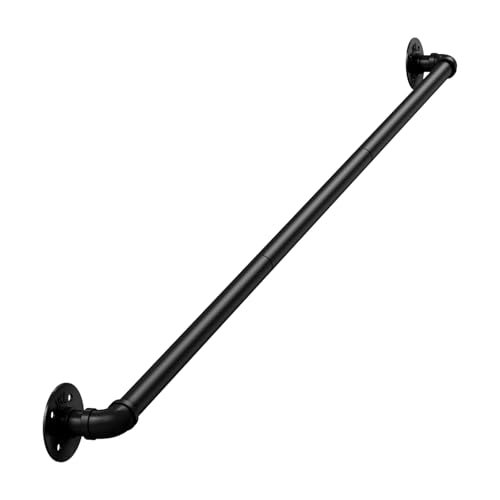
Measure the distance that needs support and note whether the rail follows a horizontal, inclined, or changing path. The EQUSPUR and ZALNVEY 12-foot systems are intended for extended runs. METRAXION covers 8 feet, while the VEVOR carbon steel system reaches 10 feet through three connected pipe sections. A long rail requires planning for wall supports, joints, and clearance.
Short entries require a different format. The compact ZALNVEY model is specified for one to two steps and includes two stair posts. The VEVOR stainless model is listed for one to three steps and offers 0-to-60-degree adjustment. The VIVOHOME set is designed around three-step stairs and lets the installer choose pre-drilled positions. Do not assume that a short rail can cover a longer staircase simply because its material is similar.
Compare material and finish
Stainless steel is represented by the METRAXION, EQUSPUR, ZALNVEY, and VEVOR stainless options. Several listings identify 304 stainless steel for general indoor and outdoor use. The ZALNVEY 12-foot listing specifically says it is not recommended within 10 miles of the coast or in salt water, so outdoor location still matters even when stainless steel is used.
Galvanized steel appears in the DAMEING and VIVOHOME designs. Their listings describe corrosion-resistant or weatherproof construction, making them relevant for porches, decks, and exterior steps. Carbon steel appears in the VEVOR industrial and retro-arch designs. These options provide different visual styles and outdoor-oriented finishes, but buyers should distinguish coated carbon steel from 304 stainless steel when corrosion exposure is a major concern.
Check the grip profile
Diameter and shape affect how the rail may feel in use. METRAXION uses a 2-inch outside-diameter rail, while EQUSPUR uses a pipe described as 1-11/16 inches and the ZALNVEY systems use 1.65-inch round tubing. Those profiles differ from the 1.26-inch VEVOR industrial pipe and the 1.2-inch Frossvt rail.
The Frossvt design adds a 45-degree downward tilt for a short transition or garage entrance. VIVOHOME uses an oval rail, and the VEVOR retro model uses a black arch shape. These choices can affect appearance and hand approach, but the supplied data does not establish that one profile is universally safer or more comfortable.
Review wall and floor compatibility
Installation surfaces are a critical specification. METRAXION lists wood, concrete, and brick applications, while EQUSPUR provides multiple wall anchors. The ZALNVEY 12-foot kit includes hardware for wood and tile drilling and identifies wood, vinyl, brick, stucco, and concrete applications. DAMEING is listed for wood, concrete, brick, or stucco.
Short-step models may mount to floors rather than walls. VIVOHOME identifies wood, concrete, and brick steps, and the VEVOR stainless model lists concrete, wood, ceramic, and marble. The retro arch model is also positioned for several solid surfaces. Verify the substrate, anchor type, clearance, and local building requirements before installation; included hardware does not guarantee compatibility with every site.
Consider capacity claims carefully
Some listings provide stated load figures, including METRAXION, EQUSPUR, VEVOR, DAMEING, and the short VEVOR models. These are listing claims, not independent test results. Compare them only as documented specifications and do not treat them as a substitute for proper structural attachment.
For a longer rail, bracket spacing and wall construction remain important even when a capacity is advertised. For a short rail, the number and placement of posts or anchors matter. If the handrail will serve a high-traffic or accessibility-focused setting, consult applicable local requirements and a qualified installer.
Look at what the kit includes
A complete package can simplify planning, but contents vary. The ZALNVEY 12-foot kit lists drill bits, anchors, screws, brackets, and tools. METRAXION includes rotating brackets, two anchor types, and pre-fixed caps. DAMEING provides brackets, screws, and anchors, while VIVOHOME includes hardware and a drill bit.
The Frossvt rail includes six screws and plastic extensions, but its short length makes it a specialized purchase. Before ordering, inventory the supplied parts against the wall or floor material and tools available at the installation site. Also confirm whether the product is a single rail, a two-piece set, or a system made from multiple sections.
Final recommendation
ZALNVEY 12-Foot 304 Stainless Steel Handrail Kit ranks first overall in this specification-based comparison under the published weighted criteria.
ZALNVEY 12-Foot 304 Stainless Steel Handrail Kit is the highest-scoring returned product and the first overall specification-based choice.
Among the best steel staircase handrails reviewed here, it combines a long span, 304 stainless steel, a round 1.65-inch profile, broad documented wall compatibility, and a detailed accessory package. Choose EQUSPUR when a 12-foot span with rotating brackets is the priority, or METRAXION when an 8-foot rail with a 2-inch profile and two anchor types better matches the project.
For industrial styling, VEVOR’s carbon steel pipe system is a clear match. Short porch and entry steps are better served by the adjustable VEVOR stainless model, VIVOHOME’s oval set, the compact ZALNVEY rail, or the retro arch design. These are the top steel staircase handrails here by documented fit and features, not by customer ratings or popularity.
Frequently Asked Questions
How should I choose among the best steel staircase handrails for a short porch?
First identify the number of steps and the slope. The compact ZALNVEY rail is specified for one to two steps, while the VEVOR stainless model covers one to three steps with 0-to-60-degree adjustment. VIVOHOME is designed for three-step stairs and uses pre-drilled adjustment positions. A short model may be easier to fit than a long wall-mounted pipe system, but confirm the mounting surface and required clearance.
Are 304 stainless steel handrails suitable for outdoor stairs?
The supplied listings position 304 stainless steel models for general indoor and outdoor use. However, the ZALNVEY 12-foot listing specifically excludes projects within 10 miles of the coast or in salt water. Outdoor suitability depends on the environment, finish, anchors, and installation details. Coastal or saltwater projects may require a product selected specifically for that exposure.
Is a higher stated load capacity automatically better?
No. A stated capacity is only one specification and is not independent testing. METRAXION, EQUSPUR, VEVOR, and DAMEING list different load figures, but actual performance also depends on substrate, anchors, bracket spacing, and installation quality. Treat the published figure as a comparison point and follow applicable building requirements.
What is the difference between a wall-mounted rail and a post-supported rail?
Wall-mounted rails attach brackets directly to a wall or similar surface, as with the long METRAXION, EQUSPUR, and ZALNVEY systems. Post-supported designs attach to the steps or floor and can work where a suitable wall is unavailable. The compact ZALNVEY model uses stair posts, while VIVOHOME’s design uses two adjustable legs. Measure the available mounting area before choosing a format.
Do these handrail kits include everything needed for installation?
Not necessarily. Several include substantial hardware, but the contents differ. ZALNVEY lists drill bits, anchors, screws, brackets, and tools, while other kits may provide only selected anchors and fasteners. Check the supplied parts against the actual wall or floor material, required tools, and local code. Professional advice may be appropriate when the rail is part of an accessibility or structural project.