Buying Guide
The best suspender tool belts should be selected by the way the rig carries weight, not by pocket count alone. A larger layout can reduce trips for supplies, but it can also add bulk. Start with the tools you carry most often, then compare the belt range, shoulder support, pouch arrangement, and materials documented for each model.
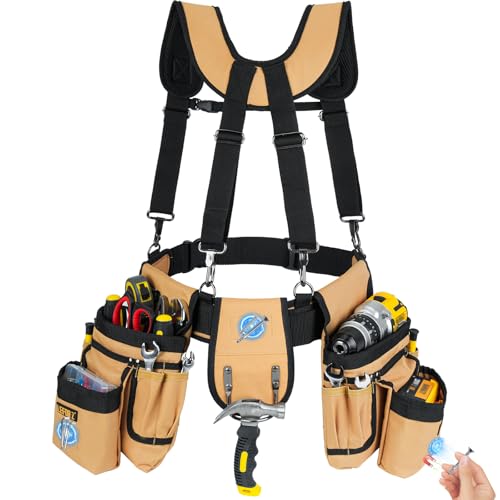
A compact setup may suit a handyman who carries a tape measure, hammer, pliers, driver, and a few fasteners. A larger construction load benefits from more compartments and structured openings. The DEWALT DWST540602 lists 25 pockets with wide-open structured pockets, while Aupofit’s 7-Piece Professional Tool Belt Rig lists 32 pockets and loops across multiple pouches. The Marscamd MD09502 lists 31 storage points and adds two detachable pouches.
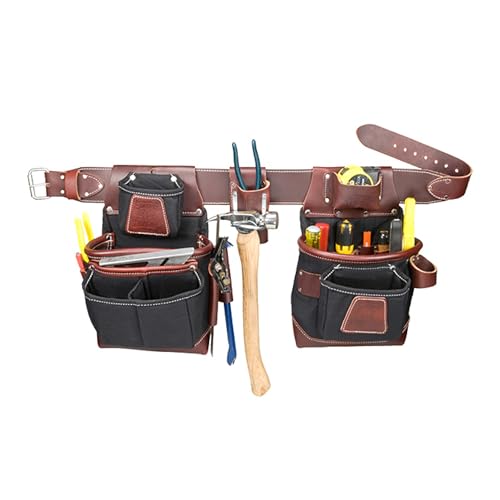
Pocket totals are not perfectly interchangeable because listings may count loops, holders, and magnetic sections differently. Look at the type of access supplied. The Klein Tools 55896 includes a cell phone pocket, headlamp bracket, tape measure clip, and small accessory pocket. The Dead On Tools HDP400945 identifies separate drill, steel-loop hammer, and tape-measure holders. These details can matter more than a headline number when your daily workflow depends on a few specific tools.
Prioritize weight distribution
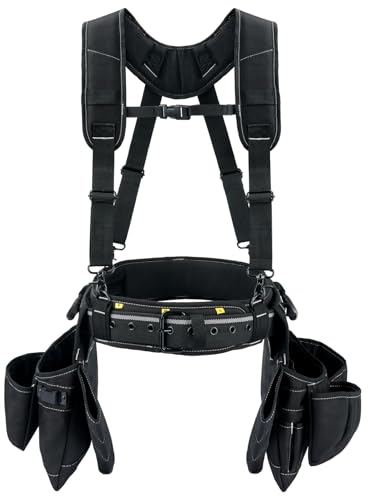
Suspenders are useful when the belt carries enough equipment to make hip-only support uncomfortable. The Klein 55896 documents both a padded belt and padded shoulder supports. DEWALT specifies a 5.5-inch padded belt and padded suspenders, while KUNN’s TC02-B uses a 3.5-inch padded waistband and removable padded shoulder straps. These features indicate where the product is designed to distribute load, but the supplied evidence does not establish how any model feels during actual wear.
A four-point connection can spread attachment across the rig. LEFOR·Z describes a four-point suspender connection, and the ZMGM Tool Belt Pro 18P includes padded, adjustable shoulder straps plus a widened waist belt. The Bucket Boss Mullet Buster 55135 instead highlights LoadBear stretch suspenders. Consider whether you prefer a more fixed harness connection or a design that emphasizes movement in the suspenders.
Check waist and strap adjustment
Measure the waist area where the belt will sit and compare it with the listing’s stated range. The ZMGM Tool Belt Pro 18P covers 32 to 66 inches, and LEFOR·Z covers 32 to 60 inches. Klein covers 30 to 52 inches, while Dead On covers 29 to 46 inches. The Bucket Boss AirLift 50100 and Mullet Buster 55135 both identify an infinity belt that fits up to a 52-inch waist.
Some listings provide only a general size. DEWALT lists the DWST540602 as one size without a numeric waist range in the supplied specifications. That does not establish a poor fit, but it gives you less documented information for pre-purchase sizing. Adjustable shoulder straps, chest straps, and quick-release buckles can further affect how a rig is positioned, so check which of those features are explicitly included.
Compare materials and reinforcement
Jobsite tool belts face abrasion, concentrated loads, and repeated handling. The Klein and DEWALT rigs specify 1680D fabric with reinforcement details. Marscamd identifies 1680D water- and tear-resistant fabric, reinforced stitching, and riveted stress points. Aupofit also specifies 1680D polyester with heavy-duty stitching, rivets, and hardware. These are useful construction signals, but they are not a substitute for independent durability testing.
The KUNN TC02-B uses 600D high-density polyester and stain-resistant waterproof canvas, with industrial-grade rivets and double-stitched seams. Dead On specifies 1680 denier material and vinyl-reinforced pouches. Bucket Boss emphasizes reinforced pouch bottoms and barrel-bottom construction rather than a denier rating in the supplied listing. Compare the stated reinforcement to the tools you expect to carry, especially around hammer holders and pouch bases.
Decide whether you need detachable pouches
Detachable storage can help when you switch between tasks or want to carry only part of a rig. Marscamd includes two detachable tool pouches, Aupofit includes large pouches with handles for detached carrying, and both LEFOR·Z and ZMGM describe three detachable pouches. These designs offer layout flexibility, but more moving parts can require more setup before work begins.
Fixed or simpler configurations may be preferable when consistency matters. The Bucket Boss AirLift 50100 uses a single-body construction with adjustable pouch and rigging features. The Mullet Buster 55135 offers three bags and adjustable rigging. Review the supplied pocket arrangement and decide whether you want a stable layout, removable sections, or a balance between the two.
Consider specialized holders and accessories
A tape measure clip, hammer sleeve, drill holster, phone pocket, or magnetic section can reduce the need for extra pouches. Klein includes a headlamp bracket and tape measure clip. Aupofit identifies a drill holster, water bottle pocket, hammer holder, and two tape measure clips. LEFOR·Z documents magnet sections on the pouches and hammer holder, while Marscamd lists an external magnetic panel for small metal parts.
Only count features that match your work. A magnetic area may be useful for nails or screws, but it is not a replacement for a secure pocket for larger tools. Likewise, a water bottle pocket adds utility for some jobs but may be unnecessary if you already carry hydration separately.
Final recommendation
Klein Tools 55896 Tool Rig ranks first overall in this specification-based comparison under the published weighted criteria.
The final choice among the best suspender tool belts depends on the documented features that match your intended use.
Klein Tools 55896 Tool Rig is the highest-scoring returned product and the first overall specification-based choice. Its combination of padded support, 23 pockets, a 30-to-52-inch waist range, 1680D material, and dedicated holders gives it the broadest balance for many professional trades. DEWALT DWST540602 is a close alternative when 25 pockets and wide-open access matter most. For modular storage, Marscamd MD09502 and Aupofit’s 7-Piece Professional Tool Belt Rig offer the clearest documented pouch flexibility.
Among the top suspender tool belts, the right pick depends on fit and load. Choose LEFOR·Z or ZMGM when a broad waist range is the priority. Choose Dead On for a documented pocket layout with gel-padded suspenders, or Bucket Boss when an adjustable bag-style arrangement is more appealing. KUNN TC02-B offers a padded, mid-capacity option, while the simpler Bucket Boss AirLift 50100 suits buyers who do not need the largest pocket grid.
Frequently Asked Questions
Measure your waist where the belt will actually sit, then compare that measurement with the product’s stated range. Also consider clothing layers and whether the belt will sit over a work garment. Numeric ranges are supplied for models such as Klein, Dead On, LEFOR·Z, and ZMGM, while DEWALT’s listing provides a one-size designation without a numeric range.
No. More pockets can help organize a broad tool load, but they may add bulk and can be unnecessary for a smaller daily kit. Compare the actual layout: DEWALT lists structured open pockets, Aupofit includes a drill holster and water bottle pocket, and Dead On identifies dedicated holders. Select the arrangement that matches your tools rather than choosing by count alone.
When are detachable pouches useful?
Detachable pouches are useful when your tool list changes between tasks or when you want to carry only one section. Marscamd, Aupofit, LEFOR·Z, and ZMGM all document detachable storage. A fixed or simpler rig may be preferable if you want the same layout every day and do not need to reconfigure the belt.
Look for a padded waist belt or waistband, padded shoulder straps, and a documented multi-point suspender connection. Klein, DEWALT, KUNN TC02-B, and ZMGM each specify padded support features. The supplied evidence describes design intent only; it does not provide hands-on comfort or load-testing results.
Most selected models are described for multiple trades, including construction, carpentry, electrical work, framing, and handyman tasks. The better match depends on tool size, pocket access, fit, and material requirements. Check the documented holders and adjustment range against your own work pattern instead of relying only on the trade names in a listing.