Buying Guide
The best waist tool belts differ mainly in how they distribute weight, organize tools, and fit over work clothing. A compact pouch can be easier to wear for a short repair, while a full rig can carry more equipment but may feel bulky. These products are ranked from supplied listing specifications, not from hands-on testing, customer opinions, or volatile marketplace information.
Start with the work pattern
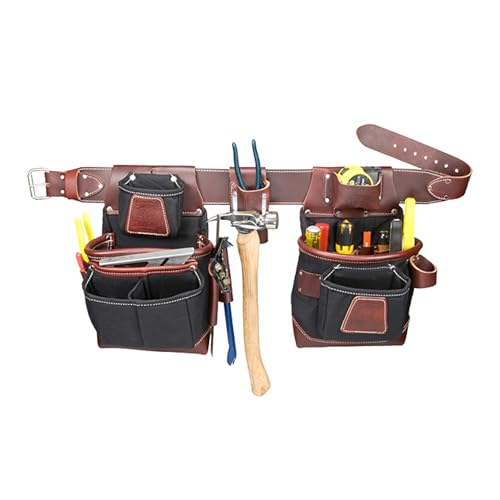
Match the belt to the tools you actually carry. The Klein Tools 55896 Tool Rig and AWP Carpenter Tool Rig are designed around larger jobsite loads, with suspenders or multiple padded contact areas and substantially more pockets than compact pouches. They make sense when a worker needs pliers, screwdrivers, measuring equipment, fasteners, and other hand tools available at once.
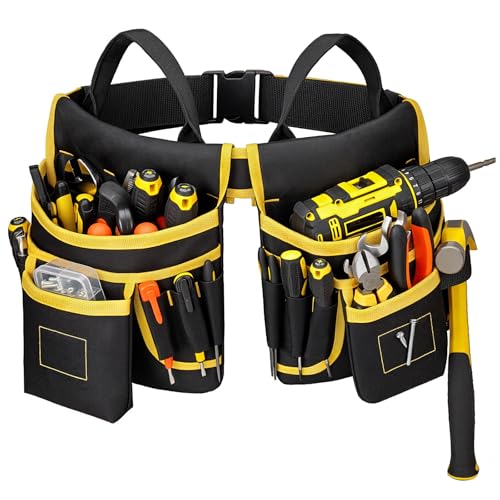
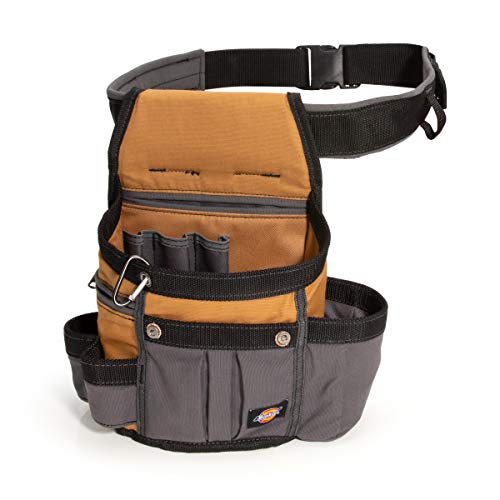
For simpler repair work, a belt apron may be more practical. The GlossyEnd 11-Pocket Construction Tool Belt uses a straightforward waist-apron design with a quick-release buckle and a mix of main and smaller pockets. The Dickies 8-Pocket Padded Tool Belt is another belt-only option, adding a 3-inch padded belt and a 32-to-56-inch adjustment range. These formats can be easier to put on than a full suspender system, although they provide less documented support for very large loads.
Gardening is a separate use case. The WORKPRO Garden Tool Belt is built around five varied pockets, a hanging ring, and a 26-to-51-inch strap. That layout is better aligned with pruners, small hand tools, and garden accessories than with a full collection of construction tools.
Compare pocket count with pocket layout
A high pocket count does not automatically mean better organization. The UUP 26-Pocket Magnetic Tool Belt has the largest stated number of pockets and three magnetic zones, plus removable pouches. That is useful when the job includes many small items and when the wearer wants to change the layout.
The Eswilran TB03 Tool Belt documents 18 pockets and 19 webbing loops, along with two magnetic zones and a transparent file pocket. The ARROW Heavy-Duty Tool Belt takes a different approach, listing six exterior pockets, seven loops, four internal compartments, and a tape measure clip and hammer holder.
Look for task-specific storage rather than counting every compartment equally. A tape clip, hammer holder, electrical tape loop, or dedicated small-item area can reduce clutter. The supplied evidence documents these details on several selected products, but it does not establish how easy any pocket is to use while moving or wearing gloves.
Check the waist range carefully
Measure the intended waist over the clothing normally worn on the job, then compare that measurement with the documented range. The Dickies belt reaches from 32 to 56 inches, while the Bucket Boss AirLift Tool Belt fits up to 52 inches. The Klein Tools rig and Eswilran TB03 cover approximately 30 or 31 inches through 52 inches, respectively.
The UUP 26-Pocket belt covers 31 to 48 inches, and the ARROW belt is stated to fit up to 49 inches. GlossyEnd lists 33 to 50 inches. These figures are not interchangeable: a maximum waist measurement does not describe padding thickness, overlap, or fit over bulky clothing.
The MELOTOUGH Padded Tool Belt is listed for 30 to 43 inches, so it is a better match for users within that range than for someone needing a large adjustment span. WORKPRO provides one of the broadest documented ranges, from 26 to 51 inches, which can be useful when the belt will be shared or worn over different layers.
Consider materials and reinforcement
Construction details help indicate how a belt is intended to be used, but they do not prove long-term durability. Klein Tools specifies 1680D fabric, reinforced stitching, and double-thick belt construction. GlossyEnd lists heavy-duty 1,000D polyester and rust-proof rivets, while ARROW documents triple-layer fabric and 1200D material at exterior pocket bottoms.
The AWP rig uses 600D polyester with reinforced seams. Eswilran uses 600D Oxford cloth and reinforced stitching, and the UUP 26-Pocket belt lists Oxford fabric, double stitching, and metal rivets at stress points. WORKPRO describes tear-resistant Oxford cloth and fine stitching for outdoor use.
Canvas can also be appropriate for a lighter or simpler arrangement. Dickies documents canvas with webbing-reinforced pockets, while the selected construction options emphasize polyester or Oxford fabrics. Choose based on the task and the amount of equipment, but avoid treating a fabric denier number as a complete performance guarantee.
Evaluate comfort and load distribution
Padding is most useful when the belt is expected to carry a meaningful load for extended periods. Klein Tools includes padding on the belt and shoulder supports. AWP lists air-mesh padding at the shoulder, back, and waist straps. Dickies specifies a 3-inch padded work belt, and MELOTOUGH uses a padded layer with a dual-layer webbing design.
Suspenders can shift some load away from the waist, but they add harness straps and more adjustment points. The Klein Tools and Bucket Boss designs include suspenders, whereas the other selected products are primarily waist belts or pouches. A belt without documented padding or suspenders may still suit light work, but the supplied evidence does not support assuming equal comfort under heavy loads.
Decide whether modularity matters
Detachable or attachment-ready systems are useful when tool layouts change. MELOTOUGH documents D-rings and metal hooks for H-harness systems and tool attachments, making it the clearest selected option for building a customized setup. The UUP 26-Pocket belt also documents removable pouches, allowing a different type of configuration change.
A fixed pouch layout can be preferable when simplicity matters. GlossyEnd, WORKPRO, and the compact belt formats provide a defined arrangement without requiring the wearer to configure multiple modules. Consider whether you want to add storage later before choosing attachment hardware.
Final recommendation
Klein Tools 55896 Tool Rig ranks first overall in this specification-based comparison under the published weighted criteria.
Klein Tools 55896 Tool Rig is the highest-scoring returned product and the first overall specification-based choice among the best waist tool belts. Its 23 pockets and loops, 30-to-52-inch adjustment, padded belt and shoulder supports, and 1680D construction give it extensive documented capability for demanding work.
Choose the AWP Carpenter Tool Rig if you want an organized rig with air-mesh padding and carry handles. Pick the Dickies 8-Pocket Padded Tool Belt for a belt-only design with a broad fit, the UUP 26-Pocket belt for substantial stated pocket capacity, or MELOTOUGH when modular attachments matter more than built-in storage. For outdoor gardening, WORKPRO is the most focused choice. These top waist tool belts serve different load and organization needs, so the best match depends on your waist measurement and daily tool list.
Frequently Asked Questions
Start with the number and type of tools you carry, then check waist fit and load support. The Klein Tools and AWP rigs document suspenders or multiple padded support areas and offer extensive organization. For a smaller hand-tool load, GlossyEnd or Dickies may be simpler. Pocket count, padding, and waist range are documented features; actual comfort and durability require personal use.
They can provide a designated place for small magnetic items such as nails or screws. The Eswilran TB03 documents two magnetic zones, while the UUP 26-Pocket belt lists three. Magnetic storage does not replace regular pockets for nonmagnetic items, and the supplied evidence does not establish how securely a particular item will stay during movement.
Suspenders can help distribute a heavier load beyond the waist. Klein Tools and Bucket Boss document suspender-equipped rigs, while AWP lists padded shoulder and back straps. A belt-only design may be easier for short jobs or lighter loads. Choose based on the equipment carried and whether you want the added straps and adjustment points.
What waist range should I look for?
Measure around the waist where the belt will sit, including typical work layers. Compare that measurement with the listed range rather than relying on a general size label. Selected options range from the MELOTOUGH 30-to-43-inch model to the Dickies 32-to-56-inch belt, with several choices covering approximately 31 to 52 inches.
The WORKPRO Garden Tool Belt is the most purpose-specific selected option. It lists five varied pockets, a hanging ring, tear-resistant Oxford cloth, and a 26-to-51-inch strap. Its documented layout is suited to compact garden tools, but users carrying a broad construction-tool load should consider one of the larger rigs.