Buying Guide
Choosing among the best teak spatulas is mainly a matter of matching the utensil’s shape, reach, and maintenance needs to the way you cook. The listings in this comparison document several formats: single flat turners, two-piece combinations, and larger sets with scrapers, slotted tools, paddles, and spoons. Because this is a specification-based review, the recommendations reflect the supplied product descriptions and specifications—not hands-on testing or customer sentiment.
Start with the shape you actually need
A flat turner is the most direct choice for eggs, pancakes, grilled sandwiches, fish, and other foods that need to be lifted or flipped. The Calphalon Prime Solid Turner is a focused single-tool option with a listed 13-inch length and a wide, sturdy head. The DADU BADU turner similarly emphasizes a wide, flat 2.9-inch head and a 12.7-inch handle. These designs may be easier to assess than a broad utensil set because their intended job is clear.
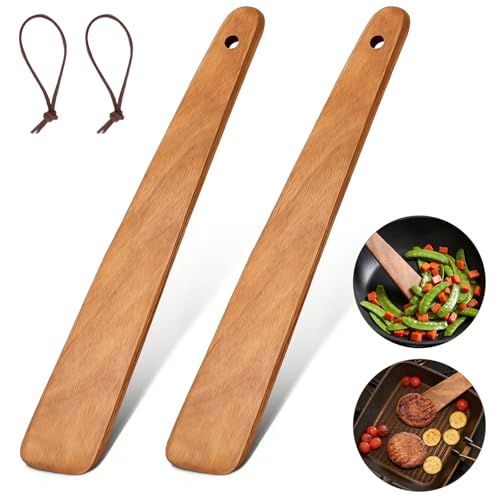
A thin front edge matters when the goal is to slide under food or scrape the cooking surface. The Zpwkq spatula documents a 0.03-inch front edge and a slightly curved head for reaching pan corners. The Azureblue set also lists an ultra-thin front edge, with a 12-inch length and 2-inch widest point. These details make both products appropriate for shoppers who prioritize a precise flat profile, although neither should be treated as a complete replacement for every utensil shape.
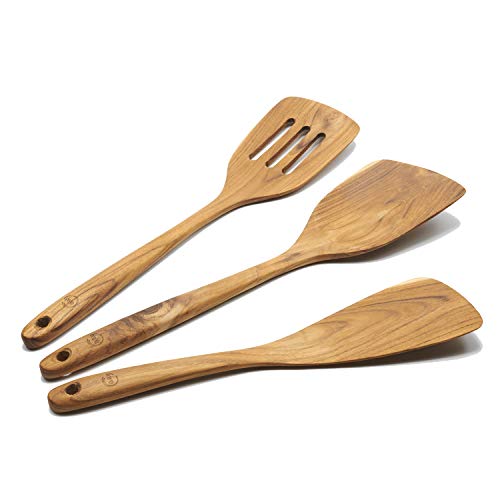
A set becomes more useful when your cooking includes several distinct jobs. WOODLANDS USA lists a scraper, slotted spatula, flat spatula, turner, and wooden spoon. FAAY’s three-piece set lists stir-fry, slotted, and compact spatulas. The AIUHI two-piece set combines a standard turner with a deeper bowl-style tool intended for scooping, transferring, and serving. Those combinations document more task coverage than a single spatula, but they also take more storage space and may include shapes you do not use often.
Match reach and width to your cookware
Most selected products fall close to the 12- to 13-inch range, which is a practical middle ground for stovetop work according to the supplied listings. Longer handles can help keep hands farther from heat or splatter, as described for the DADU BADU turner and several set options. The Calphalon turner lists a 13-inch length, while the AIUHI set lists a 13.2-by-3.2-inch size. FAAY’s three-piece set lists 13.5 by 3.25 inches, making it one of the larger documented options.
A wide head can help support larger portions, but it may feel less nimble in a small skillet. The DADU BADU’s 2.9-inch width and the Calphalon tool’s description of a wide, sturdy head favor lifting and serving. By contrast, the Zpwkq and Azureblue specifications emphasize narrower, flat profiles. For compact cookware, a shorter or narrower tool may be easier to position; for larger pans and serving tasks, a broader head may be more convenient. The supplied evidence does not establish a universal best width.
Check cookware compatibility claims
Every selected product is described as gentle on at least one protected or delicate cooking surface. Several listings specifically mention nonstick cookware, while others also name cast iron, ceramic, or enameled surfaces. Woodenhouse lists use across cast iron, stainless steel, and nonstick cookware. Calphalon names nonstick and enameled cookware. Azureblue and Zpwkq list nonstick, cast iron, and ceramic compatibility.
These claims describe the intended surface compatibility in the public listings; they are not independent test results. A smooth, polished, or hand-finished surface is repeatedly presented as a way to avoid scratching. The WOODLANDS USA set describes smooth edges, while HOTTOR emphasizes polished edges and a rounded handle. If protecting a pan is your priority, compare the finish language and avoid assuming that every wooden spatula has identical edge quality.
Consider solid construction and finish details
The most specification-aligned construction descriptions use phrases such as solid teak, one-piece construction, or carved from a single block. AIUHI, WOODLANDS USA, Azureblue, and Zpwkq each provide versions of this information. A one-piece design means the listing does not identify glued joints or spliced sections, which may appeal to shoppers seeking a simple construction. It does not, however, prove a particular lifespan or guarantee resistance to every type of damage.
Finish details also differ. Some products mention food-grade oil, plant-based oil, or a food-grade coating. Woodenhouse specifies a clear food-grade non-toxic lacquer, while DADU BADU identifies a plant-based oil finish. FAAY’s listing says its spatulas have no glue or lacquer. These are meaningful differences for shoppers who want to compare surface treatments, but the supplied data does not provide laboratory verification of any safety claim.
Plan for hand washing and occasional oiling
The best teak spatulas are not dishwasher-oriented products in this pool. The care instructions generally call for warm water, mild or neutral soap, gentle cleaning, thorough drying, and occasional oiling when the wood feels dry. WOODLANDS USA, Calphalon, HOTTOR, Azureblue, and DADU BADU all provide hand-care guidance or recommend hand washing. Woodenhouse is especially specific, advising against dishwasher use and describing limits for hot water and hot oil exposure.
Teak’s moisture resistance is mentioned by several listings, but moisture resistance is not the same as dishwasher approval. Repeated exposure to heat, water, or prolonged soaking may conflict with the care instructions. Store the tool dry and follow the individual listing’s recommendations. A hanging hole or strap can simplify storage: AIUHI includes built-in hanging holes, Azureblue lists a hanging hole with string, and Tebery includes a leather strap.
Choose a set or a single utensil
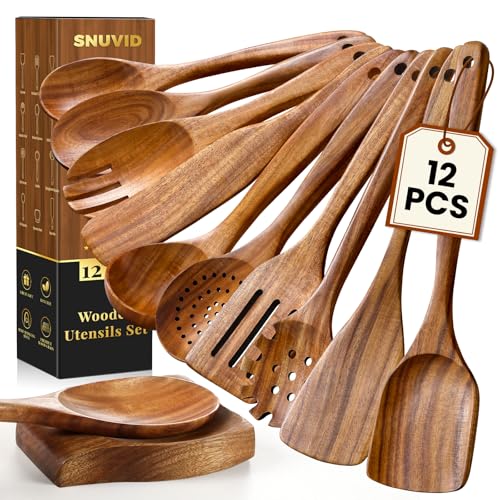
Single spatulas are sensible when you already own a complete utensil collection or need a specific profile. The Calphalon, DADU BADU, and Zpwkq options focus on one primary turner or scraper shape. A two-piece set, such as AIUHI or Azureblue, adds a spare or a second profile without creating a large assortment. Three- and four-piece sets such as FAAY, Tebery, Woodenhouse, and WOODLANDS USA cover more tasks but require closer attention to the exact contents.
For a first teak purchase, start by identifying whether you need a thin edge, a wide head, a slotted design, a deep bowl, or a scraper. Then check length, width, finish, and care instructions. That process is more reliable than choosing only by the number of pieces in the package.
Final recommendation
AIUHI 2-Piece Teak Spatula Set ranks first overall in this specification-based comparison under the published weighted criteria.
The final choice among the best teak spatulas depends on the documented features that match your intended use.
Calphalon Prime Solid Turner is the highest-scoring returned product and the first overall specification-based choice for shoppers seeking a single everyday teak turner. Its documented 13-inch length, wide sturdy head, natural teak construction, and stated nonstick and enameled-cookware compatibility make it a balanced option for flipping, lifting, and serving.
For broader coverage, the AIUHI 2-Piece Teak Spatula Set is the stronger choice because it supplies two specialized shapes, including a deeper bowl-style tool. The WOODLANDS USA set is better suited to someone replacing several utensils at once, while the Woodenhouse set stands out for detailed care limits. The DADU BADU turner is a practical wide-head alternative, and FAAY offers a distinct artisan-style three-shape assortment.
Among the top teak spatulas, the best fit depends on whether you want one precise tool or a group of complementary shapes. Zpwkq and Azureblue emphasize thin edges, Tebery offers two lengths and portable storage, and HOTTOR provides a straightforward two-pack. In every case, verify the listed size, surface claims, and hand-wash routine against your kitchen before buying.
Frequently Asked Questions
Are the best teak spatulas safe for nonstick cookware?
The selected listings describe all ten products as suitable for nonstick cookware or delicate surfaces, usually because they have smooth, polished, or hand-finished edges. These are manufacturer or public-listing claims rather than independent test findings. Inspect the edge before use and follow your cookware maker’s instructions.
Should I buy a single teak spatula or a set?
Buy a single tool if you need a specific flat turner or scraper and already have other utensils. Choose a two-piece set for modest variety, such as a standard and wok-style turner. A three- or four-piece set makes more sense when you want slotted, scraping, stir-fry, paddle, or spoon formats together.
How should a teak spatula be cleaned?
The supplied listings generally recommend hand washing with warm water and mild or neutral soap, followed by thorough air drying. Several also recommend occasional food-safe oiling when the wood feels dry. Avoid assuming dishwasher safety; Woodenhouse, Calphalon, HOTTOR, and other selected listings call for hand care.
Does a longer handle make a teak spatula better?
A longer handle can provide more reach and may keep a hand farther from heat or splatter, as described in selected listings. However, length should match the pan and the task. A wide, long turner may be useful for serving, while a narrower 11.8- to 12-inch profile may offer more control in a smaller pan.
What should I look for in teak construction?
Look for clearly documented solid or one-piece teak construction, a smooth or polished finish, and care instructions that fit your routine. Also compare the edge profile, head width, handle length, and whether the finish is described as oil-based, lacquered, or unfinished. Natural color and grain variation are expected in the listed wood products.