Buying Guide
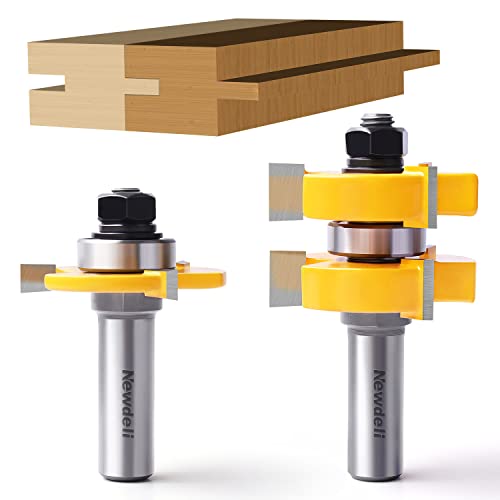
Choosing the best tongue joinery router bits starts with the joint you need to make, not with the brand name alone. Tongue-and-groove sets generally use one cutter for the tongue and another for the matching groove, but the documented designs vary considerably. Some sets offer washer-based adjustment for changing stock thickness and groove width. Others use a fixed profile, a defined angle, or router-table height adjustment. The right choice depends on the material, the required joint dimensions, and the router setup available to you.
Match the bit to the joint profile
A standard matching set is usually the most flexible option for cabinet doors, drawers, panels, boxes, and furniture components. The Freud 99-036, CMT 800.625.11, KOWOOD PRO KO-202, and FIVEPEARS sets all document adjustable configurations. Their listings describe adjustment in small increments and give specific stock or groove ranges. That makes them appropriate when the material thickness is not known in advance or when a project uses more than one stock size.
A fixed or specialty profile can be preferable when appearance is part of the design. The Yakamoz set documents a 120-degree V-groove, while the Profession set specifies a 45-degree V-groove. Both are aimed at flooring or wainscot paneling. Those profiles are not interchangeable with every flat tongue-and-groove application, so confirm the intended visual and mechanical joint before selecting one.
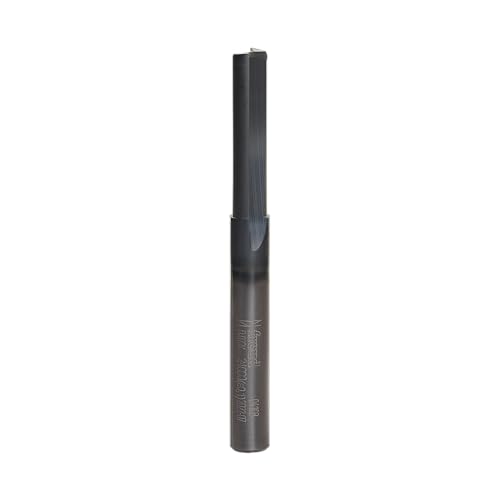
The Bosch 84623M takes another approach. Its listing identifies material from 1/2 to 3/4 inch and says the groove can be cut by adjusting router-bit height. That can suit a router-table workflow where the operator prefers to set the bit position rather than change spacer combinations.
Check stock thickness and groove dimensions
Stock range is one of the most important specifications in this category. The adjustable Freud, CMT, KOWOOD PRO, and FIVEPEARS options document coverage from 1/2 to 1-1/4 inches. Their groove-width ranges are also stated, although the CMT range begins at 13/64 inch while the others list 7/32 inch as the lower figure. These details matter because a tongue that is too thick or too deep may not mate correctly with the groove.
The Yonico 15221 is more narrowly defined: it cuts a 1/4-inch-thick, 1/2-inch-deep tongue in material up to 3/4 inch. That clarity can be useful when your project is built around standard 3/4-inch boards. Newdeli instead gives a 15- to 31-mm processing-template range, while Yakamoz lists stock up to 1 inch. Compare those documented figures with the actual board or panel thickness rather than assuming that every two-bit set has the same capacity.
Consider the router and shank
Most selected products use a 1/2-inch shank. A larger shank can be a sensible fit for compatible routers and tables, but the router collet must match exactly. The Bosch listing recommends a router table, and Yonico, KOWOOD PRO, and several other sets identify table-mounted use. The Newdeli listing mentions router tables, desktop woodworking engraving machines, and CNC-style equipment, but users should still verify collet, speed, and mounting requirements for their specific machine.
The shank is not the only compatibility issue. Several listings specify that the set is for table-mounted use only, or recommend a router table. A table can provide the positioning control needed to keep the tongue and groove aligned, especially with larger cutter diameters. Do not infer handheld compatibility simply because a bit has a familiar shank size; follow the product’s stated setup guidance.
Review cutter and body features
Cutter material and body design provide useful specification clues, though they are not substitutes for testing. Freud documents opposing shear angles and a Silver I.C.E. coating. CMT identifies high-density carbide cutting edges. Yonico, KOWOOD PRO, FIVEPEARS, and Yakamoz list micro-grain tungsten carbide or C3 carbide features. These descriptions can help distinguish a basic cutter from one with additional documented construction details.
Anti-kickback design appears in the FIVEPEARS, Newdeli, Yakamoz, Profession, and KOWOOD KR-110 listings, among others. Always use the selected product’s own instructions and confirm the router’s operating range.
Plan for the material
The selected sets generally target wood and wood-based panels. Freud lists composition materials, plywood, hardwoods, and softwoods. KOWOOD PRO adds laminate, particle board, and compact panel. Newdeli, Yakamoz, Profession, and KOWOOD KR-110 similarly identify combinations of wood, MDF, plywood, particle board, or compact panel. These statements establish intended applications, not permission to cut metal or other non-wood materials. The FIVEPEARS listing expressly excludes metal and several non-wood materials.
Fixed versus adjustable sets
Adjustable sets are helpful when one tool must cover several thicknesses, but they require careful setup. The spacer or washer arrangement determines the relationship between the tongue and groove, so record the configuration before making production cuts. Fixed-profile sets reduce that particular adjustment decision and may be easier to plan around when the project uses one known dimension.
For a broad household woodworking range, the Freud 99-036, CMT 800.625.11, KOWOOD PRO KO-202, and FIVEPEARS sets provide the most detailed adjustment documentation. For a defined 3/4-inch stock project, Yonico 15221 is more specific. For decorative flooring or paneling, select the documented angle that matches the desired joint profile.
Final recommendation
Freud 99-036 Adjustable Tongue & Groove Set ranks first overall in this specification-based comparison under the published weighted criteria.
Freud 99-036 is the highest-scoring returned product and the first overall specification-based choice among the best tongue joinery router bits. Its combination of.002-inch adjustment increments, broad stock and groove ranges, opposing shear angles, material coverage, and Silver I.C.E. coating gives it the most specification-aligned documented balance.
CMT 800.625.11 is a close alternative for cabinet-door and plywood work. KOWOOD PRO KO-202 and FIVEPEARS are sensible adjustable options when varied materials or stock sizes are expected. Yonico 15221 and Bosch 84623M make more sense when the project has a defined thickness and router-table plan. Yakamoz and Profession are specialty choices for different V-groove angles, while Newdeli and KOWOOD KR-110 emphasize general woodworking coverage and storage practicality. Together, these top tongue joinery router bits cover adjustable, fixed-profile, table-mounted, and flooring-oriented use cases without relying on marketplace popularity.
Frequently Asked Questions
What should I check before buying the best tongue joinery router bits?
Confirm the stock thickness, tongue dimensions, groove width, cutter profile, shank diameter, and router instructions. Adjustable sets such as Freud 99-036 and CMT 800.625.11 document useful ranges, while Yonico 15221 and Bosch 84623M are more specifically tied to defined material sizes. Also check whether the listing calls for a router table and whether your collet accepts a 1/2-inch shank.
Are adjustable tongue-and-groove sets better than fixed-profile sets?
Neither design is automatically better. Adjustable sets provide more documented flexibility for changing stock thickness and groove width, but they require careful spacer or washer setup. Fixed-profile sets can be easier to plan around when the project has one known dimension. Yakamoz and Profession are examples of specialty fixed-angle designs, while Freud, CMT, KOWOOD PRO, and FIVEPEARS document adjustable configurations.
Which selected bits are intended for flooring or wainscot paneling?
Yakamoz documents a 120-degree V-groove for flooring and wainscot paneling. Profession specifies a 45-degree V-groove and also lists flooring and wainscot applications. Yonico 15221 is another flooring-related option, although its listing describes a defined 1/4-inch tongue and 1/2-inch depth rather than a V-angle. Match the profile to the appearance and joint dimensions required by the project.
No selected listing supports treating these products as metal-cutting tools. Their documented applications center on wood, MDF, plywood, particle board, laminate, compact panel, and similar materials. The FIVEPEARS, Yakamoz, and Profession listings specifically caution against ferrous metal and other non-wood materials. Use the material limitations supplied for the specific product and do not substitute a different cutting application.
Is a router table necessary?
Several selected products recommend or require a table-mounted router, including Bosch 84623M, Yonico 15221, and Profession. Newdeli describes broader machine compatibility, but the router and bit still need matching specifications. A table may help maintain alignment and control, but the product’s own instructions and your machine’s collet, speed, and mounting requirements should determine the setup.