Buying Guide
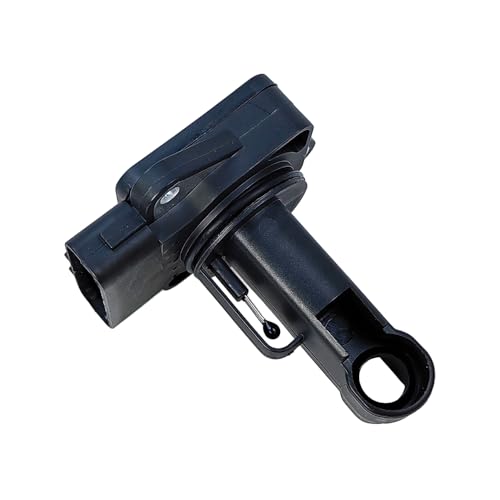
Choosing among the best toyota mass air flow sensors is primarily a compatibility exercise. A MAF sensor is installed in the intake path and supplies airflow information to the engine control unit. Because Toyota used different sensor families across model years, engines, connector layouts, and production dates, a part that fits one Camry or Tacoma may not fit another vehicle with a similar name.
Start with the vehicle, engine, and year
Write down the Toyota model, model year, engine displacement, and drivetrain details before comparing listings. The selected products show why this matters. AIUSLN, ENA, LLNSEAUTO, FAERSI, and OYEAUTO cover broad groups of Toyota, Lexus, and Scion vehicles, but their lists span multiple engines and generations. HOVEED is more focused on newer Camry, Corolla, RAV4, and Tacoma applications. Yezoauto’s 22204-0F030 listing concentrates on Tacoma, Tundra, Sequoia, and Hiace applications.
Older vehicles need the same level of care. THUNDERMINGO is specifically listed for 1988–1995 Toyota Pickup and 4Runner vehicles with 3.0L V6 engines, while SeyPon covers selected late-1990s and early-2000s Toyota and Lexus 3.0L, 4.0L, and V8 applications. A general Toyota label is not enough; match the exact engine and year range.
Match the OE number before relying on the title
The OE or reference number printed on the original sensor is often the most useful comparison point. AIUSLN, ENA, and OYEAUTO list the 22204-31020 family and related numbers. LLNSEAUTO and FAERSI document 22204-22010 or 22204-21010 families for earlier vehicles. HOVEED identifies 22204-75040 for its modern four-pin applications. The classic products use different references, including 22250-65010 from THUNDERMINGO and 22204-20010 from SeyPon.
Check every digit and compare hyphenated and non-hyphenated versions. Listings may show the same reference in several formats, but a similar-looking number can still represent a different sensor. If the old part number is unavailable, use the vehicle and engine details together and compare the connector and mounting arrangement.
Confirm pin count and physical design
Connector count is a major separation point. HOVEED clearly identifies a four-pin connector and warns that it is not a five-pin unit. AIUSLN, ENA, and SeyPon identify five-pin designs. A-Premium’s 4.7L product also specifies five terminals, bolt-on mounting, and a housing that is not included. These details can prevent a mismatch that a broad vehicle list might not reveal.
Housing configuration also matters. A-Premium’s 4.7L sensor is sold without a housing, whereas other listings describe a complete sensor assembly or include housing-related details. Before ordering, compare the old unit’s mounting points, electrical connector, sensor body, and whether the replacement is a sensor-only component or an assembly. Do not assume that two products sharing an OE reference have identical physical packaging without checking the listing details.
Consider the evidence about construction
The listings describe several construction approaches. AIUSLN states that its sensor uses heat- and corrosion-resistant materials and precision integrated circuits. FAERSI identifies plastic and aluminum. SeyPon names high-temperature molded PBT. A-Premium lists PBT+GF30 and aluminum alloy. These are useful specification clues, but they are not a substitute for independent durability testing.
Several products also describe heated-element or precision sensing designs. THUNDERMINGO explains that its sensor measures airflow through a heated element, while Yezoauto describes precision-manufactured sensing elements. Treat these statements as supplied listing evidence, not verified laboratory performance. The more important practical step is confirming that the design and reference number correspond to the original Toyota application.
Many listings describe direct-fit installation, but preparation still matters. LLNSEAUTO, FAERSI, OYEAUTO, and SeyPon recommend cleaning the air box and replacing the air filter before installing the sensor. Contamination in the intake system can affect a replacement sensor, so inspect the filter, ducting, connector, and mounting area as part of the repair.
Some listings mention disconnecting the battery ground or clearing fault codes. Follow the vehicle service procedure and use appropriate safety precautions rather than relying on a generic marketplace instruction. A-Premium’s listing supplies mounting and terminal specifications but does not establish a complete installation procedure. THUNDERMINGO explicitly says that installation instructions are not included. If the sensor location or connector is unfamiliar, consult the vehicle’s repair information.
How to use this comparison
Use the ranking as a specification-based shortlist, not as a guarantee that any sensor will solve a particular drivability or diagnostic issue. First eliminate products with the wrong year, engine, OE reference, pin count, or mounting format. Then compare the remaining listings by the amount of fitment, construction, and installation information they provide.
For broad mid-2000s Toyota and Lexus applications, AIUSLN, ENA, LLNSEAUTO, FAERSI, and OYEAUTO provide the most extensive documented coverage in this group. For newer four-pin applications, HOVEED offers the clearest connector-specific description. For specialized truck, SUV, and classic Toyota needs, Yezoauto, A-Premium, and THUNDERMINGO provide more focused application details. SeyPon is similarly targeted to selected older Toyota and Lexus vehicles.
Final Recommendation
Mass Air Flow Sensor for Toyota Camry 07-11 2.4L / 2.5L / 3.5L ranks first overall in this specification-based comparison under the published weighted criteria.
AIUSLN MAF Sensor 22204-31020 is the highest-scoring returned product and the first overall specification-based choice among the best toyota mass air flow sensors. Its combination of detailed vehicle fitment, five-pin identification, multiple reference numbers, construction descriptions, and installation guidance gives it the most specification-aligned documentation profile in this comparison.
The top toyota mass air flow sensors are not interchangeable across every Toyota. Choose ENA or OYEAUTO when their documented 22204-31020-family application matches your vehicle. Choose HOVEED when the original sensor is the specified four-pin 22204-75040 design. LLNSEAUTO and FAERSI are useful reference-rich options for older Toyota and Lexus platforms, while Yezoauto, A-Premium, THUNDERMINGO, and SeyPon serve more focused truck, SUV, V8, V6, or classic-vehicle applications.
Before installation, compare the old sensor’s part number, connector, mounting style, and engine application with the selected listing. Also inspect the air box, filter, intake duct, and wiring. These checks are more important than choosing a sensor solely because its title contains the correct Toyota model name.
Frequently Asked Questions
How do I identify the best toyota mass air flow sensors for my vehicle?
Begin with the Toyota model, year, engine, and original sensor number. Then confirm the connector pin count and mounting format. For example, HOVEED documents a four-pin 22204-75040 design, while AIUSLN, ENA, and SeyPon identify five-pin products. Those details can distinguish otherwise similar listings.
Are all Toyota MAF sensors interchangeable?
No. The selected products cover different OE-reference families, engines, production years, and connector layouts. THUNDERMINGO is listed for 3.0L V6 Toyota Pickup and 4Runner vehicles from 1988–1995 and specifically excludes 2.4L engines. A-Premium’s product is aimed at selected 4.7L V8 vehicles. Always verify the complete application.
Should I replace the air filter when replacing a MAF sensor?
Several selected listings, including LLNSEAUTO, FAERSI, OYEAUTO, and SeyPon, recommend cleaning the air box and replacing the air filter before installation. That recommendation is part of their supplied installation guidance. Inspect the filter and intake system and follow the vehicle manufacturer’s service procedure.
What is the difference between a sensor-only unit and an assembly?
A sensor-only unit may reuse the vehicle’s existing housing, while an assembly can include additional body or mounting components. A-Premium’s 4.7L listing states that its housing is not included. Compare the original component and the replacement description before ordering so the physical configuration is appropriate.
No. Claims such as response time, accuracy, or OEM-specification compliance come from the supplied product listing and are not independent test results. Use them as comparison evidence, but prioritize correct fitment, reference-number matching, connector verification, and proper intake-system inspection.