Buying Guide
Choosing the best toyota oxygen sensors is primarily a compatibility exercise. An oxygen sensor can be the right general component but still be wrong for a particular engine, connector, harness length, or exhaust position. The listings in this comparison include single sensors as well as two- and four-piece sets, so first determine whether the repair calls for one sensor or a complete position-specific package.
Confirm the vehicle, engine, and year
Start with the exact Toyota model, model year, engine size, drivetrain where relevant, and installation position. The fitment evidence varies considerably. BasaltAuto limits its two-piece set to 2005-2008 Toyota Corolla and Matrix vehicles with 1.8L L4 engines. Sangyue’s Prius set is specified for 2004-2009 Prius I4 1.5L vehicles, while labwork identifies 2001-2003 RAV4 models with a 2.0L engine. These details are not interchangeable.
The truck and SUV listings also show why a model name alone is insufficient. ATBIZZLE covers selected Tacoma, Tundra, T100, 4Runner, and Sequoia applications across multiple engine and transmission details. Sangyue’s four-piece listing includes a 2005-2008 Tacoma 4.0L application but also names different years and engines for other Toyota vehicles. Use the supplied application list as a screening tool and verify the complete vehicle configuration before installation.
Match upstream and downstream positions
A sensor position should be treated as a core specification. Bosch 13720 is presented as a single sensor, and the supplied evidence does not assign it an upstream or downstream position for every listed application. By contrast, BasaltAuto separates its upstream 234-9052 sensor from its downstream 234-4233 sensor. PulseVector is specifically identified as downstream, and NECATUO 234-9128 is specifically identified as upstream.
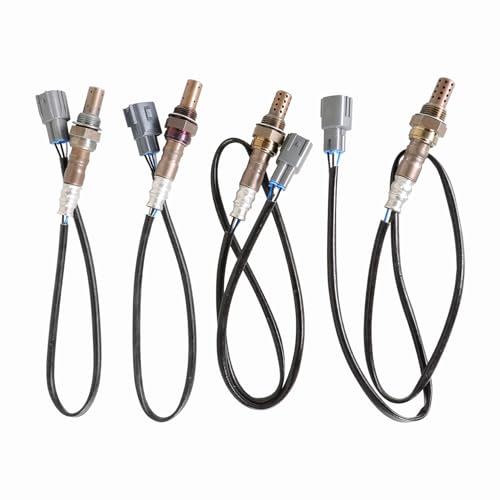
Multi-sensor packages can simplify a repair when the listing matches the vehicle. The Sangyue Prius product contains one upstream and one downstream sensor. The labwork RAV4 package contains two of each, and the Maxfavor Tundra and Sequoia package likewise identifies two upstream and two downstream units. The Sangyue Tacoma listing describes two upstream air-fuel-ratio sensors plus two downstream sensors. Do not assume that a four-piece package fits a vehicle that needs only one replacement.
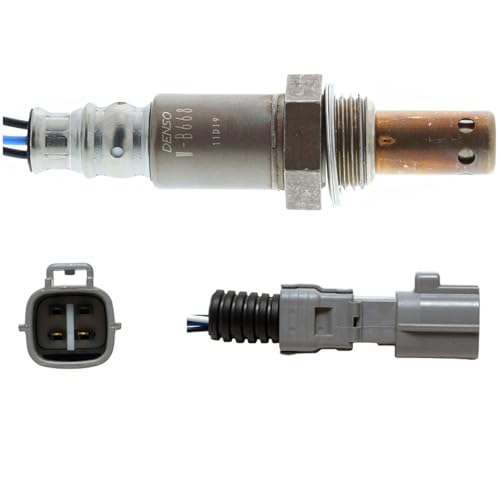
Connector details help distinguish a direct-fit replacement from a part requiring additional verification. Bosch specifies true direct-fit OE connectors and harnesses, while PulseVector lists a stock-style connector and an approximate 16.548-inch wire length.
For products with less electrical detail, compare the old sensor carefully. ATBIZZLE explicitly advises checking wire length and connector type. Sangyue, labwork, and Maxfavor provide package and fitment information but less connector detail in the supplied fields. The most suitable evidence-based approach is to compare the original plug, wire routing, sensor position, and listed reference number rather than relying on the Toyota model name alone.
The listings describe several construction features. Bosch identifies a double laser-welded stainless steel body and a fast-acting heater. BasaltAuto lists high-temperature-resistant materials, a dual laser-welded stainless steel body, rolled threads, and an anti-sintering agent. PulseVector specifies stainless steel housing and ceramic components. ATBIZZLE identifies ceramic components, precious-metal-coated electrodes, and a 310S stainless steel housing.
These details are useful for comparing documented specifications, but they do not replace fitment confirmation or establish real-world service life. Denso 234-4168 takes a different evidence profile: its listing emphasizes precision manufacturing and OE standards rather than providing a long material specification. That makes it a focused choice for the listed Highlander, Sienna, and Venza applications, provided the exact position and part number match.
Choose a single sensor or a complete set
A single sensor is appropriate when the diagnostic information identifies one failed position and the replacement listing matches that position. Bosch, Denso, NECATUO, and PulseVector are single-sensor listings in this selection. Multi-sensor sets are more relevant when the application calls for several sensors or when the listing explicitly covers both positions. BasaltAuto offers two separately identified positions for Corolla and Matrix vehicles, while the Prius, RAV4, Tacoma, Tundra, and Sequoia listings document larger sets.
Package count alone should not determine the choice. A four-piece set may include the correct number of units but still be unsuitable if the engine, year, connector, or position differs. Check the part numbers and package composition together.
Final recommendation
BasaltAuto 2-Piece Corolla and Matrix Sensor Set ranks first overall in this specification-based comparison under the published weighted criteria.
Bosch 13720 Premium OE Fitment Oxygen Sensor is the highest-scoring returned product and the first overall specification-based choice. It combines broad Toyota application documentation with direct-fit connectors, a stated harness, pre-coated threads, stainless steel construction, and heater information. The top toyota oxygen sensors for a particular vehicle may differ, however, when the repair requires a position-specific pair or a complete set.
For a targeted Toyota fitment, Denso 234-4168 offers a focused OE-standard specification for listed Highlander, Sienna, and Venza applications. BasaltAuto is the most clearly separated Corolla and Matrix pair, while NECATUO is a strong documentation match for selected upstream applications from 2012 through 2018. PulseVector is the clearest downstream option for its listed newer Toyota applications because it supplies connector and approximate wire-length details.
Truck, SUV, Prius, and RAV4 owners should prioritize package composition and engine fitment. ATBIZZLE, Sangyue, labwork, and Maxfavor each document multi-sensor configurations, but their application ranges are specific. The best toyota oxygen sensors are therefore the ones whose vehicle, engine, position, connector, and reference number all agree with the original component.
Frequently Asked Questions
How do I identify the best toyota oxygen sensors for my vehicle?
Check the vehicle year, model, engine, drivetrain where listed, sensor position, connector, wire length, and replacement number. A product should match all relevant details, not merely the Toyota name in its title.
Are upstream and downstream oxygen sensors interchangeable?
The supplied listings treat them as distinct positions. NECATUO is identified as upstream, PulseVector as downstream, and BasaltAuto gives separate upstream and downstream reference numbers. Match the position specified for your vehicle.
When should I choose a multi-sensor package?
Choose a multi-sensor package only when its stated contents and fitment match the repair. The Sangyue Prius set contains one upstream and one downstream sensor, while the labwork RAV4 and Maxfavor sets contain two of each. Package count should be checked against the vehicle configuration.
Compare the original plug, wire routing, and approximate harness length with the listing. Bosch specifies direct-fit OE connectors and harnesses, PulseVector specifies a stock-style connector and approximate wire length, and ATBIZZLE advises checking connector type and wire length before selection.
Do stainless steel housing and ceramic components prove compatibility?
No. Those are construction details, not vehicle-fitment proof. PulseVector, BasaltAuto, and ATBIZZLE document such materials, but you still need to match the exact Toyota application, engine, sensor position, connector, and reference number.