Buying Guide
Choosing among the best tv boxes starts with deciding what the box must do. Some products in this comparison are broad streaming hubs, while others are designed for antenna reception, authorized operator services, or local media. A television with an HDMI input can often work with several types, but the available services and required accessories differ substantially.
Choose streaming, broadcast, or local playback first
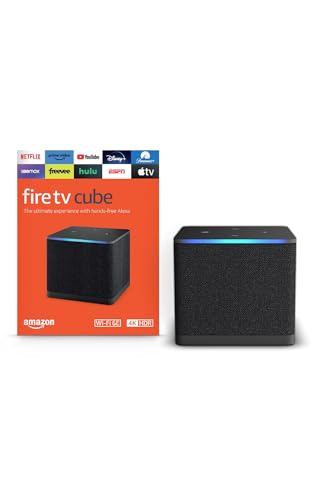
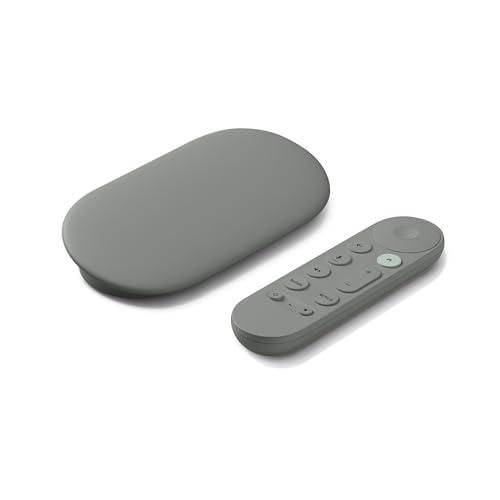
Mainstream streaming platforms are represented by the NVIDIA Shield Android TV Pro, Amazon Fire TV Cube, Google TV Streamer 4K, Xiaomi TV Box S 3rd Gen, and KICKPI KP1. These products document access to apps or smart-TV platforms, voice search, or casting. The Fire TV Cube adds hands-free control of compatible entertainment equipment. Google TV Streamer 4K and Xiaomi TV Box S 3rd Gen are particularly aligned with Google TV features and casting.
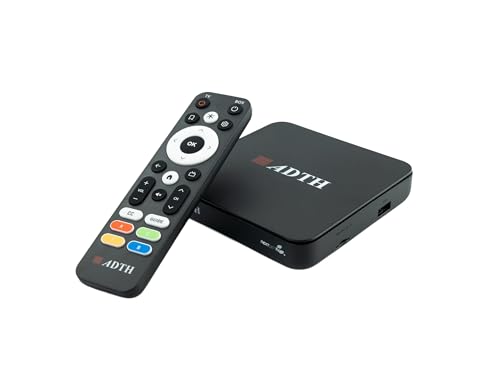
An antenna-based setup calls for a tuner rather than a general streaming player. The ADTH NextGen TV Box Gen 2 receives both ATSC 3.0 and ATSC 1.0 broadcasts and includes 64GB storage for DVR functions. It requires an antenna, and the availability of 4K broadcast signals depends on location. The ADTH is therefore a specialist choice for local channels, not a replacement for every streaming app.
The Infomir MAG544w3 serves a different purpose. Its listing describes a Linux environment optimized for authorized operator applications and Ministra PRO. That makes it relevant to service deployments and compatible operator systems, but it should not be assumed to provide the same general app experience as Google TV or Fire TV.
For downloaded applications and compatible files, the RINGREAT Android 14 TV Box with 128GB storage and the RINGREAT Android 15 W5 with 64GB storage offer the largest stated capacities among the selected Android boxes. The W5 also lists TF, USB, AV, HDMI, and optical connections, which may help when combining newer and older equipment.
Match picture and sound support to your television
4K output is widely represented, but the exact specification matters. The NVIDIA Shield TV Pro documents Dolby Vision, HDR, and AI upscaling from HD to 4K. The Fire TV Cube lists 4K, Dolby Vision, HDR, and Dolby Atmos. Google TV Streamer 4K lists 4K HDR and Dolby Vision, while Xiaomi TV Box S 3rd Gen adds HDR10+, Dolby Vision, Dolby Audio, and DTS:X.
The KICKPI KP1 lists 4K HDR and Dolby Digital Plus. The Infomir MAG544w3 specifies 4K at 60 frames per second, HDR, HEVC, AV1, and Dolby Digital Plus. These details can matter when the television or audio system supports the relevant formats. A box cannot add a format that the display or receiver does not accept, so check the rest of the signal chain before choosing based on a premium audio or HDR feature.
Several lower-cost Android boxes list 8K decoding or output. Those claims describe supplied specifications, not a hands-on verification or a guarantee that every application will provide 8K content. If your actual library is primarily 4K, prioritize a clear platform, supported apps, and compatible audio over a larger headline resolution.
Check wireless and wired connections
Wi-Fi 6 appears on the Google TV Streamer 4K, Xiaomi TV Box S 3rd Gen, RINGREAT models, EASYTONE, and several other Android boxes. The Fire TV Cube goes further on paper with Wi-Fi 6E. Wireless performance still depends on the router, distance, interference, and service connection, so a newer Wi-Fi label is not a substitute for a suitable home network.
Ethernet is useful when a wired run is available. The KICKPI KP1, Infomir MAG544w3, ADTH box, EASYTONE, and some Android models document Ethernet connections. The Infomir, ADTH, and EASYTONE listings specify 100Mbps Ethernet. This may be adequate for many compatible uses, but buyers should compare the port specification with their network hardware and local playback requirements.
Ports also determine how easily a box fits an existing setup. NVIDIA provides two USB 3.0 ports, while the Xiaomi model lists USB 2.0 and the Infomir model lists two USB 2.0 ports. The RINGREAT W5 adds dual USB, TF, AV, HDMI, and optical connections. The ADTH box uses HDMI for the display and coaxial input for an antenna. These are different connection priorities, so count the ports you actually need before buying.
Consider storage and memory realistically
Storage has two roles: installing compatible applications and keeping local files or recordings. Google TV Streamer 4K and Xiaomi TV Box S 3rd Gen list 32GB. KICKPI lists 16GB with USB expansion, while EASYTONE lists 16GB with TF expansion. NVIDIA identifies 3GB RAM and USB expansion but does not state internal storage in the supplied evidence.
The RINGREAT Android 14 model lists 128GB, and the RINGREAT W5 lists 64GB. Those capacities are attractive for local files and applications, but large storage alone does not establish app certification, update support, or performance in every use. The ADTH’s 64GB is specifically described for DVR recording, making its storage purpose clearer.
RAM and processor details should be read together with the platform. The Fire TV Cube lists an octa-core processor, NVIDIA lists the Tegra X1+ chip and 3GB RAM, and KICKPI lists 2GB RAM with Android TV 14. Other Android boxes list quad-core processors. These specifications help compare on paper, but they do not prove real-world speed or smoothness beyond the supplied descriptions.
Verify accessories and compatibility before ordering
The Xiaomi TV Box S 3rd Gen lists a voice remote, power adapter, HDMI cable, and manual. KICKPI lists a built-in HDMI cable. The RINGREAT W5 also lists a remote, HDMI cable, power adapter, and manual. Google TV Streamer 4K specifically notes that an HDMI 2.1 cable is required separately. The ADTH box requires an antenna, and its 4K broadcast capability varies by location.
Also confirm the television has the required input and that your audio equipment supports the advertised formats. If you need an optical connection, the RINGREAT W5 documents one; if you need an antenna tuner, select ADTH rather than a streaming-only model. These simple checks can prevent choosing a technically impressive box that does not match the intended room.
Final Recommendation
NVIDIA Shield Android TV Pro ranks first overall in this specification-based comparison under the published weighted criteria.
The final choice among the best tv boxes depends on the documented features that match your intended use.
NVIDIA Shield Android TV Pro is the highest-scoring returned product and the first overall specification-based choice for buyers who want a versatile home entertainment hub. Its combination of Tegra X1+, AI upscaling, Dolby Vision, Dolby Atmos, 3GB RAM, two USB 3.0 ports, and Plex Media Server support gives it the broadest documented feature mix in this comparison.
The Amazon Fire TV Cube is the better fit for hands-free control of compatible devices and a voice-led Fire TV setup. Google TV Streamer 4K and Xiaomi TV Box S 3rd Gen are balanced choices for Google TV, casting, 4K HDR, and stated storage. KICKPI KP1 provides a Google-certified Android TV-oriented alternative with Ethernet and USB expansion.
For specialized needs, choose the ADTH NextGen TV Box Gen 2 for ATSC 3.0 and ATSC 1.0 antenna reception with DVR storage, or the Infomir MAG544w3 for authorized operator-service integration. The RINGREAT W5, RINGREAT Android 14 model, and EASYTONE are more storage- or connectivity-focused Android options. Among the top tv boxes, the right choice depends less on a headline resolution and more on platform access, ports, audio compatibility, and whether you need streaming, recording, or local playback.
Frequently Asked Questions
Which of the best tv boxes is best for antenna television?
The ADTH NextGen TV Box Gen 2 is the clearest fit because it documents ATSC 3.0 and ATSC 1.0 reception, up to 4K HDR output, and 64GB DVR storage. It requires an external antenna, and broadcast availability varies by location. A streaming box such as the NVIDIA Shield Android TV Pro or Google TV Streamer 4K does not replace that dedicated tuner function based on the supplied evidence.
Do these tv boxes support 4K?
Most selected products list 4K output or decoding, including NVIDIA Shield Android TV Pro, Amazon Fire TV Cube, Google TV Streamer 4K, Xiaomi TV Box S 3rd Gen, KICKPI KP1, Infomir MAG544w3, ADTH, and several Android boxes. Actual viewing also depends on the television, application, source content, cable, and compatible network. The supplied listings are specifications, not independent performance tests.
Is Wi-Fi 6 necessary for a streaming box?
It is not automatically necessary. Wi-Fi 6 is documented on products such as Xiaomi TV Box S 3rd Gen, Google TV Streamer 4K, EASYTONE, and the RINGREAT models. A compatible router and suitable signal are still required. If a wired connection is more practical, consider a selected product that lists Ethernet, such as KICKPI KP1, Infomir MAG544w3, ADTH, or EASYTONE.
Which selected box has the most storage?
The RINGREAT Android 14 TV Box lists 128GB of internal storage. The RINGREAT W5 and ADTH box list 64GB, while Google TV Streamer 4K and Xiaomi TV Box S 3rd Gen list 32GB. Storage should be matched to its documented purpose: the ADTH capacity is specified for DVR recording, while the Android models describe application or local-media use.
What should I check before buying one of the best tv boxes?
Confirm the television input, required cable, network type, audio compatibility, and whether you need a general streaming platform or a specialized tuner. Google TV Streamer 4K notes that an HDMI 2.1 cable is required separately. ADTH requires an antenna. If you want local storage or older audio connections, review the listed USB, TF, AV, optical, and Ethernet ports before choosing.