Buying Guide
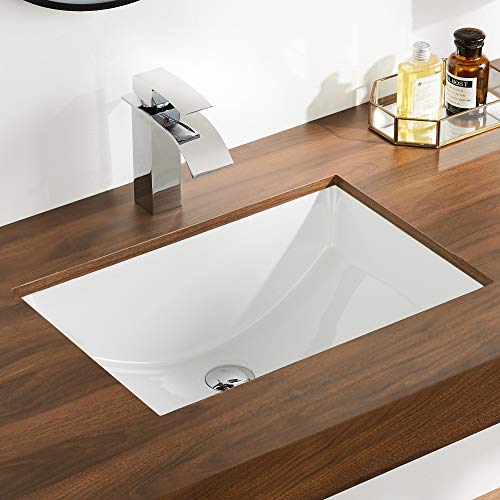
The best undermount bathroom vessel sinks are selected less by a single headline feature than by how well their documented dimensions, basin shape, material, drain details, and installation requirements fit a vanity. An undermount basin sits below the countertop surface, so the visible result depends heavily on the countertop cutout and the relationship between the rim, cabinet, faucet, and plumbing.
This comparison uses public listing data. It is not a hands-on test, and it does not summarize customer opinions. Product descriptions can also contain nominal measurements or wording inconsistencies, so treat the listed dimensions as planning information rather than a substitute for measuring the actual sink.
Start with the countertop cutout
Do not cut the vanity top from a general size such as 18 or 20 inches alone. The Hugsleek, for example, lists both a 16-1/10 by 11-current listing information-inch interior and an exterior around 18 by 13 inches. The DeerValley DV-1U101 lists a much larger 18.98 by 12.6-inch interior within a 21.06 by 14.72-inch exterior. Those differences affect usable bowl space, countertop margins, faucet placement, and cabinet clearance.
Several listings specifically recommend receiving the sink before tracing the opening. That is sensible because nominal measurements may not describe every edge precisely. Confirm the actual length, width, height, rim profile, drain location, and overflow position before fabrication. Also check whether the countertop material and installer support the selected undermount method.
Match the shape to the room
Rectangular sinks dominate this selection and can make efficient use of a long vanity. The Lordear LUF1814 and MEJE 202F are conventional rectangular choices with documented interior dimensions. The Mocoloo adds vertical sides, while the Hontzes HCBVS-02 offers a lower listed exterior height. These distinctions may matter when a bathroom has limited front-to-back space or when the vanity design calls for a more structured interior.
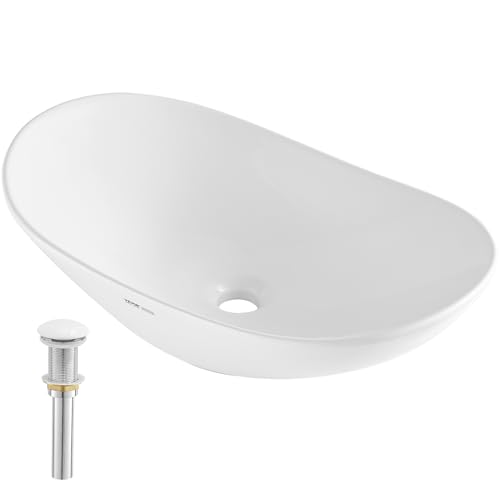
An oval shape can soften a room visually. A square shape can be useful when the counter design is organized around equal dimensions; the selected KINGWONG model lists a 16.17-inch square exterior. Choose the shape that fits the cabinet and the desired countertop margins rather than choosing by appearance alone.
Compare ceramic, porcelain, and fireclay evidence
Most selected products describe ceramic or porcelain construction with a glazed surface. The Lordear listing specifies solid porcelain and triple glazing. The Mocoloo and GhomeG listings describe glazed ceramic or porcelain surfaces, while CHIKESI identifies vitreous china with a thick glazed coating. These details are relevant because a smooth, non-porous or low-absorption finish is generally presented as easier to wipe clean in the supplied evidence.
The Hugsleek stands apart by identifying natural fireclay fired above 2300°F. That is a useful material distinction, but it should not be treated as proof of performance beyond the supplied description. Look for clear information about the body material, glaze, finish, and care expectations. Avoid assuming that similar white finishes have identical composition or maintenance requirements.
An overflow opening can help route water away from the countertop if the basin is overfilled, and every selected product with an overflow should still be installed with appropriate plumbing. The Hugsleek, DeerValley DV-1U101, Lordear LUF1814, Mocoloo, Hontzes HCBVS-02, Sarlai, MEJE 202F, CHIKESI, KINGWONG, and GhomeG listings all document overflow in some form.
Drain sizes are not identical across the group. Check the drain compatibility before ordering. A faucet and drain are often not included; Lordear, Mocoloo, Sarlai, Hontzes, CHIKESI, KINGWONG, and GhomeG explicitly identify at least some excluded accessories. The MEJE 202F also has no faucet holes and requires a wall- or counter-mount faucet.
Evaluate installation support
Included hardware can simplify preparation, but it does not remove the need for correct countertop bonding, support, sealing, and plumbing. Hugsleek lists hardware and a cutout template. Mocoloo lists installation hardware and a template. Lordear, Hontzes, Sarlai, and MEJE identify mounting clips or hardware. Other listings provide dimension and installation information without listing a full hardware package.
Review the exact package contents before purchase. A template, clips, and instructions are helpful, but the countertop fabricator may use a different template or require a verified physical sink. The cabinet also needs enough width and depth.
A larger exterior does not always mean a proportionally larger interior. Compare the inner dimensions as well as the outside size. DeerValley provides one of the largest documented interiors in this group. CHIKESI and Hugsleek are better suited to compact layouts, while the KINGWONG square design uses width differently from a long rectangle.
Depth can affect splash containment, hand clearance, and the visual relationship between the sink and faucet. Lordear lists an 8-1/4-inch exterior depth, while Hontzes lists 6.1 inches and MEJE lists a six-inch interior depth. These measurements are not directly interchangeable, so confirm whether a number refers to exterior height, interior depth, or another dimension.
Final recommendation
Hugsleek 16 x 11-Inch Fireclay Rectangle Sink ranks first overall in this specification-based comparison under the published weighted criteria.
Hugsleek is the first overall specification-based choice among the best undermount bathroom vessel sinks because it combines fireclay construction, a glazed surface, overflow, sloped drainage, a standard-size drain opening, and included hardware and template information. It is especially compelling for a compact vanity where the 16-1/10 by 11-current listing information-inch interior is sufficient.
For more washing room, DeerValley DV-1U101 is the stronger large-basin alternative, with a documented 18.98 by 12.6-inch interior. Lordear is a practical middle-ground choice when a deeper rectangular profile and mounting clips matter. Choose Sarlai when an oval silhouette better suits the vanity, KINGWONG when square geometry is intentional, and CHIKESI when the available counter is genuinely small.
The top undermount bathroom vessel sinks still require careful installation planning. Verify the physical sink, cabinet requirements, countertop cutout, faucet arrangement, overflow compatibility, and drain size before fabrication. Public listing specifications are useful for narrowing the field, but the final fit depends on the actual product and the vanity system.
Frequently Asked Questions
Among the best undermount bathroom vessel sinks, are undermount vessel sinks installed above or below the countertop?
The selected products are described as undermount or under-counter sinks, meaning the basin is intended to sit below the countertop edge. The countertop opening, support method, sealant, and plumbing must be handled according to the countertop material and installation instructions. Confirm the physical rim and cutout before installation.
What countertop size should I use for these sinks?
There is no single countertop size for the group. Hugsleek lists an exterior around 18 by 13 inches, while DeerValley DV-1U101 lists about 21.06 by 14.72 inches. CHIKESI is much smaller at 16.14 by 10.24 inches. Measure the actual sink and leave suitable countertop margins, faucet space, and cabinet clearance.
Do these sinks include faucets or drains?
Usually not. Several listings explicitly exclude faucet and drain sets, and GhomeG specifically says the drain is not included. MEJE 202F has no faucet holes, so it requires a wall- or counter-mount faucet. Check the selected product’s package contents and match the drain to the listed opening.
Is an overflow important in a bathroom sink?
An overflow is a useful basin feature that may help limit water reaching the countertop when the sink is overfilled. It does not replace attentive use or correct plumbing. The selected products document overflow designs, but buyers should still confirm that the drain assembly is compatible with an overflow basin.
Which shape is best for a small bathroom?
A compact rectangle such as CHIKESI may suit a small vanity, while the square KINGWONG uses a more even footprint. An oval such as Sarlai can change the visual profile but still requires sufficient counter depth and clearance. Compare both exterior and interior dimensions before choosing a shape.