Buying Guide
The best vegetarian ginkgo biloba supplements are not interchangeable based on the herb name alone. The supplied listings differ in how precisely they identify the extract, how clearly they state the serving, and how much information they provide about dietary suitability and manufacturing. A practical comparison should begin with the label details that can be verified from the listing rather than with broad wellness language.
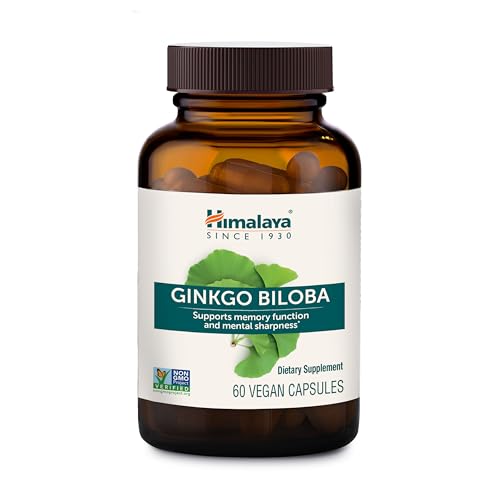
Look for explicit vegan or vegetarian wording, not merely a plant-based product title. Zazzee identifies a vegan capsule and USDA organic ingredients, while Himalaya, NOW Foods, Doctor’s Best, Nature’s Way, Futurebiotics, MRM Nutrition, Herbal Roots, and Amazing Formulas provide direct vegan or vegetarian descriptions. DEVA adds Vegan Society certification and says its tablets contain no animal products or derivatives.
Capsule material is particularly important because a ginkgo ingredient may be plant-derived while the capsule uses a different material. The selected products with explicit vegan capsule language make that point easier to verify. Nature’s Way also specifically excludes gelatin. For shoppers avoiding particular allergens, NOW Foods lists soy, nut, gluten, dairy, egg, and corn exclusions, while Himalaya lists dairy, soy, and corn exclusions. These statements are product-specific, so check the current package if your dietary requirements are strict.
Compare standardization markers
Standardization gives a more useful comparison point than a generic claim that a product contains ginkgo. Zazzee lists a minimum 24% ginkgo flavone glycosides and a 20:1 extract. Himalaya, Doctor’s Best, and Nature’s Way each identify 24% flavone-related content plus 6% terpene lactones. NOW Foods lists a 24% standardized extract.
These percentages should not be treated as proof of a particular outcome. They are simply label specifications that help distinguish a documented extract from a listing that gives little technical detail. DEVA documents 300 mg of organic ginkgo in tiny tablets but does not supply the same flavone or terpene percentages. MRM Nutrition describes its PureLeaf extract as standardized and tested, yet the supplied evidence does not state the percentage. Herbal Roots and Amazing Formulas likewise provide useful quality information without giving those markers.
Check the stated amount and serving
A milligram number is meaningful only when paired with a serving description. Doctor’s Best states 120 mg in one capsule, and Himalaya lists 120 mg with its daily capsule format. NOW Foods also describes 120 mg in one veggie capsule daily with a meal. Amazing Formulas gives 60 mg per serving, one veggie capsule per serving, and 120 servings.
Nature’s Way is different: its listing says adults take two capsules once daily, so the capsule count should be read alongside the directions. MRM Nutrition identifies a 60 mg serving and one vegetarian capsule daily with food. Zazzee supplies an extract ratio and flavone percentage but the supplied listing does not state a comparable milligram serving. Herbal Roots provides no stated milligram amount in the supplied evidence. Those differences matter when building a like-for-like comparison.
Review quality documentation
Quality information can include named certifications, testing, or manufacturing controls. NOW Foods cites NPA A-rated GMP certification and Non-GMO Project Verified status. Zazzee identifies USDA organic certification and production in the USA at a certified facility. Herbal Roots lists a cGMP-certified facility and third-party testing. Amazing Formulas states third-party testing, GMP standards, and US manufacturing.
Futurebiotics describes a cGMP-registered New York facility and in-house testing. Doctor’s Best names its ProfileProven Quality Assurance system, while Nature’s Way identifies Non-GMO Project Verified status. These details do not establish clinical effectiveness, but they make the public specification record more informative. A listing with fewer technical details should not automatically be assumed to have weaker manufacturing; it simply offers less evidence for this comparison.
Most selected products are capsules, but the format range is wider. DEVA uses tiny tablets, which may appeal to shoppers who prefer that design. Capsules from Himalaya, NOW Foods, Doctor’s Best, MRM Nutrition, and Amazing Formulas provide a familiar daily format. Zazzee offers 120 vegan capsules, while Herbal Roots lists 60 vegan capsules.
Serving count also varies. Amazing Formulas documents 120 servings, and NOW Foods, Zazzee, Futurebiotics, and MRM Nutrition list 120-count bottles. Nature’s Way lists 60 capsules with a two-capsule serving. A larger count does not by itself indicate a better formula; compare it with the stated serving and extract details.
Read claims with appropriate caution
Several listings use language about memory, focus, circulation, or brain function. Those are marketing or structure-function claims supplied by the product pages, not findings from our testing. This guide does not verify those claims or recommend ginkgo for a medical condition. If you take medication, have a health condition, or are considering an herbal supplement for a specific concern, ask a qualified healthcare professional before use. Follow the product label rather than inferring a serving from another product.
Final Recommendation
Doctor’s Best Extra Strength Ginkgo 120 mg ranks first overall in this specification-based comparison under the published weighted criteria.
Zazzee USDA Organic Ginkgo Biloba 20:1 Extract is the first overall specification-based choice among these best vegetarian ginkgo biloba supplements because it combines vegan and USDA organic credentials with a 20:1 extract and minimum 24% flavone glycosides. For a clearly stated 120 mg serving with both flavone and terpene markers, Himalaya and Doctor’s Best are strong alternatives. NOW Foods is a useful pick when certification and dietary exclusions are priorities.
The top vegetarian ginkgo biloba supplements are not defined by one universal format. DEVA suits shoppers who prefer tiny tablets, MRM Nutrition provides a clearly stated 60 mg vegan serving, and Amazing Formulas emphasizes a one-capsule, 120-serving format. Herbal Roots is notable for organic and additive-free documentation, while Futurebiotics supplies detailed facility and testing information. Compare the serving, standardization, dietary statement, and quality evidence that best match your own checklist.
Frequently Asked Questions
What should I compare in the best vegetarian ginkgo biloba supplements?
Start with explicit vegan or vegetarian wording, the stated serving amount, extract standardization, and quality documentation. A listing that identifies flavone glycosides or terpene lactones offers more technical comparison detail than one that only names ginkgo. Also check whether the daily serving is one capsule, two capsules, or a tablet.
No. Vegan capsules are usually described as capsules made without animal-derived ingredients, while tablets are compressed solid forms. DEVA documents tiny tablets and Vegan Society certification. The capsule products in this comparison use their own stated dietary descriptions, so read each listing rather than assuming all formats have identical ingredients.
Which selected product documents both flavone and terpene markers?
Himalaya, Doctor’s Best, and Nature’s Way list 24% flavone-related content and 6% terpene lactones. Zazzee lists a minimum 24% ginkgo flavone glycosides but does not provide the same terpene figure in the supplied evidence. These are specification differences, not guarantees of results.
Is a higher milligram number automatically preferable?
No. Milligrams, extract ratios, and standardization percentages describe different aspects of a formula. DEVA lists 300 mg, while several products list 120 mg with standardized extract details. Compare the complete serving information and follow the package directions instead of ranking products by the largest number alone.
What should I do before using a ginkgo supplement?
Review the current label and discuss the product with a qualified healthcare professional if you take medication, have a medical condition, or are using ginkgo for a specific health concern. The product listings provide comparison information, not individualized medical advice.