Buying Guide
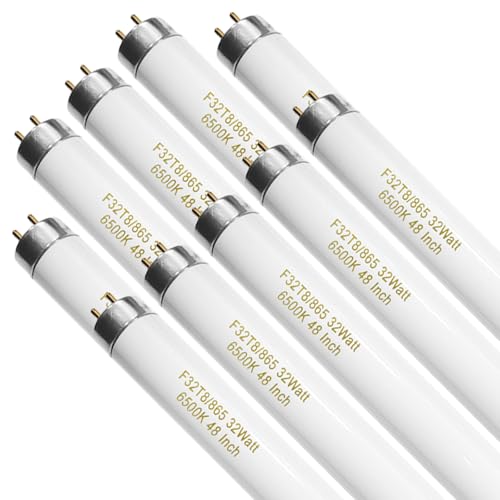
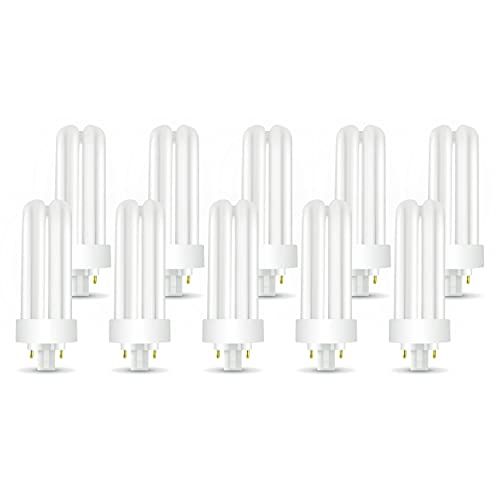
Warm fluorescent bulbs are not one interchangeable format. The best warm fluorescent light bulbs for a short under-cabinet fixture may be a 12-inch T5 tube, while a four-foot ceiling fixture may require a 48-inch T8. Compact fluorescent lamps add another category of fit because they use screw or twist-lock bases rather than the bi-pin connections found on linear tubes. Start with the fixture, then compare light characteristics.
Measure the existing lamp before considering color temperature or pack size. Linear products in this selection range from 12 inches to 48 inches. A 21-inch tube and a 22-inch tube are different replacement categories even though the difference appears small. The 24-inch T12 option also requires a fixture designed for that tube diameter and base arrangement.
Base style is equally important. G5 mini bi-pin bases appear on the shorter T5 products, while G13 medium bi-pin bases are used by the 24-inch T12 and 48-inch T8 options. Circline bulbs use G10q four-pin connections. Compact fluorescent products use either a standard medium screw base or a GU24 two-pin twist-lock base. Do not assume that a bulb will fit because its wattage or color appears similar.
Choose the warmth level
Color temperature provides the clearest comparison. The linear tubes here generally list 3000K, a warm white that is often suitable for kitchens, baths, counters, closets, and utility areas. The 48-inch Konideke tube is listed at 3500K, which is still described as warm white but should look more balanced and less amber than a 3000K tube.
The compact fluorescent choices list 2700K soft white. That lower color temperature is typically the more traditional warm appearance for bedrooms, living spaces, dining areas, lamps, and household fixtures. One circline listing references both 2700K and 3000K, so its packaging should be checked if color consistency matters.
Compare output with fixture needs
Lumens describe the listed light output more directly than wattage. The 48-inch Konideke tube lists 2850 lumens, making it the most clearly specified choice for broad-area illumination. The 24-inch Master Of Light tube lists 1200 lumens, while the nine-inch and mixed-size circline products list 1850 lumens or 1400 and 2400 lumens depending on the bulb.
For shorter under-cabinet applications, the 21-inch Konideke tube lists 800 lumens and the 12-inch KOR tube lists 480 lumens. These figures should be considered alongside the fixture’s reflector, diffuser, and intended task. A high-lumen tube may not be appropriate for a small enclosed cabinet fitting, and a lower-output tube may be adequate for accent or localized lighting.
Several products do not provide lumen figures. The Circle 12-inch and 21-inch tubes document color, wattage, length, and life but not output. That does not make them unusable, but it makes direct brightness comparison less certain. Avoid treating wattage alone as a brightness guarantee.
Consider rated life and pack size
Rated life is useful for planning replacement frequency, especially when a fixture is difficult to reach. The Circle 12-inch and 21-inch products list 20,000-hour average life. The KOR 21-inch tube lists up to 20,000 hours, and the 48-inch Konideke tube also lists up to 20,000 hours. Other selections list 10,000, 12,000, 15,000, or 16,000 hours.
Pack size affects how conveniently you can replace matching lamps. Six- and eight-pack linear products work well when several fixtures use the same format. A two-pack may be more appropriate for a single fixture or a small maintenance reserve. The circline set is unusual because it combines two sizes; that adds flexibility only if both formats match fixtures you own.
Check ballast and dimming details
A fluorescent tube depends on the fixture’s electrical system. The 24-inch Master Of Light listing identifies preheat and rapid-start operation and says it is not dimmable. The Circle 12-inch product is also listed as not dimmable. The circline listings advise checking the existing ballast and plug, and the 18-inch replacement listings note that a failed ballast can prevent the bulb from lighting.
This is why replacement should not be treated as a simple wattage swap. If an old tube flickers, lights at only one end, or fails to start, the ballast or starter may also need attention. Follow the fixture manufacturer’s requirements and turn off power before installation. For fluorescent tubes, handle the glass carefully and confirm the socket orientation before twisting the lamp into place.
Decide between linear, circline, and CFL designs
Linear T5, T8, and T12 tubes are the logical choices for elongated under-cabinet, utility, commercial, or ceiling fixtures that already use those formats. Circline bulbs are made for circular fixtures and can be a suitable replacement for certain kitchen, bath, or ceiling-fan lights. Compact fluorescent spirals are more appropriate when the fixture uses a medium screw base or GU24 socket.
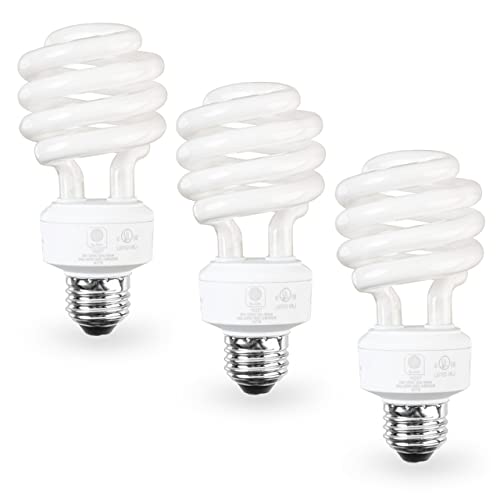
The medium-base UNITEDLUX model is included because its 1040-lumen output, 2700K color, CRI 82, and standard household base provide a clearer fit case.
Final recommendation
Konideke F32T8/835 48-Inch Warm White Tubes ranks first overall in this specification-based comparison under the published weighted criteria.
Konideke F32T8/835 48-Inch Warm White Tubes is the first overall specification-based choice among these best warm fluorescent light bulbs because it combines a standard G13 base, strong documented output, a 20,000-hour rating, and a bulk pack. It is the best match for a compatible four-foot fixture rather than a universal recommendation.
For a shorter, high-output tube, Master Of Light F20T12/WW 24-Inch Tubes are a focused alternative with 1200 lumens and 3000K color. Buyers with circular fixtures should choose between the CHKADAWA FC8T9 and FC12T9 set and the nine-inch FC9T9 option according to diameter and connector. For conventional lamps, the UNITEDLUX 13W Medium-Base Spiral CFL is the more relevant choice.
The top warm fluorescent light bulbs therefore depend on physical compatibility as much as color. Confirm length, tube family, base, wattage, ballast, and dimming requirements before ordering.
Frequently Asked Questions
Among the best warm fluorescent light bulbs, what makes a fluorescent bulb warm white?
The listed color temperature is the primary indicator. Products at 2700K are described as soft white, while many linear selections use 3000K warm white. The 3500K four-foot tube is also marketed as warm white but should appear more neutral than a 2700K lamp.
Are all T5 fluorescent tubes interchangeable?
No. T5 tubes can differ in length, wattage, base, and fixture requirements. For example, the selected products include 12-inch, 21-inch, and 22-inch formats. Measure the old lamp and confirm its base before purchasing. A 21-inch F13T5 tube should not be treated as a substitute for a 22-inch F14T5 tube without fixture confirmation.
What base does a circline bulb use?
The selected circline products use a G10q four-pin base. Their circular shape and diameter also matter, so check both the old bulb’s size and the fixture connection. The nine-inch bulb and the mixed eight- and 12-inch set are different use cases.
Can these warm fluorescent bulbs be dimmed?
The available evidence specifically identifies the Circle 12-inch and Master Of Light 24-inch products as not dimmable. For other products, the supplied data does not establish dimming compatibility. Treat an unlisted feature as unconfirmed and consult the fixture and bulb documentation.
Which should I choose for a standard household lamp?
The UNITEDLUX 13W Medium-Base Spiral CFL uses a standard medium screw base and is listed for household rooms, lamps, offices, and similar fixtures. Confirm that the lamp accepts compact fluorescent bulbs and that its enclosure and operating requirements are compatible before installation.