Buying Guide
Choosing the best wood lathe turning tools starts with identifying the kind of cutting you expect to do. A pen turner, a bowl maker, and a beginner building a general-purpose bench will not need the same profiles or reach. The products above fall into two main design families: traditional steel chisels and carbide tools with replaceable or rotatable inserts. The right choice depends on the balance you want between profile familiarity, maintenance, reach, and included accessories.
Carbide or traditional HSS?
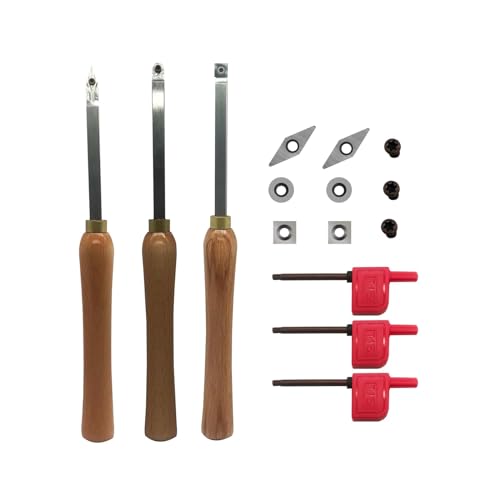
Carbide tools use a mounted insert rather than a conventionally ground cutting edge. Several selected sets, including RUITOOL, VINWOX, DEEFIINE, SIIIXS, and ASZLBYM, describe indexable or rotatable carbide tips. When an edge becomes dull, the user can rotate the insert to expose another edge; the listings also describe replacement inserts for some products. This can simplify edge management for a beginner, but it does not make every cutting decision automatic. The tool still needs to be presented steadily on the rest and matched to the work.
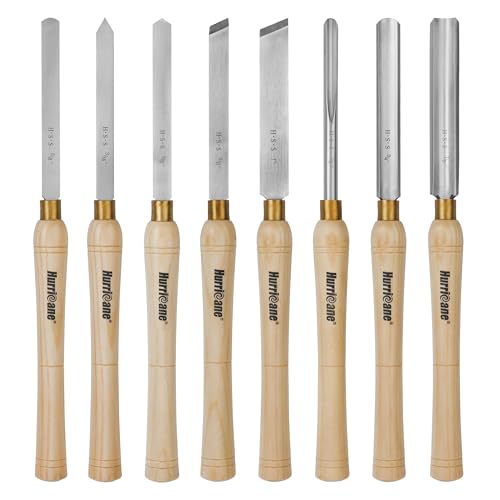
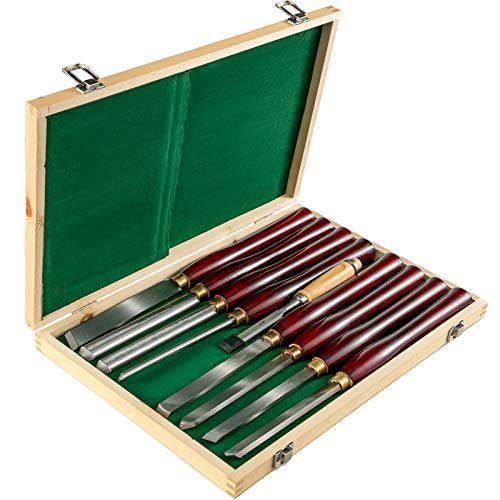
Traditional HSS sets use recognizable profiles such as bowl gouges, spindle gouges, roughing gouges, skews, scrapers, and parting tools. HURRICANE, HAUTMEC, VEVOR, and Urbansential document these designs. HSS is a useful choice when you want to learn conventional turning cuts or maintain a set by sharpening and reshaping the edges. The listing evidence supports blade material and included profiles, but it does not establish actual edge life or cutting performance in use.
Match profiles to the work
Profile variety matters more than the piece count printed in a title. A set with a rougher, detailer, and finisher may be a sensible focused carbide lineup, as shown by ASZLBYM. A broader kit may be better when you want hollowing or bowl work. RUITOOL lists five carbide shapes, including a gooseneck, while VINWOX lists a swan-neck hollowing tool along with rougher, finisher, and detailer tools. DEEFIINE also lists a swan-neck cutter in both its selected carbide packages.
For conventional turning, look at the actual profile list. HURRICANE includes a bowl gouge, roughing gouge, spindle gouge, two skews, a parting tool, and a scraper. HAUTMEC provides two skews, a spear point, a parting tool, a round nose, and three gouges. VEVOR lists three gouges, two skews, a round-nose scraper, and two parting tools. Urbansential narrows the selection to five mini tools, which makes sense for pens and detail projects but is less suitable when large material removal is the priority.
A square shaft is a recurring feature in the carbide products selected here. DEEFIINE, RUITOOL, SIIIXS, VINWOX, and ASZLBYM describe square stainless steel or square tool bars. The supplied listings say these profiles are less likely to roll and can keep a flat back against the tool rest. That is a design consideration, not proof of superior results in every setup. Check that the shaft dimensions and handle arrangement suit your lathe and rest before buying.
VEVOR’s selected HSS kit describes an arc-shaped, round-bar construction. Traditional tools can still be useful in that format, but the handling approach differs from a square carbide bar. The evidence does not provide a universal rule that one shaft style is better. Instead, choose the geometry that matches the way you expect to support and guide the tool.
Evaluate handle length and control
Handle design becomes more important as the project gets larger or the cut requires leverage. HURRICANE documents 10-inch solid hardwood handles, while HAUTMEC and VEVOR describe hardwood handles with ferrules. SIIIXS emphasizes long rubber handles with anti-slip and shock-absorption features. These details can help you compare the intended handling characteristics, but they do not replace checking the tool’s balance or your available working space.
Reach is a defining feature of VINWOX and RUITOOL. VINWOX describes two aluminum handles that can connect, with lengths from 14 to 29 inches. RUITOOL lists a 550 mm extended handle. DEEFIINE includes an extension handle or bar in its selected sets. Such features are relevant for deep or large work, but extra length can be unnecessary for small projects and may make storage or positioning more complicated.
Decide whether sanding accessories matter
Some of the best wood lathe turning tools in this comparison are combination kits rather than cutting-only sets. RUITOOL includes a bowl sander, two mandrels, interface pads, and 50 sanding discs listed from 60 to 320 grit. SIIIXS includes a bowl sander and a one-inch HSS roughing gouge. The selected DEEFIINE bowl-sander kit also documents a bowl-sanding accessory. These packages may suit someone who wants to move from shaping to surface preparation without assembling separate accessories.
A sanding attachment should not be treated as a replacement for a complete set of cutting profiles. If your priority is learning gouge and skew work, HURRICANE, HAUTMEC, or VEVOR provides more directly relevant conventional profiles. If you already own chisels and want a finishing add-on, a combination carbide kit may be the more logical direction.
Check storage and maintenance details
Storage can protect edges, simplify transport, and keep small inserts or wrenches together. HURRICANE, VEVOR, Urbansential, DEEFIINE, RUITOOL, and some other selected products document wooden or aluminum cases. ASZLBYM documents plastic case packaging, while the carbide listings commonly include wrenches, screws, or spare inserts. These inclusions make a kit easier to organize, but they are not evidence of long-term durability.
Maintenance also differs by design. Carbide inserts can be rotated or replaced according to the supplied descriptions. HSS and other steel blades need sharpening or resharpening as the edge wears. The Urbansential listing advises pre-sharpening, while HURRICANE and HAUTMEC describe factory-sharpened or ready-to-use edges. Treat those statements as setup information rather than a prediction of how long an edge will last.
How this comparison was scored
This is a specification-based comparison using the supplied public listing data, not a hands-on test and not a summary of customer opinions. The editorial score uses five category-specific criteria: turning profile variety, blade material and edge design, handle ergonomics and control, reach and project coverage, and storage and kit completeness. Each product was scored from 0 to 10 on every criterion using its documented features. Volatile marketplace signals were not used in the published criteria, and no customer sentiment or performance result is inferred.
Final Recommendation
RUITOOL Carbide Tools Set with Bowl Sander ranks first overall in this specification-based comparison under the published weighted criteria.
The final choice among the best wood lathe turning tools depends on the documented features that match your intended use.
RUITOOL Wood Lathe Tools Set with Carbide Lathe Tools and Bowl Sander is the highest-scoring returned product and the first overall specification-based choice. Its five carbide profiles, extended handle, bowl sander, mandrels, sanding discs, and aluminum case give it the broadest documented project coverage in this group. It is particularly compelling for a turner who wants shaping and bowl finishing in one package.
The top wood lathe turning tools are not identical substitutes. Choose HURRICANE if you want a conventional M2 HSS assortment with long hardwood handles and a wooden case. Choose VINWOX if adjustable handle length and hollowing capability matter. ASZLBYM is the more focused carbide trio, while Urbansential is the better-defined fit for pens and small projects. Buyers who prioritize traditional profiles should compare the HSS sets by their actual gouge, skew, scraper, and parting-tool selection rather than by piece count alone.
Before ordering, confirm that the tool length, shaft style, handle reach, and included accessories suit your lathe and work area. Also decide whether you are prepared to sharpen traditional steel or prefer the documented rotate-or-replace approach of carbide inserts. Those checks will narrow the list more reliably than a generic claim about performance.
Frequently Asked Questions
A beginner can reasonably start with a clearly organized profile set or a simple carbide trio. HURRICANE provides a broad conventional assortment with a stated factory edge and storage case. ASZLBYM keeps the carbide lineup focused on roughing, detailing, and finishing, while DEEFIINE offers more carbide shapes and an extension option. The better fit depends on whether you want to learn traditional sharpening and cutting profiles or begin with indexable inserts.
The supplied evidence does not establish that one material is universally better. Carbide sets such as RUITOOL, VINWOX, and SIIIXS document rotatable or replaceable inserts, which may simplify edge management. HSS sets such as HURRICANE and VEVOR document conventional gouges, skews, scrapers, and parting tools that can be resharpened. Choose based on the profiles you want, the maintenance method you prefer, and the type of turning you plan to do.
RUITOOL and VINWOX have the clearest documented reach features. RUITOOL lists a 550 mm extended handle, while VINWOX describes connectable aluminum handles reaching up to 29 inches and includes a swan-neck hollowing tool. DEEFIINE also includes an extension handle or bar. These specifications suggest suitability for deeper work, but the listings do not provide hands-on results or a universal maximum depth.
Some do. RUITOOL includes a bowl sander, mandrels, interface pads, and sanding discs. SIIIXS lists a bowl sander and a one-inch HSS roughing gouge, and DEEFIINE has a selected kit with a bowl sander. The other selected products are primarily cutting-tool sets. Check the included accessory list carefully because not every carbide package provides sanding equipment.
Check the cutter or chisel profiles first, then confirm shaft shape, handle length, blade material, and storage contents. For carbide, verify that compatible inserts, screws, and wrenches are included or available. For HSS, consider whether the set has the gouges, skews, scrapers, and parting tools needed for your work and whether you have a sharpening plan. Finally, compare the tool length with your lathe, tool rest, and available workspace.