Buying Guide
Choosing among the best power lathes starts with identifying the material and the largest workpiece you expect to turn. The products in this comparison divide into two clear groups: wood lathes for bowls, pens, cups, vases, and similar work, and metal lathes for parts, models, threading, and operations such as facing or tapering. A machine’s advertised motor size is useful, but it should be considered alongside capacity, speed control, construction, and the included operating features.
Match the lathe to the material
Wood lathes generally emphasize swing over bed, distance between centers, tool rests, faceplates, live centers, and speed adjustment. The Record Power Coronet Herald documents a 21-inch bowl capacity when used with its optional outrigger, while the JET JWL-1221VS provides a 12-by-21-inch format. Those specifications are more relevant to bowl and spindle work than a motor number alone.
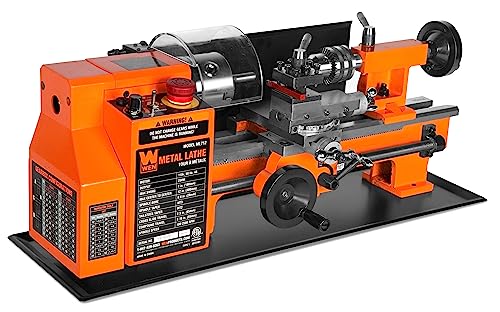
Metal lathes use a different configuration. The WEN ML712 lists a 3-jaw chuck, tool post, threading dial, and adjustable auto feed. The VEVOR 8.3-by-29.5-inch model adds digital speed control, metal gears, and documented metric and imperial threading. PeakPursuit also lists a 3-jaw chuck, compound rest, four-way tool post, and auto-feed option. These features make the metal models appropriate for a different class of work than woodturning machines.
Check capacity before motor power
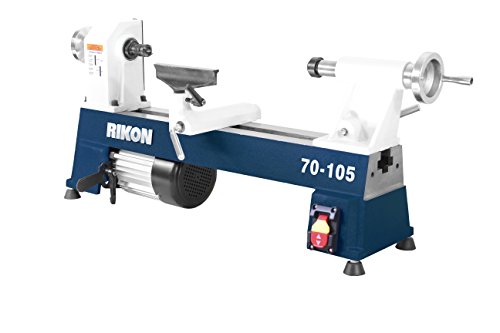
Capacity determines whether a machine can physically accommodate your project. For wood, compare swing or maximum diameter with distance between centers. The WEN 3421 is specified for workpieces up to 12 inches long and 8 inches wide, making it a small-project machine. RIKON’s 70-105 lists a 10-inch swing and 18-inch distance between centers, giving it more room for pen-focused work and other compact pieces.
For a larger benchtop wood lathe, the 12-by-18-inch VEVOR WL1218V, 12-by-16-1/2-inch QD-KYOHO WL1216B, and 12-by-21-inch JET offer different ways to balance footprint and capacity. The QD-KYOHO listing also documents optional bed extensions and outboard bowl turning, which may matter if your projects are likely to grow. Confirm whether an extension or stand is included before planning around the maximum figure; the Record Power stand is explicitly separate.
Metal-lathe capacity should be read with the diameter and length format in mind. WEN’s 7-by-12-inch specification is compact, while PeakPursuit’s title gives a 9-by-30-inch format and VEVOR lists 8.3 inches by 29.5 inches. These figures are not interchangeable with wood-lathe swing numbers, so compare machines within the same material category and verify that the chuck, tool post, and tailstock configuration suit the stock you intend to use.
Understand speed control
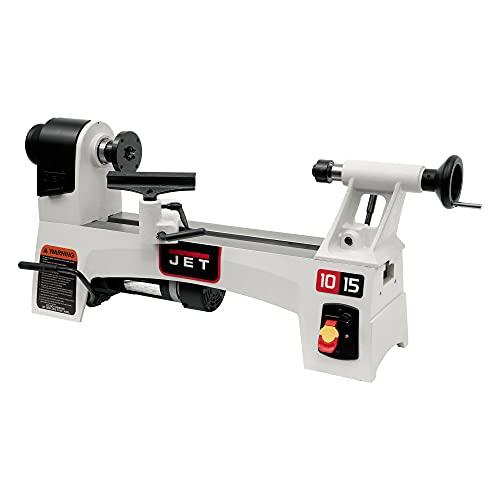
Variable speed is useful when workpiece size, material, or operation changes. The Coronet Herald offers electronic control from 95 to 3890 RPM and three pulley ratios. JET’s JWL-1221VS uses three ranges from 60 to 3600 RPM, while the JWL-1015VS uses three ranges from 200 to 3600 RPM. Range selection can provide a practical balance between slower roughing and faster finishing, but it is not the same operating design as infinitely adjustable electronic control.
Several smaller wood lathes offer straightforward alternatives. VEVOR’s WL1218V lists 150–3800 RPM with a brushless DC motor, and the QD-KYOHO lists 250–3200 RPM with a digital readout and three ranges. RIKON uses five speed settings, and WEN’s 3421 uses soft-start variable speed from 750 to 3200 RPM. Choose based on how often you expect to change speed and whether a visible readout or fixed settings would make your workflow easier.
Metal models also differ. The VEVOR metal lathe lists low and high gear ranges with forward and reverse operation, digital display, and intelligent electric speed control. PeakPursuit lists a 0–3000 RPM dial with real-time digital feedback, while WEN provides two variable ranges from 100 to 2500 RPM in either direction. A broad range can be useful, but the listing does not establish how any machine performs under a particular load, so this comparison treats speed range as a documented control feature rather than a performance test.
Consider motor and drive design
Motor power should be evaluated with the intended work size. The Record Power and JET JWL-1221VS list 1 HP motors, while the VEVOR WL1218V lists 1 HP/750W. Those machines offer the most specification-aligned documented power figures among the selected wood models. Smaller machines, including the RIKON 70-105 and JET JWL-1015VS, list 1/2 HP motors and are better aligned with their compact formats.
Brushless designs may reduce the need for carbon-brush replacement. That feature is documented on the VEVOR WL1218V and the VEVOR metal lathe. It should not be treated as proof of superior turning results, but it is a relevant maintenance distinction.
Prioritize stability and mounting
A lathe needs a stable base for controlled work. The Record Power description emphasizes a compact design with a heavy-duty build, the VEVOR WL1218V specifies a cast iron body, and the QD-KYOHO lists a heavy-duty cast iron build. RIKON also documents cast iron construction. These details support a stability-focused comparison, but they do not replace proper mounting or establish vibration performance in actual use.
Some products document additional structural details. The VEVOR metal lathe lists HT200 cast iron, metal gears, and aluminum alloy handwheels. PeakPursuit lists iron construction and a backsplash guard. Check available bench space, machine weight, bolt requirements, and whether a stand is supplied. The QD-KYOHO and other benchtop designs may require a suitable work surface, and the Record Power stand is not included.
Look for workflow features
Indexing, spindle locks, tailstock design, tool rests, and display controls can influence how easily a project is set up. Record Power documents built-in indexing, quick-action cam locks, and a self-ejecting tailstock. JET lists 24 integrated indexing positions, a spring-loaded spindle lock, and an Acme-thread tailstock. These are practical setup features rather than claims about finished accuracy.
For metalworking, the threading dial and auto feed on the WEN ML712 are central workflow features. VEVOR’s metal model lists multiple protective power-off switches and 24 threading options. PeakPursuit lists an adjustable compound rest and four-way tool post. Review the included accessories carefully: the VEVOR WL1218V lists a ready-to-use accessory kit, while the RIKON includes a live center, tool rest, knockout bar, and wrenches. Included tools can reduce initial setup needs, but compatibility with future accessories still matters.
Final recommendation
Record Power Coronet Herald ranks first overall in this specification-based comparison under the published weighted criteria.
The Record Power Coronet Herald is the highest-scoring returned product and the first overall specification-based choice among the best power lathes. Its combination of 1 HP power, electronic 95–3890 RPM control, rotating headstock, indexing, and documented bowl capacity gives it the most complete woodturning specification set in this comparison.
The JET JWL-1221VS is a close alternative for woodworkers who prefer a 12-by-21-inch format with three speed ranges and 24-position indexing. For a more compact wood setup, the JET JWL-1015VS and WEN 3421 offer smaller capacities, while the VEVOR WL1218V supplies a 1 HP brushless drive. The top power lathes for metal work are different: VEVOR’s 8.3-by-29.5-inch model emphasizes threading and protective controls, WEN’s ML712 provides a compact threading-oriented setup, and PeakPursuit emphasizes a broad starter configuration.
Before buying, confirm the machine’s material category, maximum workpiece size, speed-change method, mounting requirements, included accessories, and whether optional components are needed. Treat the listed specifications as a comparison foundation, not as evidence of hands-on performance.
Frequently Asked Questions
What are the best power lathes for a beginner?
The answer depends on the material and project size. For small wood projects, the WEN 3421 documents soft-start variable speed, two tool rests, and capacity for workpieces up to 12 inches long and 8 inches wide. The VEVOR WL1218V is a larger wood option with a 1 HP brushless motor and a ready-to-use accessory kit. For metal, the WEN ML712 includes a 3-jaw chuck, threading dial, and auto-feed option, but its 7-by-12-inch capacity is compact.
Is a variable-speed lathe better than a fixed-speed model?
Variable speed offers more adjustment for different workpieces and operations, but the listing evidence does not establish that it will produce better results in every situation. The Record Power Coronet Herald and VEVOR WL1218V provide broad variable-speed ranges for woodturning. RIKON’s 70-105 uses five fixed settings and is specifically positioned for small turning tasks. Choose based on the types of work you expect to do and how often you want to change speed.
Choose a wood lathe for bowls, pens, cups, vases, and similar woodturning projects. Choose a metal lathe when you need features such as a chuck, tool post, threading dial, compound rest, or auto feed. The WEN ML712 and VEVOR 8.3-by-29.5-inch model document those metalworking features. Their configurations should not be treated as substitutes for the tool rests and faceplates typically documented on the wood models.
How much capacity do I need?
Start with the largest diameter and length you expect to turn, then allow room for the workholding method and accessories. The JET JWL-1221VS lists 12 inches by 21 inches, while the Record Power Coronet Herald documents up to 21-inch bowl capacity with an optional outrigger. Compact models such as the WEN 3421 are better suited to small work. Capacity figures should be compared within the relevant wood or metal category.
What should I check before installing a benchtop lathe?
Check the available bench area, machine dimensions, weight, mounting instructions, and whether a stand, extension, or mounting hardware is included. The Record Power stand is sold separately, and the QD-KYOHO listing describes optional bed extensions. Also review spindle or tailstock tapers, tool-rest dimensions, chuck compatibility, and the included accessories before committing to a setup.