Buying Guide
Wood soup spoons cover a wide spectrum, from long-handled cooking ladles that sit on a stovetop to shallow Japanese-style spoons designed for ramen and rice bowls. When sorting through the best wood soup spoons for your kitchen, it helps to separate cooking ladles from table spoons, because length, capacity, and finish goals differ between the two.
Wood Species and Build
The wood used in a spoon shapes its density, weight, and behavior around moisture and heat. Teak appears often across the best wood soup spoons because of its dense grain and high heat tolerance, while olive wood stands out for its tight grain, distinctive patterning, and resistance to warping. Nanmu and Phoebe Nanmu wood are common in Asian-style spoons and offer a lighter feel suitable for table use. Black walnut and acacia round out the field, each adding its own grain character and density.
Shape, Capacity, and Use Case
A long-handled ladle with a deep bowl excels at scooping soups, stews, and congee from tall pots, while a shallow Japanese-style spoon suits ramen broths, rice dishes, and small tasting portions. Capacity ranges in this category from around 1.7 oz on olive wood ladles to 2 oz on long teak ladles, with shallower table spoons holding far less per scoop. Selecting the right shape depends on whether the spoon will live on the stove, at the table, or both.
Heat and Moisture Resistance
Wooden spoons are valued for staying cooler to the touch than metal, but tolerance varies by species and finish. Teak is often cited for withstanding temperatures up to around 450°F, making it a frequent choice for stovetop stirring. Most wooden spoons still benefit from being kept out of standing water and away from prolonged soaking, regardless of the wood type.
Finishes and Food Safety
Finishes range from food-grade mineral oil and beeswax to plant oil glazes and natural sumac resin varnishes. Oil and wax finishes keep the wood natural and may need occasional reapplication, while resin and lacquer finishes can add stain resistance for table use. Choosing between them is mostly about how much maintenance you want to do and whether the spoon will see oily broths and acidic sauces.
Handle Length and Grip
Longer handles, often 10 to 12 inches, keep hands away from steam and support deep-pot cooking, while shorter handles around 6 to 9 inches feel more natural at the table. Curved handles and back-hook designs add comfort during long stirring sessions, and a hanging hole in the handle simplifies storage.
Cleaning and Maintenance
Most wood spoons call for hand washing with warm water and mild soap, then prompt drying in a ventilated spot. Some Japanese-style options in this list advertise dishwasher compatibility, though hand washing generally extends the life of any wooden spoon. Periodic oiling with food-safe mineral oil or beeswax helps maintain a smooth surface over time.
Final recommendation
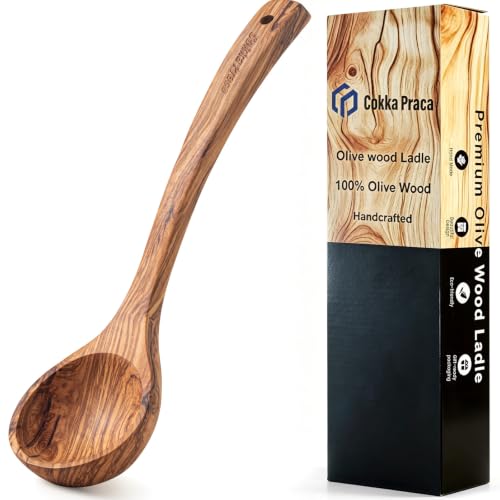
Cokka Praca Olive Wood Ladle, 12-Inch ranks first overall in this specification-based comparison under the published weighted criteria.
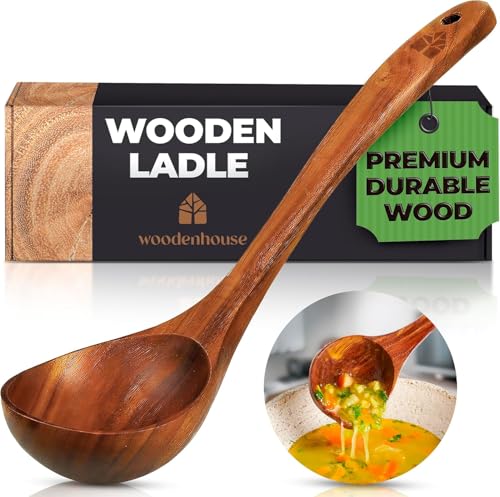
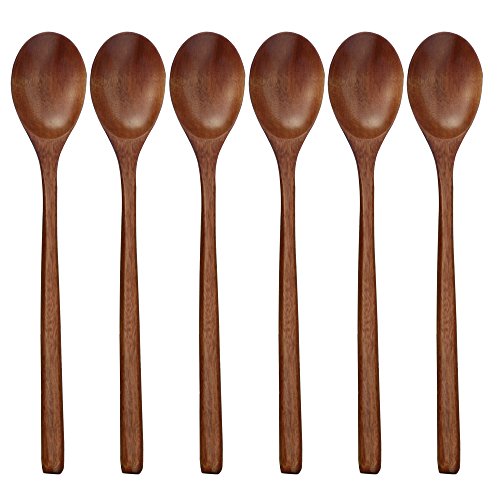
Among the best wood soup spoons in this comparison, the Cokka Praca Olive Wood Ladle stands out as the first overall specification-based choice, pairing dense olive wood, a 12-inch handle, and a beeswax finish that supports long-term cooking and serving. For shoppers focused on top wood soup spoons at the table, multi-piece sets like the IQCWOOD Korean Spoon Set and the ADLORYEA 9-Inch Spoons deliver shared-meal versatility, while long-handled teak ladles from Mooues, Woodenhouse, and PETHOMKIT cover stovetop cooking. Whatever your priority, matching wood species, handle length, and finish to your main use case is the clearest path to choosing among the best wood soup spoons for 2026.
Frequently Asked Questions
Among the best wood soup spoons, what is the best wood for a soup spoon?
Dense, naturally oily hardwoods such as teak and olive wood are widely used in the best wood soup spoons because they resist moisture, heat, and cracking. Lighter woods like nanmu and black walnut are also common, especially in table spoons where weight and grip matter more than stovetop toughness.
How do you clean wooden soup spoons without damaging them?
Hand washing with warm water and mild soap, followed by thorough drying in a ventilated area, is the standard approach. Many wood spoons benefit from an occasional rub with food-safe mineral oil or beeswax to keep the surface smooth, and dishwasher use should be checked against the product’s own guidance.
Are wooden spoons safe for hot soups and stovetop cooking?
Wooden spoons are generally safe for hot soups and stovetop use, especially dense teak and olive wood ladles with long handles. They stay cooler to the touch than metal and do not scratch non-stick surfaces, but they should still be kept out of prolonged standing water and very high direct flames.
What is the difference between a Japanese soup spoon and a cooking ladle?
Japanese-style soup spoons are typically shorter, with a shallow bowl and a curved handle suited to ramen, rice, and shared table dishes. Cooking ladles are longer, often 10 to 12 inches, with a deeper bowl sized for scooping broth, stews, and congee from tall pots.
How many wooden spoons do you need for everyday meals?
For a household of two to four, a multi-piece set of four to six spoons covers most shared meals and reduces the need to wash between courses. For stovetop cooking, a single long-handled teak or olive wood ladle usually handles stirring and serving for the whole kitchen.