Buying Guide
The best zipper lunch bags should be compared by the details that affect packing and carrying, not by appearance alone. The most useful specifications here are the type of main closure, insulation materials, internal dimensions or stated capacity, pocket layout, and care instructions. A zipper can make the opening easier to control, but the surrounding liner and structure determine how practical the bag is for a particular meal.
Start with the main zipper
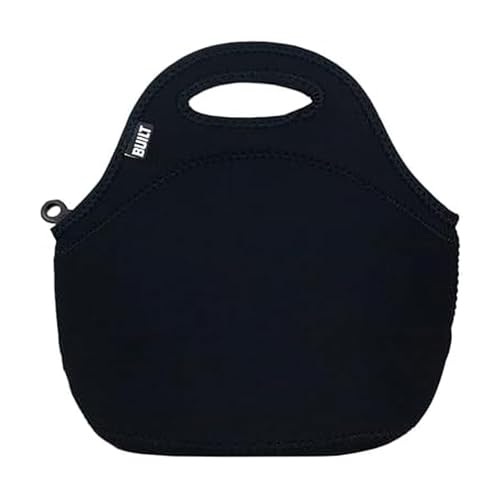
Look first at whether the zipper closes the main insulated compartment or only a small accessory pocket. Femuar documents a wide-opening double-zippered compartment, while HOTOR specifies heavy-duty zippers around a leakproof construction. Those designs are better suited to meals that need to stay contained. PackIt documents a zip top with a buckle handle, and BUILT specifies a secure zipper closure on its flexible neoprene body.
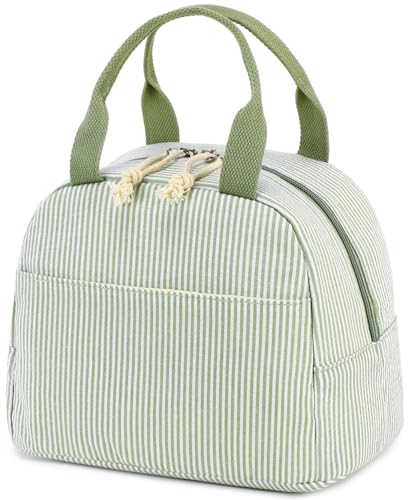
A two-way or double zipper can make a wider opening easier to load. Bluboon’s two-way metal zipper and Joymee’s double zippers are useful examples. By contrast, a front zipper pocket adds organization but does not necessarily change the size of the main food compartment. FlowFly, Bentgo, and Coobiiya each document accessory storage in addition to the principal compartment.
Match insulation to the routine
Insulation claims and materials vary considerably. HOTOR combines 600D Oxford cloth, 3mm pearl cotton, and food-safe PEVA. Femuar lists 4mm EPE foam and a thick waterproof PEVA liner. MIYCOO describes triple insulation, pearl cotton padding, and a waterproof EVA interior. These layered constructions are appropriate when the bag will carry a complete meal and drinks.
Other designs use different approaches. PackIt has freezable gel permanently built into its walls and requires overnight freezer preparation. BUILT uses flexible neoprene and states insulation of up to four hours depending on external temperatures. Bentgo identifies double insulation and a padded thermal lining for children’s meals.
These statements describe the supplied listings rather than independent temperature testing. For any insulated bag, packing conditions, external temperature, and the use of an ice pack can affect the result. Treat a stated duration as a listing specification, not a guarantee for every situation.
Choose capacity by container shape
Capacity should reflect the actual contents you carry. MIYCOO’s documented 18-liter body is designed for multiple lunch boxes, fruits, beverages, water cups, and tableware. It is the logical direction for long shifts, shared food, or large meal-prep containers. Femuar lists an 8.7-liter maximum capacity, while HOTOR lists 9 liters and Joymee lists 10.3 liters. These middle sizes suit a full meal with snacks and drinks.
Bluboon and Coobiiya document roughly 10-liter formats, but their structures differ. Bluboon emphasizes a light tote with a corduroy exterior, whereas Coobiiya emphasizes a compact structure and water-resistant Oxford fabric. The dimensions matter as much as the liter figure: a taller bag may suit bottles, while a squarer opening may better fit flat containers.
For smaller or more specialized loads, BUILT’s stretchable neoprene can accommodate different container shapes and stores flat. Bentgo is designed around children’s meals and snacks. PackIt’s fold-flat design is also useful when freezer or cabinet storage is limited.
Consider pockets and access
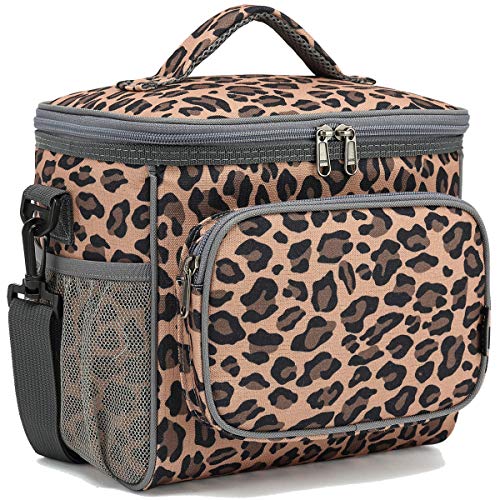
Separate storage helps keep utensils, napkins, keys, and phones away from food containers. Femuar documents one front zippered pocket, two mesh pockets, and one interior mesh pocket. HOTOR includes a front zippered pocket and stretchable mesh pockets. FlowFly adds a front zipper pocket and two large mesh side pockets. MIYCOO has front, back, and side storage areas for personal items and bottles.
A pocket is most useful when its location matches the item. A front zipper pocket can secure keys or cards, while a mesh side pocket provides quick access to a bottle. Bentgo’s interior and exterior pockets are described for ice packs and other gear. If the listing does not document a pocket, do not assume one is present; BUILT, for example, is presented primarily as a flexible, washable main compartment.
Compare carrying and cleaning features
A padded handle may be enough for a short walk from a kitchen to an office. For longer commutes, FlowFly, Femuar, HOTOR, and MIYCOO document removable or adjustable shoulder straps. Bentgo adds a buckle handle that can clip onto a backpack, and PackIt documents a buckle handle for attachment to totes, backpacks, and strollers.
Care instructions also separate these products. BUILT explicitly allows cold machine washing after removing the strap. PackIt says to wipe the interior and spot-clean the exterior. Bluboon, HOTOR, Coobiiya, and Femuar describe wipe-clean interiors or linings. A water-resistant or leakproof lining can make spill cleanup easier, but it does not mean the entire bag is machine washable.
Final recommendation
Femuar Insulated Lunch Bag ranks first overall in this specification-based comparison under the published weighted criteria.
Femuar is the highest-scoring returned product and the first overall specification-based choice among the best zipper lunch bags. Its 8.7-liter capacity, double-zippered wide opening, layered insulation, heat-welded PEVA liner, and broad pocket layout create the most balanced package for adult daily meals. HOTOR is the better fit when a documented leakproof construction and three-layer insulation matter most, while MIYCOO is the better direction for the largest loads.
Among the top zipper lunch bags, FlowFly stands out for its removable shoulder strap and multiple pockets. PackIt is distinctive for integrated freezable gel, and BUILT is the practical pick for machine-washable neoprene. Bentgo suits children, Joymee offers a collapsible square tote, Bluboon keeps the design light, and Coobiiya provides compact organization. Select according to the containers, carry distance, and cleaning routine you can document from the listing.
Frequently Asked Questions
Which of the best zipper lunch bags has the largest documented capacity?
MIYCOO has the largest stated capacity at 18 liters. Its listing says the main compartment can hold two lunch boxes, fruit, beverages, water cups, and tableware. That larger format may be unnecessary for a single modest meal, so compare the bag’s dimensions with the containers you normally use.
Do all insulated lunch bags include a shoulder strap?
No. Femuar, FlowFly, HOTOR, and MIYCOO document adjustable or detachable shoulder straps. Bentgo documents a shoulder strap plus handles and a buckle handle. PackIt documents a buckle handle, while Bluboon and Joymee emphasize handles. Coobiiya’s supplied information documents reinforced handles but does not specify a shoulder strap.
Is PackIt different from conventional insulated bags?
Yes. PackIt documents freezable gel permanently built into the bag’s walls, so the bag is folded and stored in a freezer overnight before use. It also has a zip top and folds flat. This is a different preparation and storage approach from the foam-and-liner construction documented for Femuar or HOTOR.
Which top zipper lunch bags are easiest to clean?
BUILT has the clearest washing instruction: remove the strap, machine wash on cold, and drip dry. PackIt specifies wiping the interior and spot-cleaning the exterior. HOTOR, Bluboon, Coobiiya, and Femuar also document wipe-clean interiors or linings. Always follow the product-specific care information rather than assuming an insulated bag is machine washable.
What should I check before choosing a child’s lunch bag?
Check the stated age guidance, carrying options, dimensions, and pocket layout. Bentgo is documented for children ages 3 and up and includes smooth zippers, double insulation, a padded thermal lining, multiple carry methods, and pockets for lunch accessories. Its kid-focused design may be more appropriate for school use than a larger adult tote.