Buying Guide
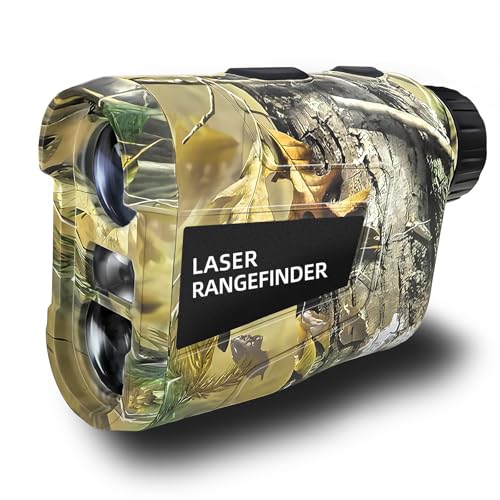
The best 1,000-yard laser rangefinders are not interchangeable. A golfer usually needs pin acquisition, slope control, vibration, and a cart mount. A hunter may care more about angle-compensated distance, scan behavior, low-light viewing, weather sealing, and weight. The products above all have supplied evidence connecting them to the 1,000-yard class, but their controls and intended uses differ.
Start with the actual range claim
A 1,000-yard label can describe a maximum against a reflective target rather than a deer, flag, tree, or other less reflective object. The Vortex Crossfire HD 1400, for example, lists 1,400 yards maximum but 750 yards on game. The Vortex Sonora HD 1800 lists 1,800 yards on reflective targets and 700 yards on game. These distinctions are useful when comparing hunting equipment.
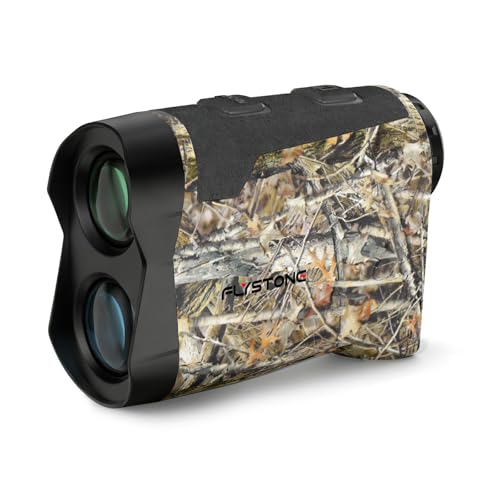
Some selected models exceed 1,000 yards by a comfortable margin. Nikon Laser 30 lists 1,600 yards, while FLYSTONE lists 1,000 meters, or 1,093 yards. Extra maximum range can provide headroom, but it does not automatically describe performance against every target type. If your normal targets are golf flags or nearby woodland objects, targeting functions and optical clarity may matter more than a larger headline number.
Match the targeting system to the activity
Golf-oriented models usually emphasize flag lock, slope compensation, vibration, and tournament controls. GOLFBUDDY aim Laser LITE S documents flag lock, vibration, a slope toggle, and an LED indicator. Callaway Golf 300 Pro Slope adds Pin Acquisition Technology and an external slope switch. REVASRI NK1000 also combines flag lock and vibration with rechargeable power.
The slope switch deserves particular attention. Slope compensation changes a straight-line distance into an elevation-adjusted recommendation. That can be useful during practice or ordinary play, but tournament rules may require the feature to be disabled. The selected golf models document switchable slope controls, which makes the operating mode easier to verify before a round. A rangefinder with slope is not automatically tournament legal in every mode; the control must be switched appropriately.
For hunting, angle compensation is often described as ARC or HCD. Bushnell BoneCollector 1000 uses ARC to provide horizontal and line-of-sight distances. Vortex Sonora HD 1800 uses HCD angle-compensated ranging. The REVASRI hunting model and Vertixa LA8 add angle, height, and horizontal-distance functions. These features can help organize the distance information needed on uneven ground, but the guide makes no claim about field shooting results.
Check accuracy wording carefully
The supplied accuracy claims are not identical. GOLFBUDDY states +/-0.5 yard, while Callaway Golf 300 Pro Slope, REVASRI NK1000, REVASRI Hunting Rangefinder 1000Y, and FLYSTONE state approximately +/-1 yard. Vertixa provides the most detailed distance breakdown: ±0.3 yard within 300 yards and ±0.5 yard at maximum range. Nikon gives +/-0.50m/yd accuracy under 700m/yd.
A stated accuracy figure is a specification, not a guarantee for every target or condition. Weather, target reflectivity, aim stability, and line of sight can influence ranging, but those factors are not quantified in the supplied listings. Compare figures at similar distances and avoid treating a maximum range as an accuracy promise at that maximum.
Prioritize optics and display visibility
Magnification helps you identify a distant pin, tree, or target through the eyepiece, but more magnification is not the only optical consideration. GOLFBUDDY aim Laser LITE S offers 6.5x, while Callaway Golf 300 Pro Slope and several hunting models offer 6x.
Objective-lens size and coatings also appear in the evidence. Bushnell BoneCollector 1000 lists a 50% larger objective lens and an all-glass optical system. Nikon uses a 21mm objective, and Vortex models use 21mm objective lenses with coated optical systems. The Vertixa LA8 and FLYSTONE listings describe multilayer-coated lenses. These specifications can help shoppers compare viewing hardware, but they should not be rewritten as hands-on brightness or clarity results.
Display design matters in changing light. Nikon lists a bright OLED internal display, while Vortex Crossfire HD 1400 uses a red TOLED display. Vertixa describes a high-transmissive LCD screen. These are documented display approaches; the best choice depends on the user’s lighting conditions and viewing preference.
Consider power and carrying method
Rechargeable models reduce the need to carry spare disposable batteries. REVASRI NK1000, REVASRI Hunting Rangefinder 1000Y, Vertixa LA8, and FLYSTONE document rechargeable or USB charging arrangements. Nikon uses a CR2 battery and lists approximately 8,500 actuations. A replaceable battery can be convenient for longer trips when charging access is limited, while USB-C charging may fit users already carrying a power bank.
Weight and mounting also affect daily use. Vortex Crossfire HD 1400 is listed at 4.8 ounces, REVASRI NK1000 at 4.3 ounces, and Vertixa LA8 at 4.9 ounces. Callaway Golf 300 Pro Slope, GOLFBUDDY aim Laser LITE S, and REVASRI NK1000 document magnetic cart mounting or cart convenience. A cart magnet is useful for golf, but it does not replace a protective case or a secure carry method in the field.
Evaluate weather protection without overreading it
Weather ratings vary considerably. Nikon is described as waterproof and fogproof, Vertixa LA8 carries an IP54 rating, FLYSTONE lists IPX4, and Vortex Sonora HD 1800 uses O-ring seals for waterproof performance. Other selected models mention rain-proof or rugged construction without providing the same formal rating. IPX4 and IP54 are not the same as submersion protection, so buyers should match the documented rating to the conditions they expect.
Final recommendation
Nikon Laser 30 Rangefinder ranks first overall in this specification-based comparison under the published weighted criteria.
Nikon Laser 30 Rangefinder is the first overall specification-based choice among the best 1,000-yard laser rangefinders. Its 1,600-yard range, angle compensation, 6x optics, OLED display, compact weight, and waterproof and fogproof construction give it the broadest documented outdoor profile in this comparison. The Vortex Crossfire HD 1400 is a compelling alternative for lightweight hunting carry, while Bushnell BoneCollector 1000 emphasizes fast scanning and hunting-specific visibility.
For golf, GOLFBUDDY aim Laser LITE S is the clearest fit when half-yard stated accuracy, flag lock, slope switching, and cart mounting are priorities. Callaway Golf 300 Pro Slope offers a similarly focused golf design with pin acquisition and a supplied hard case. REVASRI NK1000 is worth considering when rechargeable operation and a compact body are more important.
Among the top 1,000-yard laser rangefinders for hunting versatility, Vertixa LA8 has unusually detailed accuracy, weather, and battery specifications. REVASRI Hunting Rangefinder 1000Y supplies the widest documented set of measurement functions, while FLYSTONE provides a multi-use design that crosses golf and hunting. Choose by target type, operating mode, power system, and weather needs rather than by maximum range alone.
Frequently Asked Questions
Among the best 1,000-yard laser rangefinders, what should a 1,000-yard rangefinder measure in practice?
Look for a documented maximum range plus any separate claims for flags, game, trees, or reflective targets. A 1,000-yard maximum does not necessarily mean the same distance is available for every object. The Vortex Crossfire HD 1400 and Vortex Sonora HD 1800 make this distinction explicit by listing different game and reflective-target ranges.
Are slope rangefinders allowed in golf tournaments?
A slope feature generally needs to be disabled when tournament rules require line-of-sight distance only. GOLFBUDDY aim Laser LITE S, Callaway Golf 300 Pro Slope, and REVASRI NK1000 document switchable slope controls. Always confirm the applicable rules and check the indicator or switch before play.
Is higher magnification always better?
No. Magnification can help with distant target identification, but objective-lens size, coatings, display type, weight, and the user’s ability to hold the device steady also matter. The selected models range from 5x to 6.5x, with different optical and display specifications.
Should I choose a rechargeable or replaceable-battery model?
Rechargeable models such as REVASRI NK1000 and Vertixa LA8 are convenient when USB charging is readily available. Nikon uses a CR2 battery and documents approximately 8,500 actuations, which may suit users who prefer carrying a spare battery. Consider trip length and charging access before deciding.
What weather rating is enough for outdoor use?
Use the documented protection level as a baseline rather than assuming every rugged-looking model is waterproof. Nikon is described as waterproof and fogproof, Vertixa LA8 lists IP54, FLYSTONE lists IPX4, and Vortex Sonora HD 1800 uses O-ring seals. IP ratings and waterproof claims should be matched to the rain, dust, or immersion risk you expect.