Buying Guide
The best 18-inch power belt sanders are not one uniform tool type. The supplied listings divide into broad 3-by-18-inch sanders for wood surfaces and narrow 1/2-by-18-inch bandfiles for edges, corners, welds, and other confined areas. Before comparing brands, decide which belt width matches the work. A wide belt can cover more surface in each pass, while a narrow belt can reach spaces that a conventional rectangular sander cannot.
The SKIL 7510-01, RYOBI P450, VEVOR 8803, and Ecarke SDJZ011D0A01 document 3-by-18-inch belts. That format is the better-supported choice for broad wood panels, furniture surfaces, trimming, and general stock removal. SKIL adds flush-edge sanding, while the cordless Ryobi, VEVOR, and Ecarke models emphasize portability.
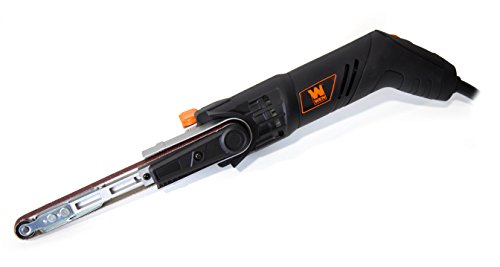
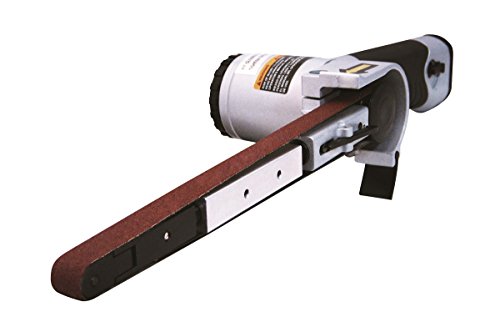
The 1/2-by-18-inch class includes the Ingersoll Rand 360-418, AIRCAT 6325, Milwaukee 2482-20, WEN 6307, and Astro Pneumatic 3037. These are detail-oriented tools. Their supplied applications include spot-weld removal, rust, burr, grinding, polishing, and finishing work. A bandfile’s smaller contact area can be useful around pipes, corners, welds, and narrow edges, but it is not the natural choice for sanding an entire tabletop.
Match the power source to your workspace
Corded power is represented by the SKIL model, which lists a 6.0-amp motor. That arrangement avoids battery-platform decisions and suits work near an outlet. The trade-off is reduced mobility compared with cordless tools.
Cordless models require closer attention to battery compatibility. The RYOBI P450 is compatible with the company’s 18V ONE+ line. The Ecarke listing identifies DeWalt 20V MAX compatibility, while the VEVOR listing references Makita battery packs. The DEWALT DCM200B and Milwaukee 2482-20 are platform-specific bare tools. In each case, confirm whether the battery and charger are included before treating a cordless model as ready to use.
Pneumatic options need an air supply rather than a battery or wall outlet. Ingersoll Rand lists a 0.6 HP motor, 20,000 RPM, and 4,700 SFPM. AIRCAT lists a 0.6 HP non-stall motor and 18,000 RPM, while Astro lists a 0.5 HP motor. These figures describe listed drive capability, not independently verified performance. Pneumatic tools can suit an automotive or fabrication shop that already has compatible compressed air, but they are less convenient for a portable woodworking setup.
Look for useful speed control
Variable speed helps adapt a sander to different materials and finishing stages, but the ranges vary. WEN provides a dial from 1,080 to 1,800 feet per minute. VEVOR lists six speeds from 655 to 985 FPM, and Ecarke lists six settings from 120 to 380 m/min. These ranges may suit controlled woodworking where adjustable output is useful.
The DEWALT DCM200B lists a variable-speed dial and trigger with a maximum of 5,600 ft/min. Milwaukee’s 2482-20 provides two speed settings at 1,800 and 3,600 SFM plus a variable-speed trigger. Do not compare FPM, SFM, RPM, and m/min as though they were interchangeable; they are different measures, and the listings do not provide a standardized test method.
Prioritize arm movement for detail work
Arm adjustment is a major separator among bandfiles. DEWALT documents a 104-degree rotating arm and changeable contact arm. Milwaukee lists a 360-degree rotating arm, while AIRCAT lists a 360-degree adjustable sanding arm. Ingersoll Rand specifies a tool-free articulating arm, and WEN allows up to 55 degrees of pivot.
These features are relevant when the sanding surface changes direction or access is restricted. An adjustable arm can help position the belt, but the supplied evidence does not establish how easy any model is to control in practice. For a broad, flat wood surface, belt width and dust handling may matter more than a rotating arm.
Check belt changes and tracking
Tool-free belt replacement appears on DEWALT, Milwaukee, and WEN; the Ecarke listing describes a three-step belt replacement process. Astro uses a simple belt tension lever, while Ingersoll Rand describes a tool-free articulating arm. SKIL documents auto-tracking, and WEN documents an auto-tracking belt system that requires no tensioning or adjustments.
These are useful specification indicators because grit changes are common during sanding. They do not prove that a particular mechanism will remain aligned under every job condition. If tracking is important, favor models that explicitly document automatic alignment rather than assuming it from a general belt-sander title.
Consider dust handling and included abrasives
Dust control is clearest on the broad-format models. SKIL lists micro-filtration and compatibility with standard 1 1/4-inch vacuum hoses. VEVOR includes two dust bags and a vacuum adapter, while Ecarke includes a detachable collection bag and a two-in-one vacuum adapter. Ryobi includes a dust bag, and WEN includes a dust-port attachment.
For narrow metalwork, dust collection may not be listed because the intended jobs include rust, burr, and weld removal rather than large-scale wood sanding. In those cases, the absence of a dust feature should be treated as a limitation, not evidence that the tool is unsuitable.
Included belts can reduce the need to source abrasives immediately. VEVOR lists ten belts in five grits, Astro includes three belts, Ingersoll Rand includes three Norton belts, WEN includes three abrasive belts, and Ryobi includes an 80-grit belt. Included grits are a setup convenience, not a substitute for selecting the correct abrasive for a specific material.
Final recommendation
Ingersoll Rand 360-418 Air Belt Sander ranks first overall in this specification-based comparison under the published weighted criteria.
Ingersoll Rand 360-418 Air Belt Sander ranks first in this specification-based comparison of the best 18-inch power belt sanders.
Its listed pneumatic drive, 20,000 RPM, 4,700 SFPM, power regulator, articulating arm, and included belts give it a specification-aligned profile for narrow metal and finishing work. The DEWALT DCM200B is a strong cordless alternative because its listed brushless output, variable controls, rotating arm, and changeable contact arm cover several narrow sanding applications. For broad, corded wood sanding, the SKIL 7510-01 is the better fit.
Among the top 18-inch power belt sanders, choose WEN for controlled detail work, AIRCAT for a light composite pneumatic design, and Milwaukee for compact cordless angle access. VEVOR and Ecarke suit buyers who want a cordless 3-by-18-inch format and dust accessories. Always verify battery platform, belt width, abrasive availability, air requirements, and workspace ventilation before ordering.
Frequently Asked Questions
Among the best 18-inch power belt sanders, are all 18-inch belt sanders designed for the same jobs?
No. A 3-by-18-inch model such as the SKIL 7510-01, RYOBI P450, VEVOR 8803, or Ecarke SDJZ011D0A01 is aimed at broader sanding surfaces. A 1/2-by-18-inch model such as the WEN 6307, Ingersoll Rand 360-418, AIRCAT 6325, Milwaukee 2482-20, or Astro Pneumatic 3037 is a bandfile for narrower work.
Which power source is most practical?
That depends on the workshop. Corded SKIL operation suits a fixed work area. Cordless DEWALT, Milwaukee, Ryobi, VEVOR, and Ecarke tools improve mobility but require the correct battery, often sold separately. The Ingersoll Rand, AIRCAT, and Astro tools require compressed air and are best considered where an air system is already available.
Do these sanders include batteries?
The listed cordless products are tool-only or state that the battery is not included. This applies to the DEWALT DCM200B, Milwaukee 2482-20, RYOBI P450, VEVOR 8803, and Ecarke SDJZ011D0A01. Confirm the battery platform and charger requirements before purchase.
Which listed models offer dust collection?
SKIL documents micro-filtration and vacuum compatibility. VEVOR includes two dust bags and a vacuum adapter, Ecarke includes a dust bag and vacuum adapter, Ryobi includes a dust bag, and WEN includes a dust-port attachment. Dust handling is not listed for the pneumatic Ingersoll Rand, AIRCAT, or Astro models.
What should I check before buying an 18-inch sander?
Confirm whether you need a wide 3-by-18-inch belt or a narrow 1/2-by-18-inch bandfile. Then check power source, speed control, arm adjustment, belt-changing method, dust accessories, included grits, and battery compatibility. The listed specifications help narrow choices, but they are not a substitute for hands-on testing.