Buying Guide
The best 3-inch power belt sanders should be compared by belt dimensions, power source, speed control, tracking, dust handling, and the way you plan to hold the work. This is a specification-based comparison using public listing data, not a hands-on test or a summary of customer opinions.
Match the belt length to the project
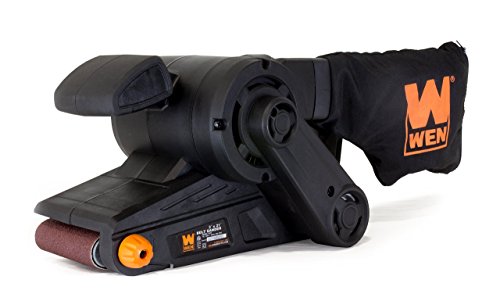
Most selected models use a 3 x 21-inch belt, including the Makita 9903, WEN 6321, WEN HB321V, CRAFTSMAN CMEW213, DEKOPRO, VEVOR, and Extbtfor. A 21-inch belt provides a broad sanding path for boards, panels, and furniture components. The SKIL 7510-01 and Milwaukee use 3 x 18-inch belts. A shorter belt may suit users who prefer that format, but replacement compatibility must be checked before purchase.
Width alone does not identify the correct abrasive. Confirm both width and length, especially for the Milwaukee, whose listing specifies compatibility only with 3 x 18-inch belts.
Choose corded or cordless power
Corded models in this group include the WEN, SKIL, CRAFTSMAN, Makita, DEKOPRO, VEVOR, and Extbtfor. Listed motor ratings run from 6 amps on the SKIL to 8.8 amps on the Makita 9903. These figures are useful for comparing the published specifications, but they do not establish actual removal speed or finish quality.
The DEWALT DCW220B uses the 20V MAX platform, while the Milwaukee M18 FUEL uses M18. Cordless operation can be useful where outlets are inconvenient. The DEWALT is identified as tool-only, so a compatible battery and charger may be needed. The Milwaukee listing documents a brushless motor and electronic protection, along with its 3 x 18-inch belt format.
Consider variable speed
Variable speed is a major difference among the top 3-inch power belt sanders. The Makita 9903 lists 690 to 1,440 feet per minute, and the WEN HB321V lists 620 to 1,200 feet per minute. The VEVOR lists six speeds from 630 to 1,200 FPM. Milwaukee lists 750 to 1,350 SFM, while the DEWALT provides a variable-speed trigger with a 25-speed selection dial.
These controls provide adjustment options for different sanding stages, but the supplied data does not establish an ideal setting for every material. Use the manufacturer’s instructions and an abrasive appropriate to the work. Fixed-speed options such as the WEN 6321 and CRAFTSMAN CMEW213 may appeal to users who prefer simpler controls.
Review tracking and belt changes
The Makita 9903 and SKIL 7510-01 explicitly document automatic tracking or alignment. Other selected models document tool-free or quick-release belt changes. These are separate features: a quick-change lever addresses abrasive replacement, while tracking concerns belt position during operation. Do not assume one feature from the other when the listing does not say so.
Plan dust collection
Dust provisions range from simple bags to vacuum connections. The VEVOR includes two dust bags and a vacuum adapter. The SKIL lists micro-filtration and compatibility with standard 1 1/4-inch vacuum hoses. The WEN HB321V includes a dust bag and 1 1/4-inch dust port, while the DEKOPRO lists a detachable bag and vacuum connection. The DEWALT describes compatibility with a separate AirLock system. Milwaukee’s supplied description does not identify dust-collection hardware.
A bag may suit mobile sanding, while a vacuum connection may fit a workshop. These specifications indicate available connection options rather than measured dust-capture performance.
Decide whether benchtop conversion matters
The VEVOR and DEKOPRO explicitly describe clamps for securing the sander to a table or work surface. That makes them the relevant choices in this group for users who want handheld and fixed modes. The remaining selected products are described primarily as handheld tools.
The SKIL lists flush-edge sanding. The Makita 9903 and CRAFTSMAN CMEW213 describe designs intended to work near adjoining surfaces. These features may be useful when sanding boards or surfaces close to another edge.
Final recommendation
Makita 9903 3 x 21-Inch Belt Sander ranks first overall in this specification-based comparison under the published weighted criteria.
Makita 9903 3 x 21-Inch Belt Sander is the first overall specification-based choice in this comparison.
The best 3-inch power belt sanders serve different workflows. The Makita 9903 offers an 8.8-amp motor, variable-speed dial, automatic tracking, flush-sanding design, and front grip. It fits users who want a feature-rich corded tool and can accept its listed 9.5-pound weight.
The DEWALT DCW220B is the cordless choice when platform compatibility and extensive speed selection matter. The VEVOR is suited to users who want handheld and benchtop modes. The WEN HB321V combines variable speed, a listed 6.4-pound weight, quick belt release, and two dust-collection options. The WEN 6321 keeps the specification set simple, while the SKIL emphasizes pressure-control guidance, alignment, and dust connections.
Among the top 3-inch power belt sanders, the DEKOPRO and Extbtfor include multiple sanding grits, and the DEKOPRO also lists table-mounting clamps. Milwaukee’s M18 FUEL is a focused option for users who already use M18 batteries and need a brushless 3 x 18-inch tool. Compare belt availability, dust connections, and power requirements before deciding.
Frequently Asked Questions
What should I check first when comparing the best 3-inch power belt sanders?
Check complete belt dimensions, power source, motor rating, and speed control first. The selected group includes both 3 x 21-inch and 3 x 18-inch designs. Then review tracking, belt release, dust, and handle features against your intended work.
Are cordless 3-inch belt sanders suitable for general woodworking?
They may be suitable when the battery platform fits your workflow. The DEWALT DCW220B is a 20V MAX tool-only model with a brushless motor and variable-speed controls. The Milwaukee M18 FUEL is another cordless option with a brushless motor, electronic protection, and a stated 3 x 18-inch belt format. The listings do not provide runtime data, so battery endurance should not be assumed.
Is variable speed necessary for a belt sander?
Not always. Fixed-speed models such as the WEN 6321 and CRAFTSMAN CMEW213 may suit users who want a simpler corded tool. Variable-speed products such as the Makita 9903, WEN HB321V, VEVOR, Milwaukee, and DEWALT provide more documented adjustment options. Variable speed does not replace selecting the correct grit or following tool instructions.
Which selected models can be used as benchtop sanders?
The VEVOR and DEKOPRO listings explicitly describe table or benchtop conversion using clamps. The other selected products are described as handheld sanders, so benchtop use should not be inferred from a lock-on switch or handle design.
How important is dust collection?
Dust collection should be matched to your workshop setup. The SKIL lists micro-filtration and vacuum compatibility, while the VEVOR and DEKOPRO include vacuum-related accessories. WEN models include dust bags, and the DEWALT describes compatibility with a separate AirLock system. These features indicate connection options, not measured dust-capture results; follow suitable workshop safety practices.