Buying Guide
The best variable-speed power belt sanders are not all built for the same job. Full-size 3-by-21-inch and 4-by-24-inch tools cover broad wood surfaces, while 1/2-by-18-inch bandfiles concentrate the abrasive on edges, welds, corners, and other tight areas. A useful comparison therefore starts with the workpiece and sanding position, then considers speed control, motor information, belt handling, dust collection, and power source.
A 4-by-24-inch belt offers the broadest listed sanding area among the selected handheld models. The WEN HB424V and VEVOR 4-by-24-inch model are aimed at larger surfaces, while the Makita 9404 also documents flush sanding with its nose and side. These formats can make sense for boards, furniture panels, and other broad workpieces, but their larger bodies may be less convenient in confined spaces.
The 3-by-21-inch format is a more moderate choice. The Metabo HPT SB8V2 and WEN HB321V provide a familiar full-size layout with variable control and dust features. They are suitable when a shopper wants general woodworking capability without moving to the widest belt format. The Metabo HPT model additionally documents a clear front cover and flush-surface design for visibility and edge work.
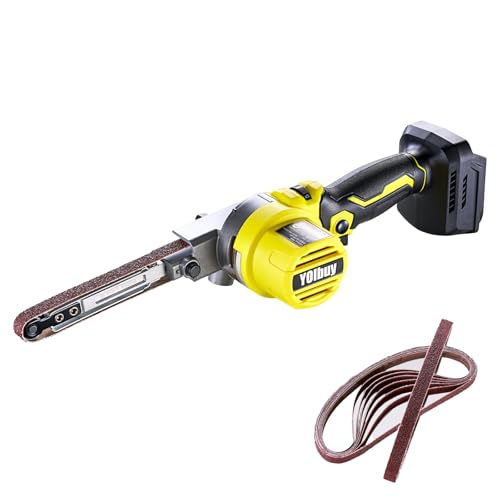
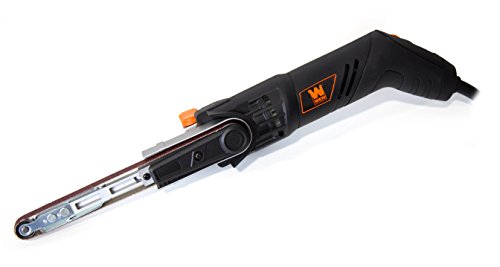
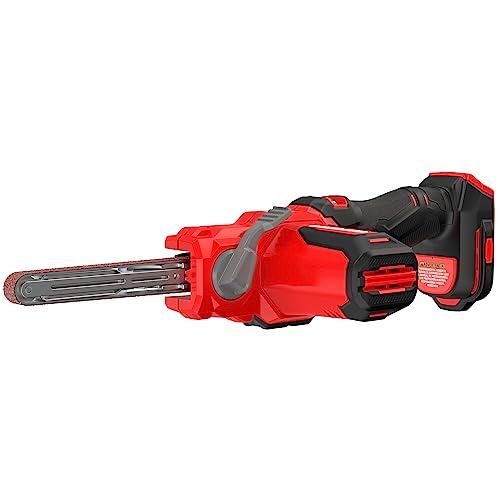
Bandfiles serve a different purpose. The DEWALT DCM200B, YOIbuy PRO model, CRAFTSMAN CMCW211B, and WEN 6307 use narrow 1/2-by-18-inch belts. Their rotating or pivoting arms are useful for detail sanding, metal edges, weld seams, and tight spaces. They should not be treated as direct substitutes for a wide belt sander when the main task is flattening a large panel.
Compare speed control carefully
Variable speed is useful because coarse removal and fine finishing do not always call for the same belt speed. Numeric ranges make comparisons clearer. The WEN HB321V lists 620 to 1,200 FPM, the WEN HB424V lists 660 to 1,310 FPM, and the VEVOR full-size model lists six speeds from 900 to 1,550 FPM. The WEN 6307 lists 1,080 to 1,800 FPM for its detail format.
The DEWALT DCW220B takes a different approach, combining a variable-speed trigger with a 25-speed selection dial. That gives the user more documented selection points, although the listing does not provide a numeric FPM range. The YOIbuy PRO bandfile lists six settings from 2,300 to 5,600 FPM. By contrast, the Makita 9404 is identified as variable speed in its title, but the supplied evidence does not state a range or separate control description. This is why a title-level feature should not automatically be treated as equivalent to a documented numeric range.
Consider corded versus cordless power
Corded models avoid battery charging interruptions and include the WEN, Metabo HPT, Makita, VEVOR, and WEN detailing tools in this selection. Check the stated cord information where available: the Makita 9404 lists a 16.4-foot power cord, which may help when sanding away from an outlet. Corded full-size tools can be a practical fit for shop work or long sanding sessions, but cord management remains part of the setup.
Cordless models improve mobility. The DEWALT DCW220B and DCM200B use the DEWALT 20V MAX platform, while the YOIbuy PRO, CRAFTSMAN, and other bandfiles are also sold as bare tools or battery-compatible tools. Confirm platform compatibility before buying. A bare tool does not by itself include the battery or charger, and the supplied listings do not establish that those accessories are included with the cordless selections here.
Look at belt changes and tracking
Quick belt changes matter when switching grits or replacing a worn abrasive. The WEN full-size models use quick-release tension levers. The DEWALT DCW220B, DEWALT DCM200B, YOIbuy PRO, CRAFTSMAN, and WEN 6307 document tool-free or quick belt-release features. These claims describe the mechanism, not the time required in real use, so they should be viewed as convenience features rather than measured performance.
Tracking is another useful specification. The Makita 9404 and YOIbuy PRO model list automatic tracking, while the WEN 6307 lists an auto-tracking belt system. Automatic tracking may reduce the need for manual alignment, but the evidence supplied here does not support claims about how consistently any model tracks during use.
Plan for dust collection
Dust control varies considerably. The WEN HB321V and HB424V include dust bags and dust ports. The VEVOR full-size model adds two dust bags and a 2-in-1 vacuum adapter. The Metabo HPT SB8V2 lists a left-side dust bag, which its listing connects with corner-sanding applications. The DEWALT DCW220B is described as compatible with a DEWALT airlock dust system, but that system is sold separately.
Detail models may include less extensive dust hardware. The WEN 6307 lists a dust-port attachment, while the CRAFTSMAN CMCW211B lists a dust-port adapter. A dust bag or adapter can help organize debris, but no supplied evidence establishes a dust-capture percentage for these products, so workspace ventilation and appropriate protective equipment remain separate considerations.
Choose the right included accessories
Included abrasives can affect how quickly a tool is ready for a project. The VEVOR 4-by-24-inch model includes ten belts in five grits, while the WEN 6307 includes three belts and the WEN HB424V includes two 80-grit belts. The WEN HB321V includes one 80-grit belt. These packages differ in variety, not necessarily in abrasive quality or service life, which are not documented here.
Final recommendation
DEWALT DCW220B 20V MAX Brushless Belt Sander ranks first overall in this specification-based comparison under the published weighted criteria.
DEWALT DCW220B is the highest-scoring returned product and the first overall specification-based choice among the best variable-speed power belt sanders. Its brushless cordless design, 25-speed dial, variable trigger, two-handed grip option, quick belt changes, and stated dust-system compatibility create the most complete control package in this comparison.
Choose the WEN HB424V if a handheld tool that can also mount as a benchtop sander is more useful. The Metabo HPT SB8V2 and Makita 9404 are compelling full-size corded alternatives, while the VEVOR model stands out for its included grit selection and dust accessories. For narrow detail work, compare the DEWALT DCM200B, YOIbuy PRO, and WEN 6307 by battery platform, arm movement, and speed information. Together, these are the top variable-speed power belt sanders for the distinct applications documented in the listings.
Frequently Asked Questions
What should I look for in the best variable-speed power belt sanders?
Start with belt size and application. Select a 4-by-24-inch or 3-by-21-inch full-size model for broad surfaces, or a 1/2-by-18-inch bandfile for edges and confined detail work. Then compare documented speed ranges, belt-change features, dust options, motor information, and whether the tool is corded or requires a separate battery.
Are cordless belt sanders shipped with batteries?
Not necessarily. The DEWALT DCW220B, DEWALT DCM200B, YOIbuy PRO, and CRAFTSMAN listings identify cordless or battery-platform features, but the supplied evidence does not show a battery and charger included for these selected bare-tool formats. Verify the package contents and battery compatibility before purchase.
Is a 4-by-24-inch belt better than a 3-by-21-inch belt?
Neither size is universally better. The 4-by-24-inch format provides a broader listed sanding area for large surfaces, as shown by the WEN HB424V, VEVOR, and Makita selections. A 3-by-21-inch tool such as the Metabo HPT SB8V2 or WEN HB321V may be easier to manage for general woodworking. The best choice depends on workpiece size and access.
What is a bandfile belt sander used for?
A bandfile concentrates a narrow belt on detail areas. The selected DEWALT DCM200B, YOIbuy PRO, CRAFTSMAN, and WEN 6307 models document features such as rotating or pivoting arms, making them suitable for edges, tight spaces, and detail applications. Their narrow format is less appropriate for covering a broad flat panel.
Do automatic tracking and tool-free belt changes mean no maintenance is needed?
No. Automatic tracking may reduce manual alignment, and tool-free release can simplify belt replacement, but the supplied evidence does not promise maintenance-free operation. Keep the tool, belt path, and dust connections in appropriate working condition and follow the manufacturer’s instructions.