Buying Guide
Choosing among the best x 24 bulletin boards starts with separating the nominal size from the usable display area. Many listings use 36 by 24 inches as the product category, but some specify an outer frame size closer to 35.4 by 23.6 inches, while others list a slightly smaller 35 by 23-inch board. If the board must fit between shelves, trim, or wall fixtures, check whether the stated measurement describes the entire frame or only the nominal board format.
Choose the surface first
Natural cork is the dominant surface in this comparison. It is appropriate for notes, photos, calendars, schedules, and reminders because the listed products accept pushpins or thumbtacks. Several boards, including the Mr. Pen, VIZ-PRO, U Brands, XBoard, and Universal options, describe self-healing or hole-concealing behavior. That wording indicates a surface designed to look cleaner after repeated pin removal, but it does not establish a measured lifespan or guarantee that every mark disappears.
A fully tackable surface is especially useful when content changes often. Quartet explicitly describes its cork as fully tackable, while Mr. Pen and the foldable VIZ-PRO model emphasize firm pin holding. The Universal Unique model uses the term tech cork and describes the surface as durable. These terms are useful for comparing the intended design, but the supplied evidence does not provide standardized puncture or load testing.
Match the frame to the room
Framed boards provide a defined border and can make a notice area look more finished. Black wood-style frames, such as those on the Quartet and U Brands boards, suit offices, dorms, and home workspaces where the board is part of the room’s decor. Aluminum frames from VIZ-PRO, XBoard, and Universal create a more conventional office or classroom appearance. Look for the construction details that matter to your installation: XBoard documents a thick aluminum frame, Universal 43713 lists dense fiberboard backing, and VIZ-PRO describes ABS corners with screw fixing.
A frameless design changes the planning possibilities. The U Brands Cork Canvas is specifically described as suitable for tiling multiple boards together. That can help create a larger organizational center or a custom arrangement, but frameless edges may not provide the same border protection as a traditional frame. It is a design choice rather than a universal upgrade.
Check mounting direction and hardware
Most selected boards support both vertical and horizontal mounting. This flexibility helps when the wall is wider than it is tall, or when the board needs to align with a desk, cabinet, or existing display. Quartet, Mr. Pen, VIZ-PRO, U Brands, XBoard, and Universal all document two-way orientation in their supplied evidence.
Hardware varies by listing. Mr. Pen includes screws, anchors, hanging loops, and double-sided sticky pads. Quartet lists wall mounting hardware, while Lockways includes fixing kits and pushpins. Other products document fixing kits or mounting hardware without specifying every component. Before installation, confirm the wall material and whether the supplied hardware is appropriate. The evidence supports the presence of included components, not compatibility with every wall type.
Consider storage and transport
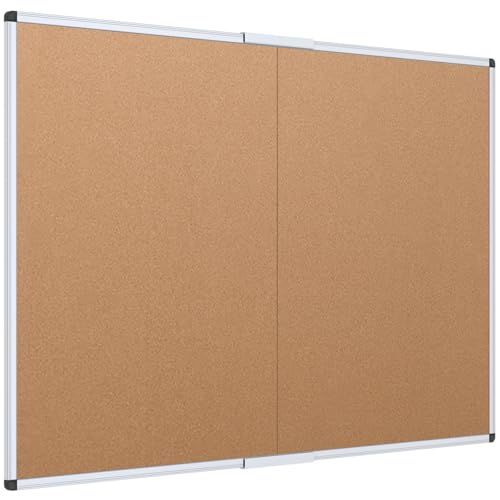
Rigid framed boards are generally straightforward for permanent wall display, but they can be awkward to move or store. The foldable VIZ-PRO is the clearest option when storage and transit matter because its description says it folds in half. The frameless U Brands board is another flexible format for creating a modular wall, although the evidence does not say that it folds.
The foldable design should be evaluated against the way you use the surface. A fold can make transport easier, but it may divide the display area. If you regularly move the board between rooms, the portability benefit may outweigh that limitation. For a fixed office or classroom notice center, a rigid framed board may be simpler.
Compare display style and intended use
For a conventional office or classroom, a framed cork board with two-way mounting is the most directly documented configuration. Quartet, Mr. Pen, VIZ-PRO, and the Universal models fit that brief. For a decorative home office, the black or wood-style frames on U Brands and Mr. Pen may blend more naturally with surrounding furniture. For an expandable wall, the frameless U Brands Cork Canvas offers the clearest documented tiling use.
The best x 24 bulletin boards are not interchangeable in every room. Consider whether you need a defined frame, a modular arrangement, simpler storage, or a surface that is repeatedly updated. Also account for the difference between the board’s nominal category size and the actual listed dimensions before ordering.
Final Recommendation
VIZ-PRO Foldable Cork Board 36 x 24 ranks first overall in this specification-based comparison under the published weighted criteria.
The final choice among the best x 24 bulletin boards depends on the documented features that match your intended use.
Mr. Pen Cork Board 24 x 36 is the highest-scoring returned product and the first overall specification-based choice. Its combination of high-density self-healing cork, firm pin holding, vertical or horizontal mounting, and a broad hardware package gives it the most specification-aligned all-around evidence for routine home, office, or classroom use.
The top x 24 bulletin boards differ mainly in construction and installation priorities. Choose Quartet for a classic fully tackable cork format and black frame. Select VIZ-PRO Cork Notice Board or XBoard when an aluminum frame is preferred. The foldable VIZ-PRO is the most practical fit for storage or transport, while U Brands Cork Canvas is the clearest choice for a frameless tiled arrangement. Universal 43713 and Universal Unique emphasize framed construction and cork surfaces, while Lockways adds a useful starter set of mounting components and pushpins.
These recommendations are based on supplied public listing specifications, not hands-on testing, independent measurements, or customer sentiment. Confirm the current listing dimensions, included hardware, and installation requirements before purchase.
Frequently Asked Questions
What should I look for in the best x 24 bulletin boards?
Start with the actual outer dimensions, then compare the pinning surface, frame material, mounting direction, and included hardware. Self-healing cork is useful for frequently changed displays, while a frameless board may be preferable for tiled layouts. If the board must be stored or transported, check for a documented folding design.
Are 36 by 24 bulletin boards always exactly that size?
No. The category label is often nominal. Several selected products list outer dimensions near 35.4 by 23.6 inches, and the U Brands Cork Bulletin Board lists 35 by 23 inches in its specifications. Some listings distinguish between the frame-included size and the available surface. Measure your wall and review the detailed dimensions before installation.
Is cork better than a felt bulletin board?
The selected products in this comparison are primarily cork boards, and their evidence focuses on pushpin use, self-healing surfaces, and framed construction. Felt is a different design type with a softer textile surface, but it is not needed to choose among the returned products. Compare the material to your preferred appearance and documented pinning use rather than assuming one surface is universally better.
Which selected board is easiest to store?
The VIZ-PRO Foldable Cork Board is the clearest storage-oriented option because its listing specifically says it folds in half. That feature can reduce the board’s storage footprint and help with transit. A foldable board may not provide one uninterrupted surface, so it is worth considering whether your display will cross the center fold.
Can these boards be mounted horizontally or vertically?
Most selected products document both orientations, including Mr. Pen, Quartet, VIZ-PRO, Lockways, U Brands, XBoard, and the Universal boards. The exact installation method and hardware differ by product. Check the supplied instructions and wall requirements before mounting, especially when using anchors, screws, or adhesive pads.