Buying Guide
Picking the best wood cake stands is less about one perfect product and more about matching a piece to how you bake, serve, and style. The list above compares ten models across wood species, footprint, pedestal type, and covering options so the choice becomes clearer once you decide which features matter most for your kitchen or event.
Wood Species and Finish
The candidates in this comparison split between acacia, mango, and rustic-finished woods, and each behaves a little differently on the table. Acacia shows up most often because the listings document its rich grain, durability, and food-safe sealing layers across several models, including the JOCHER and VALESKA entries. Mela Artisans documents solid mango wood with a natural finish, which offers a different grain pattern that suits farmhouse interiors. If your serving style is polished and modern, an acacia or mango finish will read cleaner, while a rustic wood-look stand tends to suit outdoor, woodland, and vintage themes.
Structural Stability and Pedestal Design
Every wood cake stand transfers the cake’s weight through a base and a central column, so the pedestal design matters just as much as the top board. Footed pedestals, like the one on the Libbey stand, create a classic tiered silhouette and a wider footprint that resists wobble. Screw-mounted or magnet-connected columns, as documented on the VIVIRBIEN stand, make setup tool-free and travel-friendly. Assembled heights in the pool range from compact 5-inch mango wood risers to 11-inch dome-and-stand combos, so consider both the visual height you want on the table and how easily the stand will fit back into storage.
Covering and Freshness Design
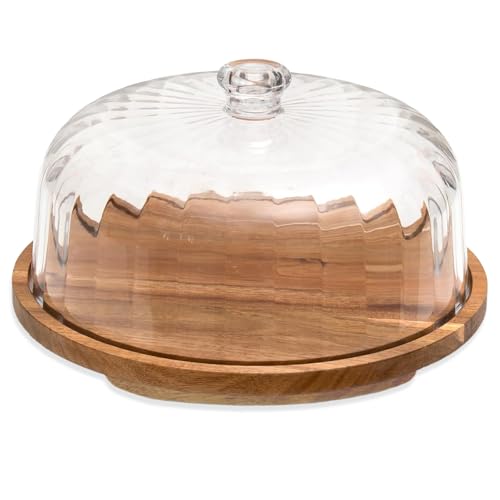
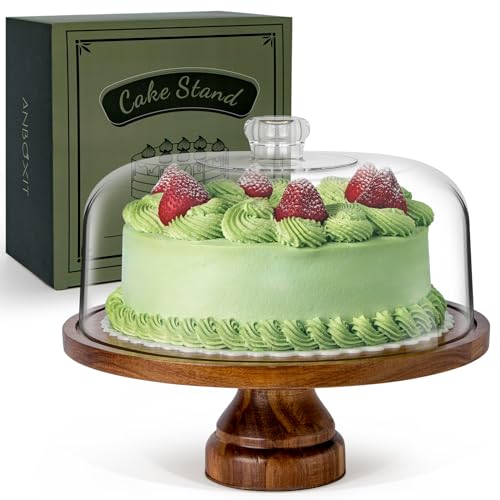
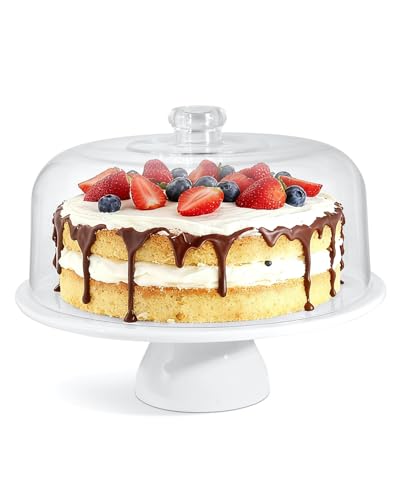
Lidded stands add dust protection, help cakes hold moisture, and turn the piece into a true display object. Glass domes, as documented on the Libbey and VIVIRBIEN stands, give the most premium feel and a slightly heavier hand during transport. Acrylic domes are the more common choice across the JOCHER, VALESKA, HOMESPHERE, ANBOXIT, and Vacream entries because they stay shatter-resistant while keeping the dessert fully visible. If you bake often and want fuss-free cleanup, an acrylic dome with a deepened lip, such as the JOCHER 12-inch design, offers a tight fit that helps the cover stay put during service.
Dual-Purpose Versatility
Many wood cake stands pull double duty as charcuterie boards or serving trays, and the listings give specific evidence for these functions. A removable pedestal foot, as on the ANBOXIT stand, lets you drop the height when you want a flat serving plate. Think about whether you entertain more often with cake, cheese, or both, then weight dual-purpose features accordingly.
Tiered Sets vs Single Stands
Single-tier stands, like the Libbey and Mela Artisans designs, are best when one centerpiece is the goal and you have room for a large footprint. Trade-offs to weigh include storage space, since three separate stands take more cabinet room, and assembly time, since most tiered sets ship flat and require screw or snap assembly before first use. If you only need to show one cake at a time but value presentation height, a footed single-stand design with a dome often does the job with less storage overhead.
Setup and Maintenance
Hand-washing is the documented rule of thumb across most wood stands in the pool, with wipe-clean damp cloth care highlighted on the Libbey, JOCHER, and VALESKA entries. Acrylic domes resist shattering but may scratch over time, which is worth considering if you frequently use knives near the cover. A few models document a weighted base or wobble-free mechanism, which keeps the stand steady when slicing larger cakes. If you take a stand on the road for events, lighter builds, like HOMESPHERE and VIVIRBIEN, travel more easily, while heavier candidates such as the HouseJoy rectangular stand feel more anchored once placed.
Final Recommendation
JOCHER 12-Inch Acacia Wood Cake Stand with Tall Acrylic Dome ranks first overall in this specification-based comparison under the published weighted criteria.
After comparing wood quality, structural stability, dimensions, covering design, versatility, and maintenance, the highest-scoring entry is the Libbey Acacia Wood Cake Stand with Glass Dome, making it the first overall specification-based choice among the top wood cake stands highlighted here. The combination of acacia construction, a genuine glass dome, a footed pedestal, and a clearly documented grip-friendly raised board gives it a presentation edge that few acrylic-domed alternatives can match.
For shoppers who prefer a shatter-resistant cover and an invertible base for charcuterie, the JOCHER 12-Inch Acacia Wood Cake Stand with Acrylic Dome is a sensible runner-up, pairing a snap-on dome with a deepened lip for everyday hosting. If your hosting leans toward larger bakes or rectangular spreads, the HouseJoy 16-Inch Rectangular Acacia Wood Cake Stand stands apart with the largest footprint and tallest internal clearance in the pool, while hosts who want tool-free setup will find the VIVIRBIEN Magnetic Pedestal stand uniquely easy to live with. Together, these picks illustrate how the best wood cake stands can be matched to different event scales, from a quiet family dessert to a full wedding table, without leaving the category’s core features behind.
Frequently Asked Questions
Among the best wood cake stands, what size wood cake stand should I choose for a standard cake?
A 12-inch round wood cake stand lines up with the most common cake board sizes and gives a small visual border around the cake, so it is a safe starting point. Compact 10- or 11-inch stands, like the VIVIRBIEN model, work well for smaller layer cakes and tight table settings.
Are lidded wood cake stands worth it for everyday use?
Lidded designs help keep dust off cakes between slices and lock in moisture, which is useful for parties where dessert sits out for a while. They also turn the stand into a closed display object between events, so a model like the JOCHER 12-Inch Acacia Wood Cake Stand with Acrylic Dome doubles as countertop decor.
How do I care for an acacia or mango wood cake stand?
The listings document hand-washing or wipe-clean care for nearly every wood stand, often with mild soap and immediate towel drying. Treating the surface with food-safe oil on a routine basis and avoiding prolonged water contact helps both acacia and mango woods hold their finish.
Are acrylic domes a good substitute for glass on wood cake stands?
Acrylic domes are lighter, shatter-resistant, and easy to transport, which is why most wood cake stands in this comparison pair acacia or mango with acrylic rather than glass. Glass domes, such as those on the Libbey and VIVIRBIEN stands, still feel more formal and scratch-resistant, so the choice depends on whether safety or presentation matters more for your setting.
When does a tiered wood cake stand set make more sense than a single stand?
Tiered sets work best when you want to present several dessert types at once, such as cupcakes, cookies, and a full cake, or when you want to vary heights on a dessert table. A single lidded stand is simpler for everyday kitchen display and uses less storage space when not entertaining.