Buying Guide
Choosing among the best ankle balance boards starts with the movement you want to practice. These products are not all the same type of trainer: most selected models use a single-foot platform, while their bases, rods, bars, and adjustment systems change how much control the user has. A specification-based comparison is useful because the listing details reveal whether a board is aimed at gentle mobility work, progressive instability, or general balance practice.
Match the board to the training goal
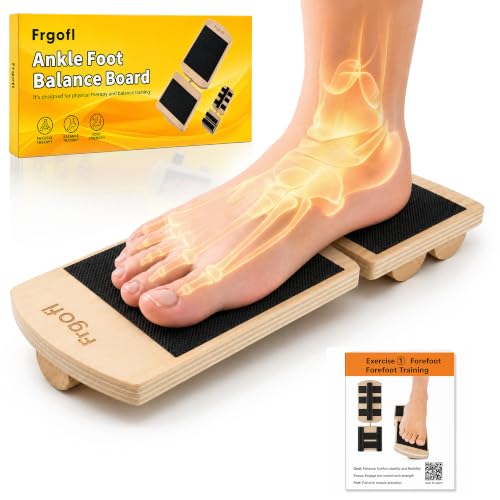
For focused ankle work, prioritize a single-leg layout. The SIDEKICK AxisBoard, Just RoQH Bamboo Axis Board, Frgofl, and WANYIDA products all describe one-foot or foot-and-ankle-specific training. A single-foot platform can make the exercise more targeted than a large two-foot wobble board, but it may also require more control at the start.
For rehabilitation-oriented use, look for a stated progression system and clear instructions. The AxisBoard documents structured 10-day programs, while Frgofl includes an illustrated guide and QR-code tutorials. Just RoQH provides two training levels, and Visader lists 10 named exercises in its manual. These features do not replace professional advice, especially after surgery or an acute injury, but they can make the intended setup easier to understand.
Understand adjustment systems
Adjustment is the most important difference among the top ankle balance boards. Peg systems, such as those described for the AxisBoard and Frgofl, offer many setup combinations and can support gradual changes. Rod systems, such as MODURE and Visader, use interchangeable or repositionable parts to change instability. A removable bar and different sphere sizes, as on Varnix, provide a simpler staged approach.
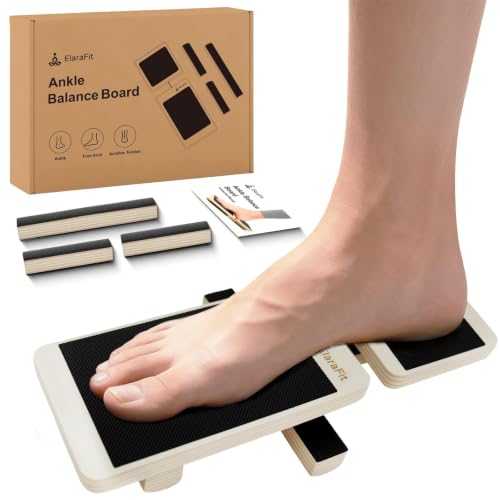
Foot-bar positioning is another form of adjustment. Yes4All documents normal, eversion, and ankle varus modes, along with easy, medium, and hard setups. ElaraFit describes parallel, triangle, and single-bar arrangements. These named positions are helpful when you want to repeat a particular setup, but they are not interchangeable with a clinician-prescribed exercise plan.
A secure-feeling surface matters because ankle training involves controlled weight shifts. Most selected boards document anti-slip, textured, or non-skid surfaces. The AxisBoard uses an anti-slip surface, WANYIDA specifies a non-slip coating, and StrongTek describes textured foot pads with a floor-gripping base. The Just RoQH board lists a high-grip surface, while the MODURE listing describes shatterproof non-slip grip features.
Wood construction is common in this category. Bamboo appears on the Just RoQH board, birch plywood on WANYIDA and Varnix, and cross-layered pine on MODURE. These material descriptions help identify the build format, but they do not independently establish long-term performance. Also consider whether you will train barefoot, in socks, or in shoes; the listings vary in how they describe surface comfort and intended use.
Consider size, storage, and setup time
Compact boards are easier to keep near a desk, therapy area, or gym bag. StrongTek uses a foldable two-panel design, while several other selected models include carry bags. Visader, WANYIDA, and ElaraFit describe compact or portable formats. A board with multiple rods or pegs may be more capable, but it can need extra time to change between configurations.
Before choosing, check the listed dimensions and any stated foot-size or support limits. Yes4All identifies compatibility through US size 12 and a 215-pound capacity. Frgofl, ElaraFit, and other products state different support limits. Treat those figures as product-listing specifications rather than a recommendation for a particular user.
Use guidance responsibly
Instruction quality varies from a basic manual to app-supported programs and QR video demonstrations. If you are new to single-leg balance work, a guide can help you begin with support, understand the available positions, and progress more deliberately. StrongTek explicitly mentions starting with chair support. For pain, recent injury, surgery recovery, or uncertainty about loading, consult a qualified healthcare professional before using any balance trainer.
Final recommendation
SIDEKICK AxisBoard ranks first overall in this specification-based comparison under the published weighted criteria.
SIDEKICK AxisBoard is the highest-scoring returned product and the first overall specification-based choice. It has the most specification-aligned combination of ankle-specific design, extensive adjustment, grip, and structured guidance. Frgofl is a close alternative for users who want a high stated support limit and configurable peg training. Choose Just RoQH for fast two-level changes, MODURE for interchangeable-rod progression, or WANYIDA for compact video-guided use. Among the best ankle balance boards, the right pick depends less on a generic ranking than on the adjustment style, guidance, and portability you will actually use. These are also practical options among the top ankle balance boards for different training preferences.
Frequently Asked Questions
Are the best ankle balance boards suitable after an ankle sprain?
Several selected listings describe use for sprain recovery, including the AxisBoard, Frgofl, Just RoQH, and WANYIDA. However, a product listing cannot determine whether loading is appropriate for your injury. Follow guidance from a qualified clinician, begin with the most controlled setup available, and stop if the activity causes pain or instability.
Should I choose a single-leg board or a larger wobble board?
The products selected here primarily use single-leg formats because the category centers on targeted foot and ankle training. Single-leg designs can provide focused positioning and progression. Larger two-foot wobble boards are a different design category and may suit general balance or core work rather than the more targeted use described by these products.
Which board is easiest to progress?
The AxisBoard and Frgofl document extensive peg adjustment. MODURE offers two interchangeable rod types, while ElaraFit lists three bar arrangements and Varnix describes three optional levels. For a simpler progression, choose a model with clearly named settings rather than one requiring many small configuration changes.
Do I need an app or QR videos?
No. Visader supplies a manual with 10 exercises, and several other boards include printed or illustrated guides. App and QR-video support may be useful if you prefer visual demonstrations, but a screen-free routine can be more convenient for users who want a basic, repeatable setup.
What should I check before buying?
Confirm the board’s dimensions, stated support limit, surface design, adjustment method, included guidance, and storage format. Also check whether the listing describes the specific movement you need, such as single-leg balance, inversion and eversion positioning, or adjustable instability. Those details are more useful than relying on a general label alone.