Buying Guide
Choosing the best acrylic latex caulk starts with the joint rather than the brand name. Acrylic latex formulas are commonly selected because they can be painted and cleaned with water, but the supplied products vary considerably in movement capacity, moisture resistance, color, and intended use. A trim bead, a wide exterior gap, and a kitchen joint should not be treated as the same application.
For stable seams and ordinary finish work, a general-purpose acrylic latex product may be sufficient. For joints around windows, doors, siding, or trim that expand and contract, look for explicit flexibility or elastomeric language. DAP Extreme Stretch lists movement of up to 600% and joints up to 3 inches wide. Sashco Big Stretch lists up to 500% stretch and gaps up to 2 inches. Those claims make both products more appropriate for unusually active or wide joints than a basic painter’s caulk.
The Titebond Pro-Grade Plus formula gives a more specific movement figure of plus-or-minus 25% and is also described as flexible and water resistant. Akfix AS606 lists movement tolerance up to 15%. These figures are useful comparison points, but they do not mean every product is suitable for every gap. Joint condition, backing material, bead size, and preparation still matter. If the listing does not provide a movement figure, avoid assuming that it matches a stretch-focused sealant.
Check the surfaces before buying
Adhesion evidence is particularly useful when a joint crosses several materials. Titebond Pro-Grade Plus lists wood, metal, glass, tile, drywall, plaster, concrete, plastic, fiberglass, masonry, aluminum, and brick. Sashco Big Stretch also lists a very broad range that includes metals, glass, plastics, wood, stone, stucco, brick, and fiber cement. These products are better documented for mixed-substrate work than products whose evidence only says all purpose.
That focused evidence makes it a logical choice when the project is primarily decorative molding rather than a large exterior gap.
Always consider whether the surface is painted, porous, metallic, or exposed to water. The listed substrate claims support comparison, not a guarantee of adhesion to an unprepared surface. Clean, dry, sound surfaces and compatibility checks remain important, especially when combining different materials.
Decide how soon the bead must be painted
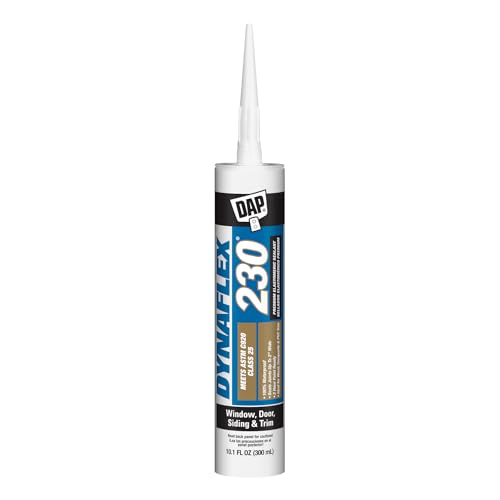
Paintability is one of acrylic latex caulk’s main practical advantages, but the timing differs. DAP Extreme Stretch, DAP Dynaflex 230 Pro, and Titebond Pro-Grade Plus are listed as paintable in 2 hours. Titebond 7401 is described as quick drying and easy to paint, but the supplied evidence does not provide a specific interval.
A fast paint-ready claim can help with trim touch-ups and short project windows, but it should not be confused with full cure. Follow the product’s stated instructions and allow the sealant to cure before exposing it to conditions named on the label.
Color also affects the finished result. Most selections are white, while Titebond Pro-Grade Plus is brown and DAP Extreme Stretch is tan. Red Devil 0777 is listed as clear, although it extrudes white and may take up to 2 weeks to dry clear. DAP Dynaflex 230 Clear likewise applies white and dries clear over 7 to 14 days. Clear products can be useful where a white bead would show, but the transition should be planned.
Consider moisture and outdoor exposure
For wet or weather-exposed areas, prioritize explicit evidence rather than assuming every acrylic latex caulk is waterproof. DAP Extreme Stretch lists a 100% waterproof and weatherproof seal. DAP Dynaflex 230 Pro is also listed as 100% waterproof and weatherproof, while Titebond Pro-Grade Plus specifies a water-resistant seal and indoor/outdoor use. Akfix AS606 lists a waterproof, flexible cured seal and is primarily positioned for interior sealing.
White Lightning adds a different moisture-related feature: its cured sealant is listed as mold and mildew resistant. That is a distinct specification, but it does not by itself establish that the product is intended for constant water exposure.
Weigh cleanup, odor, and project quantity
Water cleanup and low odor can make application more convenient, particularly indoors. Titebond Pro-Grade Plus lists quick drying and paintability but does not state water cleanup in the supplied points, so it should not be assumed.
Pack size is another practical consideration. Most selected products are listed as single cartridges, while Akfix AS606 is presented as a 12-cartridge project pack. Sashco Big Stretch is also listed as a 12-pack. Larger packs may suit repeated repairs or renovation work, but they require enough planned use and appropriate storage. Compare the cartridge size and the actual project quantity before choosing a multi-pack.
Final recommendation
DAP Extreme Stretch Acrylic Urethane Sealant ranks first overall in this specification-based comparison under the published weighted criteria.
The final choice among the best acrylic latex caulk depends on the documented features that match your intended use.
DAP Extreme Stretch Acrylic Urethane Sealant is the highest-scoring returned product and the first overall specification-based choice. Its documented 600% stretch, 3-inch joint capability, waterproof and weatherproof positioning, 2-hour paintability, and low-odor water cleanup give it the most specification-aligned combination for demanding moving joints.
For a top acrylic latex caulk focused on extreme elasticity and broad gap coverage, Sashco Big Stretch is a close alternative with up to 500% stretch and a 2-inch gap claim. DAP Dynaflex 230 Pro is better aligned with window and door work, while Titebond Pro-Grade Plus offers unusually broad listed substrate coverage and a specific movement figure.
White Lightning is worth considering when its mold- and mildew-resistance claim is relevant. Titebond 7401 is a sensible interior pre-paint choice, and Akfix AS606 suits buyers planning a larger multi-cartridge job.
No selection should be treated as universally correct. Match color, joint width, movement, water exposure, substrate, and cure instructions to the actual installation. The listed specifications make the products comparable, but they do not replace the manufacturer’s application directions.
Frequently Asked Questions
What is the best acrylic latex caulk for a wide moving joint?
DAP Extreme Stretch Acrylic Urethane Sealant has the most specification-aligned supplied movement claim among the selected products: up to 600% stretch and joints up to 3 inches wide. Sashco Big Stretch lists up to 500% stretch and gaps up to 2 inches. Either is more specifically documented for large movement than the general-purpose options, but joint preparation and product instructions still control suitability.
Which selected caulk is easiest to paint quickly?
Several other products, including DAP Dynaflex 230 Pro and Titebond Pro-Grade Plus, list a 2-hour paint window. The paint-ready time is not the same as full cure, so follow the stated water-exposure and curing guidance.
Is the best acrylic latex caulk automatically waterproof?
No. Acrylic latex products differ in how explicitly they document moisture performance. DAP Extreme Stretch and DAP Dynaflex 230 Pro list 100% waterproof and weatherproof seals. Titebond Pro-Grade Plus lists a water-resistant seal, while White Lightning lists mold and mildew resistance after curing. Use the product whose documented exposure rating matches the joint.
Which caulk is best for trim and baseboards?
Should I buy a multi-pack?
A multi-pack makes practical sense when the project includes many windows, doors, baseboards, or repeated crack repairs. Akfix AS606 and Sashco Big Stretch are listed in 12-cartridge configurations. For a small repair, a single cartridge may be easier to use before the material reaches its storage limit; check the package directions for storage and shelf-life information.