Buying Guide
Choosing the best window and door weather stripping starts with the opening, not the material label. Measure the gap with the door or window closed, note whether the surfaces meet smoothly or slide past each other, and check how much room remains for a seal to compress. A strip that is too thick can interfere with closing, while one that is too thin may leave an opening.
Match the seal profile to the opening
Foam tape is a flexible choice for simple frame gaps. Frost King R338H has a 3/8-inch width and 3/16-inch thickness, while Kikerike and DGSL provide 1/2-inch-wide by 1/4-inch-thick formats. Foam can be cut and bent, which helps around corners and interruptions.
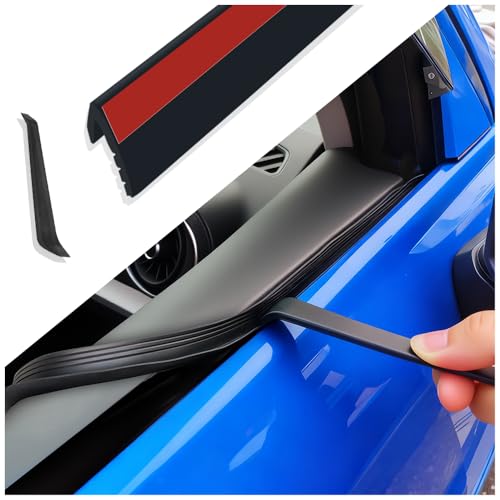
D-shaped seals are designed to compress against a surface. CHENYA documents a 3.5- to 6-millimeter gap range and uses EPDM rubber with a hollow D-shaped profile. VITAM AMO documents a 5/16- to 15/32-inch range and uses EPDM rubber with a multi-hole design. These products are useful reference points when the opening is wider than a small foam-tape gap.
Brush or pile seals are especially relevant to sliding openings. Bruiefpap lists brush heights for 0.1- to 0.5-inch gaps, including a 0.35-inch version intended for 0.2- to 0.3-inch gaps. UpinFun also uses a woven brush format and lists sliding doors and windows among its applications. Measure the channel before ordering.
Compare materials and coverage
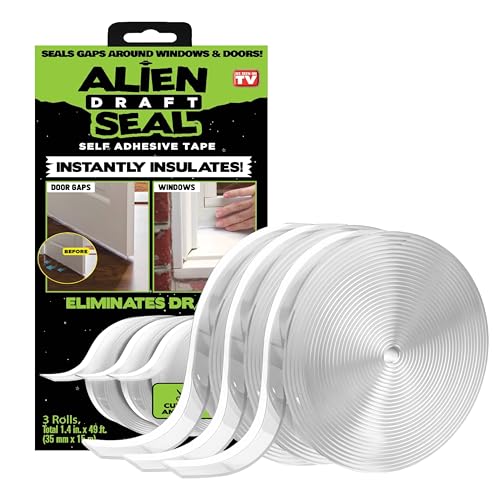
EPDM appears in VITAM AMO and CHENYA. VITAM AMO describes low-temperature use and inside or outside applications, while CHENYA pairs EPDM with a hollow D profile. Silicone appears in Benory, Brandzini, and ALIEN TAPE, with those listings emphasizing flexibility, transparency, or moisture-oriented applications.
DGSL identifies CR foam and neoprene and lists use from -50°C to 150°C. Kikerike uses EVA and lists -4°F to 140°F. These are supplied specifications, not independent test results. Adhesive performance can also depend on a clean, dry surface and suitable application temperature.
Coverage matters for multi-opening projects. ALIEN TAPE offers 49 feet across three rolls, Kikerike provides 42 feet across two rolls, Bruiefpap provides 39.4 feet, and UpinFun and Brandzini provide 33 feet. Longer rolls may reduce joins, but a shorter roll with better fit guidance may be easier to install predictably. Add material for corners, trimming, and mistakes.
Review adhesive and surface preparation
Most selected products are self-adhesive. Clean and dry the mounting surface before application. Benory says to press both adhesive surfaces firmly, while ALIEN TAPE identifies wood, glass, metal, ceramic, fiberglass, and plastic among its compatible surfaces. Brandzini describes measuring, cutting, cleaning, peeling, and pressing.
Temperature can affect installation. Where a listing recommends warming the adhesive in colder conditions, follow that instruction rather than applying tape to a cold or damp frame. Allow the adhesive to bond before repeatedly operating the door or window when the product directions call for it.
Consider noise and moisture claims carefully
Several products describe sound reduction, including VITAM AMO’s multi-hole design, CHENYA’s hollow D structure, and ALIEN TAPE’s silicone flap. These are listing-supported design claims, not independent test results. Weather stripping can close paths for air and light, but noise reduction depends on the opening, surrounding construction, and installation.
For moisture-oriented locations, Benory, Brandzini, and ALIEN TAPE describe silicone or transparent designs for exterior or moisture-prone applications. Confirm that the mounting surface and exposure match the instructions. A frame seal is not automatically a substitute for a dedicated threshold or door sweep.
Final Recommendation
Bruiefpap 39.4-Foot Brush Weather Stripping ranks first overall in this specification-based comparison under the published weighted criteria.
The best window and door weather stripping depends on the documented features that match your use. Bruiefpap leads for sliding openings because it provides several brush-height choices and explicit gap guidance. CHENYA is an alternative when its metric D-profile range matches the opening. VITAM AMO suits a documented larger gap range, while ALIEN TAPE and Brandzini offer transparent flap or wide-strip designs.
The top window and door weather stripping choice depends on fit more than on a generic label. Choose Frost King for a compact foam format, Kikerike for two long EVA rolls, DGSL for its stated temperature range, Benory for a two-surface T-shaped design, or UpinFun for a long brush profile. Before ordering, verify the gap, surface, roll length, and installation temperature.
Frequently Asked Questions
How do I choose the best window and door weather stripping for a measured gap?
Start with the gap at several points while the opening is closed. Compare it with a stated fit range when available. VITAM AMO gives a 5/16- to 15/32-inch range, CHENYA gives 3.5 to 6 millimeters, and Bruiefpap provides several brush-height ranges. Frost King, Kikerike, and DGSL provide strip dimensions but not a specific compatible-gap range, so compare thickness and profile carefully.
Is foam or rubber better for a door or window seal?
Neither is universally better from the supplied specifications. Frost King, Kikerike, and DGSL use foam formats that can be cut or shaped. VITAM AMO and CHENYA use EPDM; VITAM AMO documents interior and exterior use and low-temperature performance. Select the profile that fits the gap and the material details that match the exposure.
Which weather stripping is suitable for sliding windows?
Brush or pile designs are specifically documented for sliding openings. Bruiefpap lists sliding doors and windows and provides several brush heights. UpinFun also lists sliding doors and windows. Measure the side or bottom channel because a brush height that is too large may interfere with movement.
Can clear silicone weather stripping be used on visible frames?
Benory, Brandzini, and ALIEN TAPE document clear or transparent silicone designs. Benory is a clear T-shaped strip for exterior doors, Brandzini is a clear 35-millimeter-wide strip, and ALIEN TAPE is a transparent flap-style seal. These designs may be less visually prominent, but the mounting surface and gap still need to match the instructions.
What preparation is needed before applying adhesive weather stripping?
Measure and cut the strip first, then clean and dry the mounting surface. Press the adhesive firmly along the frame and follow product-specific guidance about warming the backing in cold conditions. The supplied listings for Benory, Brandzini, and ALIEN TAPE describe versions of this measure, prepare, peel, and press process.