Buying Guide
The best high-temperature aluminum tape is not defined by temperature wording alone. A useful comparison should also consider the foil or fiberglass structure, adhesive information, roll dimensions, and the conditions named in the listing. The products above are ranked from supplied specifications and feature descriptions. They were not hands-on tested, and the ranking does not summarize customer opinions.
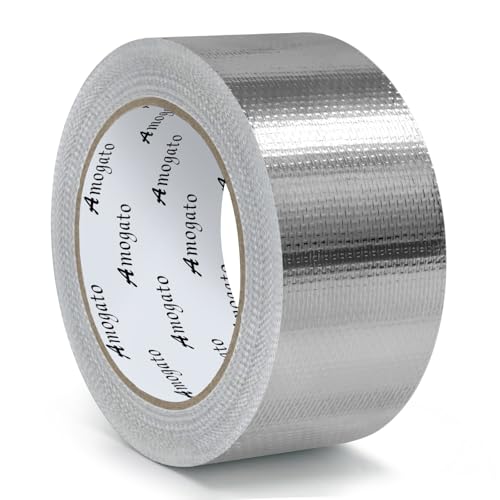
Start by identifying the hottest surface or environment the tape will encounter. A listing with a numerical range is easier to compare than a general claim such as “high temperature.” The 3M 2113NA listing states resistance up to 600°F, while AMOGATO states up to 500°F. STIKPACK gives a figure up to 300°C, which is a different unit and should not be compared casually without conversion. Other products provide lower explicit ranges, such as 3M 3340 at -40°F to 300°F, Nashua 330X at -35°F to 260°F, and BUCK at -40°F to 250°F.
These figures describe the supplied listing information, not a guarantee for every installation. Surface temperature, contact time, pressure, substrate condition, and the adhesive system can all affect suitability. For an HVAC duct seam, a tape documented for duct closure may be more relevant than a heat-shield product whose listing emphasizes reflective protection. For exhaust-related work, look for a product that specifically names exhaust pipes, mufflers, or automotive repairs, such as AMOGATO or Ealyder Tape.
Choose standard foil or fiberglass-reinforced construction
Standard aluminum foil tape is generally suited to sealing, patching, vapor barriers, and joining duct materials when a smooth foil surface and adhesive backing are the primary requirements. 3M 3340 documents a 2.0-mil foil backing and 4.0-mil total thickness, along with a pressure-sensitive acrylic adhesive and a release liner. Nashua 330X documents a 3.5-mil aluminum backing and a high-tack bond.
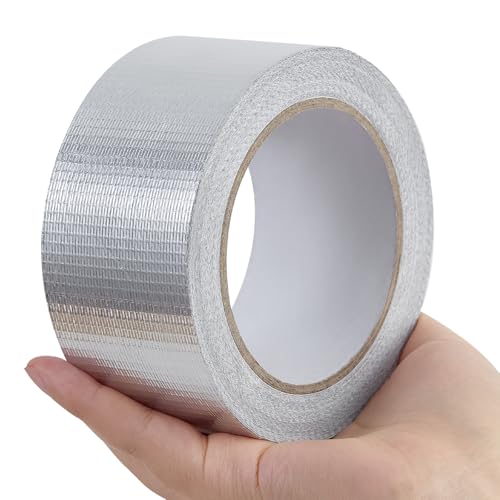
Fiberglass-reinforced products add a fabric layer or mesh to the foil structure. STIKPACK, AMOGATO, QIEOTE, and Ealyder Tape all document fiberglass or fiberglass cloth construction. The supplied listings associate that structure with toughness, tensile strength, tear resistance, wear resistance, or puncture resistance. Reinforcement can be useful when tape must wrap an irregular part, cover a larger repair, or tolerate more handling during installation. It may be unnecessary for a short, clean duct seam where a standard foil tape already provides the needed format.
Adhesive details help distinguish a product intended for a specific sealing task from one described only in broad terms. 3M 3340 specifies a pressure-sensitive acrylic adhesive and names duct closure, vapor sealing, flexible air ducts, and reinforced or rigid fiberglass duct board. Nashua 330X describes a high-tack, aggressive bond for heating, air conditioning, and ventilation systems.
Several other listings describe adhesion across multiple substrates. BUCK names sheet metal, plastic, fiberglass, and ductboard. QIEOTE names PVC, wood, metal, glass, stainless steel, ceramic, and tile. Ealyder Tape describes a pressure-sensitive adhesive for pipes, ducts, and equipment. These details can help when a repair crosses materials, but they do not replace basic preparation. COSIMIXO specifically advises applying the tape to a clean, dry surface free of grease, oil, or other contaminants. That is a practical requirement for comparing any adhesive-backed tape.
Use roll width and length to plan coverage
Width affects how much surface one strip covers and how easily it fits around a seam. The narrowest selected option is the 1.5-inch 3M 2113NA roll, which can be convenient for focused hot-air duct sealing. Most HVAC choices are 2 inches wide, including AMOGATO, QIEOTE, BUCK, and Angkeel. STIKPACK and Ealyder Tape are 3 inches wide, while COSIMIXO is 4 inches wide.
Longer rolls are more practical for extended ductwork, insulation runs, or repeated wrapping. BUCK lists 72 yards, Ealyder Tape lists 82 feet, and COSIMIXO lists 55 yards. STIKPACK and AMOGATO each list 66 feet, while 3M 3340 lists 50 yards. A wide roll can reduce overlaps on broad seams, but it can also be less convenient around narrow fittings. Measure the seam, bend, or repair area before choosing a format.
Consider moisture, weather, and barrier claims
Aluminum foil can serve as a barrier, but the product descriptions vary in the protections they document. 3M 3340 describes resistance to moisture, dust, and many chemicals and is listed for two HVAC closure standards. Nashua 330X describes resistance to UV rays, moisture, mold, and mildew. BUCK describes resistance to UV exposure and moisture, while COSIMIXO lists moisture, weather, UV degradation, flame, and smoke transmission resistance.
Reinforced heat-shield listings also emphasize waterproofing and reflective or insulating functions. STIKPACK documents waterproofing, corrosion resistance, aging resistance, and flame retardancy. AMOGATO describes waterproofing, flame retardancy, and heat shielding. These claims can be relevant outdoors or near insulation, but the tape should still be matched to the specific system and surface. Do not treat a general environmental claim as a substitute for an application-specific code, certification, or manufacturer instruction.
Final recommendation
STIKPACK 3-Inch Fiberglass Heat Shield Tape ranks first overall in this specification-based comparison under the published weighted criteria.
STIKPACK Aluminum Foil Heat Shield Tape is the first overall specification-based choice for shoppers seeking the best high-temperature aluminum tape. Its documented resistance up to 300°C, fiberglass reinforcement, 3-inch width, 66-foot length, and broad HVAC and heat-shield applications give it the most specification-aligned combined specification profile in this comparison. It is a top high-temperature aluminum tape pick when wide coverage and reinforced construction matter.
Choose AMOGATO instead when the primary task is an exhaust or muffler repair and a clear 500°F statement is important. Choose 3M 3340 for HVAC duct closure where UL181A-P and UL181B-FX listings are central to the decision. Nashua 330X is a practical alternative for weather-exposed HVAC work, while BUCK provides a long 72-yard roll for extended duct projects.
For thicker reinforced construction, QIEOTE is worth considering. Angkeel is the more versatile choice when the listing’s EMI/RFI shielding application matters. COSIMIXO’s 4-inch width suits broad seams, Ealyder Tape offers a long reinforced roll, and 3M 2113NA is the focused option for hot-air duct sealing with a stated 600°F resistance. In every case, verify the actual surface temperature, substrate, and installation requirements before applying tape.
Frequently Asked Questions
What is the best high-temperature aluminum tape for HVAC ductwork?
3M Aluminum Foil Tape 3340 is the most specifically documented HVAC choice in this selection because its listing names duct closure and vapor sealing and includes UL181A-P and UL181B-FX listings. Nashua 330X and BUCK also document HVAC duct applications, while STIKPACK and AMOGATO are broader heat-shield options. Select based on the duct material, temperature range, required width, and any code or project requirements.
Is fiberglass-reinforced foil tape different from standard aluminum foil tape?
Yes. Fiberglass-reinforced designs add fiberglass cloth or mesh to the foil structure. In the supplied listings, STIKPACK, AMOGATO, QIEOTE, and Ealyder Tape describe fiberglass reinforcement along with properties such as tear resistance, tensile strength, wear resistance, or puncture resistance. Standard foil products such as 3M 3340 and Nashua 330X may be better suited to documented HVAC closure or smooth sealing work where fabric reinforcement is not required.
3M 2113NA lists heat resistance up to 600°F, the highest explicit Fahrenheit figure among the selected products. AMOGATO lists up to 500°F, and STIKPACK lists up to 300°C. Because these figures use different units and may describe different application conditions, compare the manufacturer’s complete instructions and the actual surface temperature rather than relying on the headline number alone.
Does a wider roll always provide a better seal?
No. A wider roll covers more surface per strip and may reduce overlaps on broad seams, but it can be harder to position around narrow fittings or curved components. COSIMIXO lists a 4-inch width, STIKPACK and Ealyder Tape list 3-inch widths, and several HVAC choices list 2-inch widths. The best width depends on the seam geometry, access, and amount of overlap required.
How should aluminum foil tape surfaces be prepared?
The supplied COSIMIXO listing advises using a surface that is clean, dry, and free of grease, oil, or other contaminants. That preparation guidance is relevant to adhesive-backed foil tape generally. Remove loose material, dry the area, and confirm that the tape is suitable for the substrate and expected heat. Follow any application limitations in the product instructions, especially for exhaust, furnace, or other high-temperature locations.