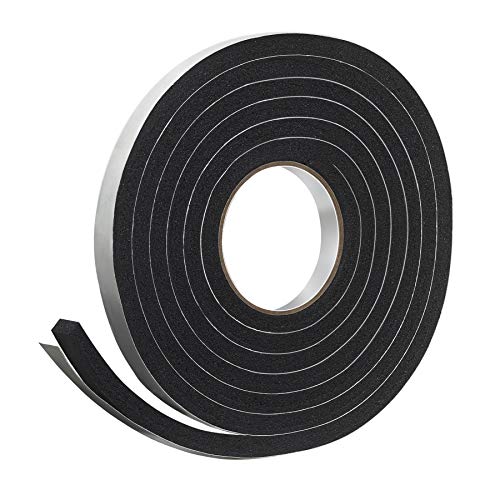
Buying Guide
The best vinyl electrical tape is not determined by roll length alone. Start with the job’s electrical requirement, then check temperature, exposure, construction, adhesive, and pack format. The products here are vinyl or PVC electrical tapes described for insulation, cable protection, repairs, bundling, or color coding. This is a specification-based comparison using public listing data, not a hands-on test.
Match the electrical application
Look for a stated voltage limit or a recognized listing when the tape will be used for electrical insulation. The selected 3M options and Amazon Basics provide clear certification or application evidence. Temflex 175 is specified for primary insulation up to 600 volts at 80°C and includes additional Canadian-code conditions. GTSE is listed for up to 600 volts and 176°F. These figures describe the products’ stated application limits; they do not replace local electrical codes or proper repair practices.
If the tape is primarily for marking rather than insulating, Scotch 35 is specifically described for phase identification, motor leads, piping systems, and safety areas. That makes it a more targeted choice when color carries information. GTSE’s mixed-color pack offers a broader set of rolls for identification across multiple cables.
Consider temperature and exposure
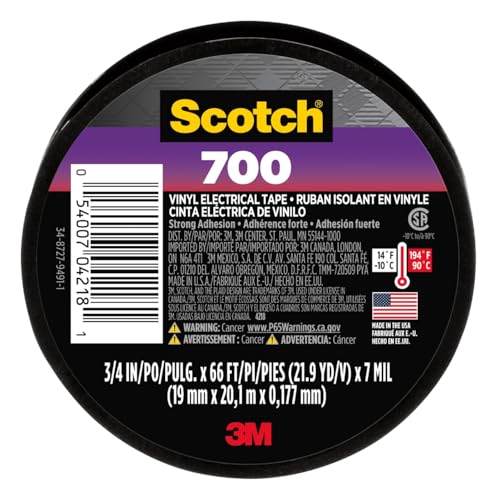
Temperature information is especially useful for automotive, outdoor, equipment, and maintenance work. Super 88 has the broadest stated range in this selection, from 0 to 221°F, and is described for indoor and outdoor conductor protection. Scotch 700 lists an adhesive temperature range from 32 to 176°F and is also described for above- and below-ground use.
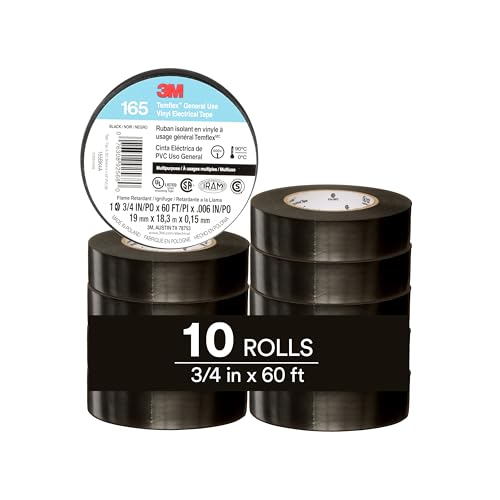
Temflex 165 is listed from 32 to 194°F, while Temflex 175 provides a 90°C thermal index and specifies minimum temperatures for its application categories. These products are better documented than options whose listings use general terms such as weather resistant without giving operating limits.
For outdoor exposure, prioritize listing details that mention moisture, UV, abrasion, corrosion, acids, oils, or weather. Super 88, Scotch 700, Lichamp, and WarriorWrap each document several of these resistance properties. The exact combination differs, so choose according to the exposure you expect rather than assuming every vinyl tape has identical protection.
A thicker tape may provide more covering material, while stretch and conformability help create a smooth wrap around irregular shapes. Super 88 is described as thicker for heavy-duty use while remaining conformable. Scotch 700 lists 200% elongation and high-strength stretch. Scotch Super 33+ is specifically described as conforming to irregular surfaces.
The selected products commonly list widths near 3/4 inch and thicknesses around 7 mil, but the roll formats are not identical. A 3/4-inch roll is a practical general-purpose size for many wire and cable tasks. Wider tape can cover larger bundles more quickly, although the selected comparison favors products with more complete electrical and application evidence.
Evaluate the adhesive and backing
PVC or vinyl backing provides the insulating tape structure, while the adhesive affects how the wrap holds to a cable, splice, or other surface. Super 88, Scotch 35, and Temflex 165 specify rubber-based adhesive systems. Scotch 700 emphasizes high adhesion across a stated temperature range, and Lichamp describes superior adhesion alongside an abrasion-resistant backing.
A tape that resists moisture, abrasion, chemicals, or corrosion may be more suitable for exposed cable jacketing or mechanical protection than a tape listed only for basic household repairs. Still, listing language should be read narrowly: resistance claims do not establish that a product is suitable for every environment or installation.
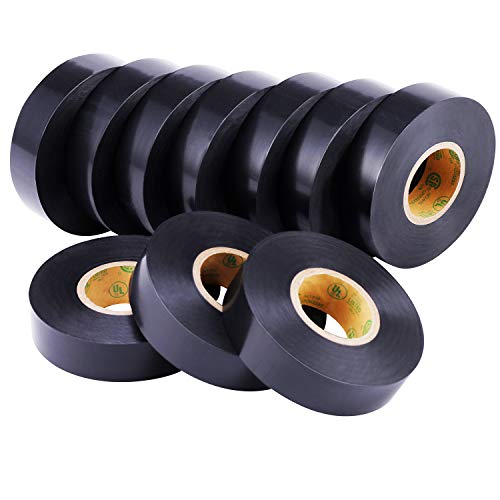
Single rolls work well for a small repair or a toolbox that already has supplies. Multi-roll packs make more sense for repeated maintenance, multiple work areas, or color identification. Lichamp supplies ten individually wrapped black rolls, Temflex 165 and Temflex 175 each supply ten rolls, GTSE supplies ten mixed colors, and Amazon Basics supplies six black rolls.
Longer rolls reduce the need to replace stock during routine work, while shorter rolls may be easier to allocate to individual projects. Scotch Super 33+ combines three 66-foot rolls, making it a useful middle ground between a single roll and a large ten-roll supply. Count both the number of rolls and the length per roll rather than judging a pack only by its headline quantity.
Specification-based buying checklist
Before choosing, verify five items: the listed voltage and certification; the operating or adhesive temperature range; resistance suited to moisture, UV, abrasion, or chemicals; thickness and flexibility for the shape being wrapped; and total roll quantity and length. Also check whether the product is intended for consumer use or industrial or occupational use. Temflex 165, for example, carries an industrial or occupational-use limitation in the supplied listing.
Final Recommendation
3M Scotch Super 88 Electrical Tape ranks first overall in this specification-based comparison under the published weighted criteria.
The final choice among the best vinyl electrical tape depends on the documented features that match your intended use.
3M Scotch Super 88 Electrical Tape is the highest-scoring returned product and the first overall specification-based choice. Its thicker PVC construction, 0 to 221°F stated range, flame retardance, outdoor suitability, and broad resistance list give it the most specification-aligned documented profile for demanding general electrical and mechanical protection.
Choose Scotch 700 if stretch and a 66-foot roll are more important, or Super 33+ if conformability and moisture-tight protection are central to the job. Temflex 175 is a strong choice for clearly specified indoor or protected-outdoor insulation, while GTSE is the most practical selected format when color coding matters. Together, these options cover the main needs for top vinyl electrical tape without relying on customer sentiment or volatile marketplace data.
Frequently Asked Questions
What is the best vinyl electrical tape for outdoor use?
Among the selected products, Super 88, Scotch 700, Lichamp, and WarriorWrap have explicit indoor or outdoor and weather-resistance language. Super 88 has the most extensive documented temperature and resistance profile. Confirm that the tape’s stated limits match the installation and follow applicable electrical requirements.
Is a 600-volt rating enough for every wiring repair?
No. A 600-volt statement is a product specification, not a universal approval for every wiring situation. The application, conductor type, temperature, installation method, local code, and required certification also matter. Use the tape only within the manufacturer’s stated conditions and seek qualified help when the repair is uncertain.
Which selected tape is best for color coding?
Scotch 35 is specifically designed for phase identification, motor-lead color coding, piping systems, and safety-area marking. GTSE’s ten mixed-color rolls are more useful when several colors and larger stock are needed. Select colors that match the labeling system used in the installation.
Are multi-roll packs better than single rolls?
They are more suitable when you perform recurring repairs, maintain several toolkits, or need multiple colors. A single roll can be more appropriate for an occasional task or a compact supply. Compare roll length as well as roll count: a larger number of short rolls does not necessarily provide more tape than fewer long rolls.
Does thicker vinyl electrical tape always provide better insulation?
Not automatically. Thickness can contribute to coverage and mechanical protection, but the correct choice also depends on voltage rating, temperature, adhesive, flexibility, certifications, and intended environment. Super 88 is described as thicker while remaining conformable, but each product should be judged by its complete specification set rather than thickness alone.