Buying Guide
The best tray cutting boards are not all built the same way. Some place a removable container beneath the cutting surface, some use slide-out drawers, and others treat the entire board as a serving tray. Start by deciding whether you need ingredient collection, transport, compartmentalized storage, or simply a board with handles.
A dedicated pull-out or slide-out tray is the most direct interpretation of a tray cutting board. BTUASSDY uses two removable stainless steel trays, while Cuisinart uses a hidden stainless steel sliding tray. Ecozoi also provides two stainless steel pull-out trays. These designs let you move chopped ingredients away from the main work area and may help keep scraps or prepared food organized.
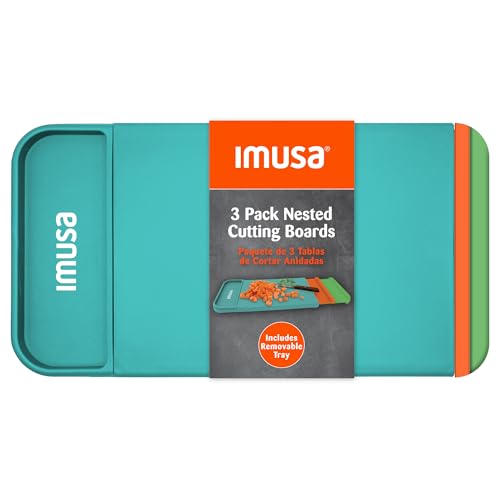
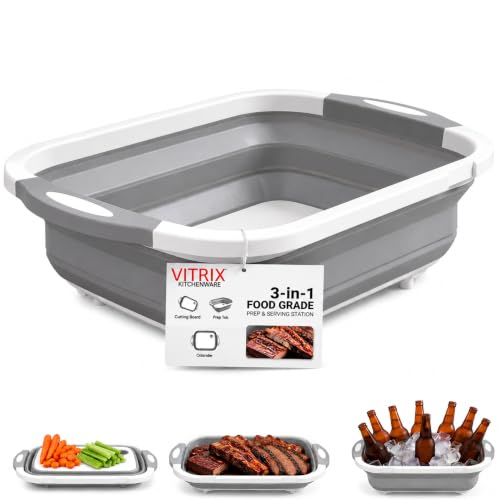
A collapsible or nesting format is more useful when storage and portability matter. HPYDIY documents a removable, collapsible tray, and OXO describes a board and tray that nest for transport and storage. IMUSA takes a different approach by nesting three color-coded plastic boards with one removable tray. That arrangement is useful when separating meat, vegetables, and fruit is more important than having one uninterrupted work surface.
Some products qualify as tray-style boards because they are intended to move food from the counter to the table. Dexas has integrated handles and is described for prep and serving. Empune similarly combines a bamboo chopping surface, side handles, and serving-tray use. These models do not provide an enclosed collection drawer, so they are better for carrying than for collecting chopped ingredients.
Match material to maintenance preferences
Bamboo appears throughout this category because it provides a wood prep surface while supporting serving use. BTUASSDY, Cuisinart, Ecozoi, HPYDIY, Farberware, and Empune all document bamboo construction or bamboo components. Bamboo models generally require more deliberate care than dishwasher-safe plastic parts: the supplied listings commonly recommend hand washing, drying, and periodic oil treatment.
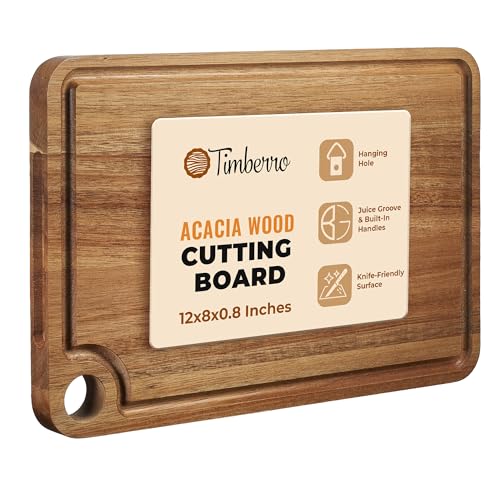
Acacia offers another wood option. The MEESS RCLH model uses an end-grain acacia format and includes a pull-out tray. That combination may appeal to shoppers who want a substantial butcher-block style board, but the listing calls for hand washing and regular oiling. Always check the care instructions for the exact model before placing wood components in water or a dishwasher.
Plastic is a practical choice when easy cleanup and color separation are priorities. IMUSA documents dishwasher-safe construction, while the OXO listing emphasizes a separate nesting tray and non-slip edge without specifying a dishwasher instruction in the supplied evidence. The plastic format may also be preferable for users who want a lighter, more compact setup, though surface feel and knife response will differ from wood.
Check liquid containment and stability
A juice groove is useful when preparing foods that release liquid. BTUASSDY, OXO, Ecozoi, Empune, and several other selected models document grooves or liquid-catching features. A groove can help keep juices from immediately reaching the countertop, but it does not replace careful handling or cleaning after use.
Stability features vary. BTUASSDY lists non-slip rubber feet, Ecozoi lists non-slip legs, OXO lists a non-slip edge, and HPYDIY describes a non-slip texture. Those details are more relevant for chopping than a tray alone. If the listing does not identify feet, an edge, or another grip feature, avoid assuming that the board will stay fixed on every countertop.
Raised boards can be convenient but take up more vertical storage space. Ecozoi lists a 2.75-inch height, and BTUASSDY describes a thick 1.26-inch construction. By contrast, the OXO board-and-tray system is much lower in its supplied dimensions. Compare the complete assembled footprint and height with your cabinet, drawer, or shelf before ordering.
Consider size and food workflow
Large surfaces help with substantial meal preparation, carving, and serving. Dexas lists a 20.25 by 12.5-inch footprint, while Empune lists 17.6 by 12 inches and BTUASSDY lists approximately 15.7 by 11.4 inches. Larger boards can reduce crowding, but they may be heavier or harder to wash in a small sink.
Compact systems can make more sense for apartments, dorms, RVs, and occasional preparation. IMUSA nests to 14 by 7.5 inches, HPYDIY measures approximately 12.8 by 9.7 inches, and OXO lists a 13.1 by 9.4-inch board. Smaller dimensions improve handling and storage, but they leave less room for multiple ingredients at once.
Think about what happens after chopping. If food must go to a grill, Cuisinart specifically describes its tray for that transfer. If food is headed to a picnic, Farberware combines a cutting-board lid with locking handles and separated snack compartments. If the goal is serving cheese or bread, Empune and Dexas emphasize carrying and presentation. The best selection is the one whose tray function matches your actual workflow.
Review cleaning and storage details
Removable stainless steel trays can simplify separating wet ingredients from the board, and Cuisinart specifically identifies its tray as dishwasher safe. IMUSA’s boards and tray are also described as dishwasher safe. Farberware lists a dishwasher-safe PP snack box but calls for hand washing its bamboo lid. These details show why it is important to evaluate each component independently rather than treating a complete set as uniformly dishwasher safe.
Wood boards need a different routine. BTUASSDY says its bamboo surface is easy to clean, while Empune and MEESS RCLH provide hand-washing and oiling guidance. Ecozoi also documents warm soapy water and bamboo oil care. Keep wood dry after washing and follow the supplied instructions for conditioning.
Storage is another key distinction. OXO’s nesting design, IMUSA’s nested set, and HPYDIY’s hangable design directly address limited space. Dedicated drawers may be helpful during preparation but can increase the assembled board’s height and the number of pieces to store. Measure the storage location with trays installed and removed if the product will live in a cabinet.
Compare the most specification-aligned use cases
For an organized countertop workflow, BTUASSDY and Ecozoi offer two-tray arrangements. For a single sliding container, Cuisinart is a clear fit. OXO is a portability pick because the board and tray nest, and IMUSA is the practical compact set for color-coded preparation. HPYDIY addresses compact storage with a collapsible tray.
For serving-led use, Farberware is specialized around snacks and travel, Dexas offers a large carryable surface, and Empune provides a simpler bamboo board with handles. MEESS RCLH is the wood-focused option for shoppers who want end-grain construction alongside a pull-out tray. These distinctions are based on the supplied specifications and feature descriptions, not hands-on results.
Final Recommendation
BTUASSDY Bamboo Board with 2 Stainless Steel Trays ranks first overall in this specification-based comparison under the published weighted criteria.
The final choice among the best tray cutting boards depends on the documented features that match your intended use.
BTUASSDY Bamboo Board with 2 Stainless Steel Trays is the highest-scoring returned product and the first overall specification-based choice. Its two removable stainless steel trays, large bamboo surface, juice grooves, and non-slip feet give it a broad combination of prep organization and serving flexibility.
Among the top tray cutting boards, Cuisinart is the better fit for a single hidden slide-out tray and grill transfer, while Ecozoi is suited to users who want two pull-out drawers in a raised station. OXO is a portability pick because the board and tray nest, and IMUSA is the practical compact set for color-coded preparation. Choose Farberware for snack travel, Dexas or Empune for carrying and serving, and MEESS RCLH when end-grain acacia is central to the decision.
The final choice should come down to tray purpose, available storage, material care, and the size of the work surface. A tray that collects ingredients is useful for meal prep; a tray that nests or locks is better for transport; and a handled board may be enough when the main goal is serving.
Frequently Asked Questions
What makes the best tray cutting boards different from ordinary cutting boards?
They add a documented tray-related function, such as a removable container, pull-out drawer, nesting tray, compartment box, or serving-oriented carrying design. BTUASSDY, Cuisinart, and Ecozoi provide the clearest collection or drawer formats, while Dexas and Empune focus on carrying and serving.
Are tray cutting boards with wood surfaces dishwasher safe?
Do not assume so. The supplied listings commonly call for hand washing and drying for bamboo or acacia components. Cuisinart specifically identifies its stainless steel tray as dishwasher safe, and Farberware identifies its PP snack box as dishwasher safe while requiring hand washing for the bamboo lid. Check each component’s instructions.
Which design is best for a small kitchen?
Look for nesting, collapsible, or hangable features. OXO’s board and tray nest, IMUSA’s boards and tray nest together, and HPYDIY describes a collapsible tray and hangable design. Compact dimensions can save space, although they also provide less room for simultaneous preparation.
Are all tray-style boards suitable for collecting chopped food?
No. Dedicated pull-out or removable trays are intended for collection or organization. A handled board such as Empune or Dexas is better understood as a prep-and-serving surface; the supplied evidence does not document a separate collection container for either one.
Which best tray cutting boards are designed for travel?
OXO documents nesting for transport, and Farberware uses locking handles to secure its compartmented snack box for road trips, picnics, and outdoor entertaining. Their portable functions differ: OXO is a board-and-tray system, while Farberware is a snack-storage format with a bamboo cutting-board lid.