Buying Guide
The best battery-powered air conditioners are not all the same type of machine. The list includes direct-12V rooftop equipment, compressor-based camping equipment, battery-compatible evaporative coolers, and small personal misting units. Choosing correctly starts with identifying whether you need to lower the temperature of an enclosed space or simply make the air around one person feel more comfortable.
Choose compressor cooling or evaporative cooling
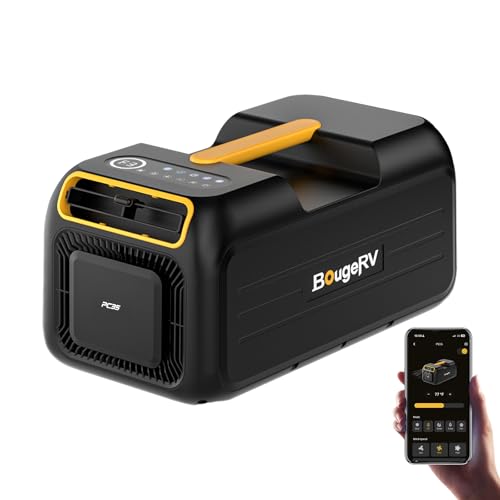
A compressor system is the closest match to a conventional air conditioner. The Gidrox RX55 is a 10,000 BTU rooftop unit that connects directly to a 12V RV battery. The BougeRV PC35 is a 3,500 BTU portable camping unit with cooling, dehumidifying, fan, and sleep functions. These designs are more appropriate when the goal is enclosed-space cooling, but they also demand more power and involve more installation or ventilation considerations.
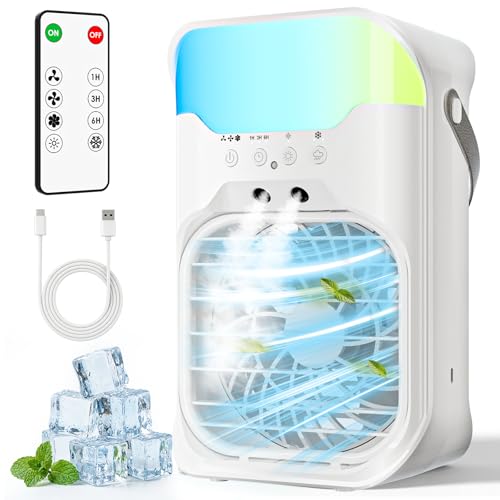
Most of the smaller products here are evaporative coolers. They move air across water or mist, sometimes with ice, to create a cooler-feeling breeze near the user. The CENSTECH unit, Arctic Air Ice Jet X3, gootu F12, and other mini models fit this category. They can be useful at a desk, beside a bed, in a vehicle, or in a tent, but they should not be treated as documented substitutes for a compressor air conditioner. Evaporative cooling may also be less comfortable in humid conditions because these units add moisture.
Check how the battery is supplied
“Battery-powered” can mean several things. The Gidrox RX55 uses a 12V DC connection to an RV battery. CENSTECH is designed around DeWalt 20V batteries. The gootu F12 and Tiptop Home BG-2026 document integrated rechargeable batteries. Other compact products are USB powered and can become cordless only when connected to a separate power bank.
For tool-battery products, confirm that your battery family and voltage match the listing. For USB products, check whether your power bank can provide the required output and whether you are comfortable carrying a separate power source. Compressor units deserve extra attention: the BougeRV PC35 listing warns that startup power may reach 2kW and recommends a battery power station or inverter with at least 2kW continuous output. A small phone-style power bank is not an appropriate assumption for that type of equipment.
Compare runtime claims carefully
Runtime depends on operating mode, fan speed, temperature, humidity, battery capacity, and whether the unit is cooling or only circulating air. The gootu F12 states five to six hours after a full charge, while the Tiptop Home BG-2026 claims up to 12 hours of cordless use. Arctic Air gives up to eight hours per fill, which describes water capacity rather than battery endurance. Those figures are not directly interchangeable.
Tank size matters for evaporative models. The Meteralla F16 has a 650ml tank, cedeil lists 1,000ml, and both Poweel and CUXPOXTU list 1,600ml. Larger tanks can reduce refill frequency, but they may also increase the size and weight of the product. Look for automatic fan-mode switching when water runs low, as documented for Poweel and CUXPOXTU, if you want the unit to continue circulating air after misting stops.
Match controls to your use
Simple controls are enough for a desk, but remote or app control becomes more useful at night or inside a tent. Gidrox offers an app, infrared remote, and physical panel. BougeRV uses app control, while CENSTECH offers four modes and three speeds. Several mini units add timers, adjustable louvers, mist levels, or oscillation.
A timer can prevent a unit from running longer than needed while sleeping. Adjustable airflow helps target the breeze, but it does not establish whole-room cooling. Lighting, humidification, and fan-only operation can be useful extras, although they should not outweigh the core requirements of battery compatibility and cooling design.
Consider installation and portability
The Gidrox RX55 is intended for a roof cutout between 1.5 and 3.5 inches thick and includes mounting hardware, so it is a specific RV installation rather than a grab-and-go product. BougeRV includes exhaust components, which makes its portable compressor design more involved than a windowless evaporative cooler.
For temporary use, wheels make the CENSTECH easier to reposition, while the small personal units can move from a desk to a bedside table. Weight also varies considerably: the compact models are around a few pounds or less, whereas the Gidrox specification lists the current price. Measure the intended location and leave room for water filling, airflow, cables, and any required exhaust or drainage.
Final Recommendation
Gidrox RX55 10,000 BTU 12V DC RV AC ranks first overall in this specification-based comparison under the published weighted criteria.
Gidrox RX55 is the highest-scoring returned product and the first overall specification-based choice among the best battery-powered air conditioners. Its direct 12V design, 10,000 BTU output, three control methods, and RV roof compatibility make it the clearest fit for installed mobile cooling. It is not the simplest choice, however, because installation and battery capacity must be planned.
For tent or campsite use, BougeRV PC35 is one of the top battery-powered air conditioners when paired with a suitably powerful battery station. Its compressor design and included exhaust parts are more appropriate for enclosed camping spaces than a small misting fan, but the startup-power requirement is substantial.
For a tool-battery owner, CENSTECH is the more convenient windowless option because its DeWalt compatibility and wheeled body are clearly documented. For a desk, bedside table, or short travel session, gootu F12 and Arctic Air Ice Jet X3 are easier to carry. They provide personal evaporative airflow, not whole-room compressor cooling.
Before buying, verify the power source, expected humidity, desired runtime, and available space. If you need actual enclosed-space temperature reduction, prioritize a compressor or 12V rooftop design. If you need a quiet breeze during a short outage or outdoor session, an integrated-battery or USB evaporative model may be more practical.
Frequently Asked Questions
What are the best battery-powered air conditioners for an RV?
The Gidrox RX55 is the most specification-aligned fit in this comparison for an RV because it is a 12V DC rooftop unit with 10,000 BTU cooling, mounting hardware, and compatibility with a common 14-by-14-inch roof cutout. Confirm roof thickness, battery capacity, and installation requirements before purchase.
Can a battery power station run a portable compressor AC?
It can, provided the power station meets the air conditioner’s requirements. BougeRV PC35 documents compressor startup power of up to 2kW and recommends a battery power station or inverter with at least 2kW of continuous output. Smaller power banks should not be assumed to operate it.
Are mini rechargeable air conditioners true air conditioners?
The gootu F12 and similar compact models use evaporative cooling, water, mist, or ice rather than a compressor and refrigerant system. They can provide targeted personal comfort, but the supplied evidence does not support treating them as whole-room air conditioners.
Do evaporative coolers work well in humid weather?
Their effect may be less comfortable in humid conditions because evaporative cooling adds moisture to the air. Models such as CENSTECH, Poweel, and CUXPOXTU document fan and mist functions, so using fan-only mode may be preferable when additional humidity is undesirable.
What should I use for cordless desk cooling?
A compact rechargeable model such as gootu F12 is convenient because its 6,000mAh battery and five-to-six-hour stated use are documented. USB-powered options such as Arctic Air Ice Jet X3, cedeil, and Meteralla can also work with a compatible power bank when an integrated battery is not specified.