Buying Guide
The best outdoor portable air conditioners are not one uniform product type. The selected products divide into compressor-based portable AC units and evaporative coolers. Compressor models such as the FO-KOKO IOG-3, Outohome IOG-1, Countrymod camping AC, and BougeRV PC35 use listed BTU capacities and are aimed at tents, RVs, vans, or enclosed compact spaces. Evaporative models such as the Uthfy 41-Inch cooler and Air Choice 3000 CFM cooler move air across water or cooling pads and are better considered for dry climates and more open areas.
Choose compressor cooling for enclosed spaces
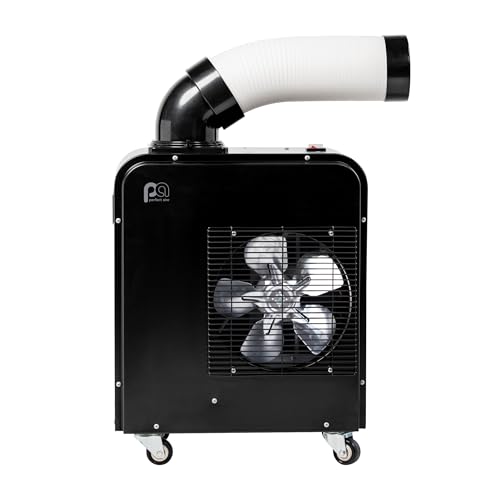
A compressor AC is generally the more relevant format when cooling a tent, vehicle, or small room. The FO-KOKO IOG-3 lists 6800 BTU cooling and also provides a heating mode. The Perfect Aire spot cooler lists 7000 BTU and is aimed at garages, workshops, patios, and events. These capacities are product-listing specifications, not independent test results, so actual comfort will depend on enclosure, insulation, heat load, airflow, and setup.
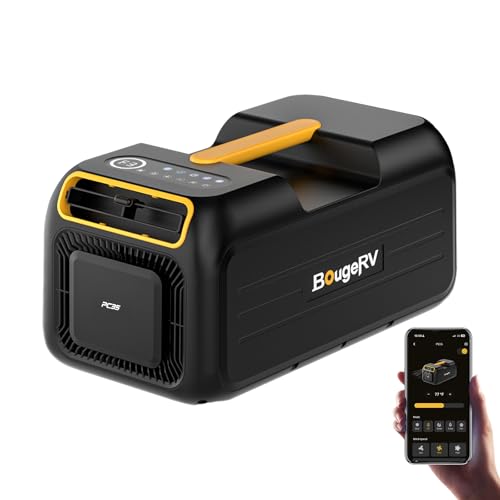
The Outohome IOG-1 and Countrymod unit offer smaller 5000- and 5200-BTU formats for compact spaces. The BougeRV PC35 lists 3500 BTU and is more specifically positioned for camping. Compare the intended space before choosing by BTU alone: a large spot cooler may be difficult to transport, while a compact camping unit may be more convenient but less suited to a broad open area.
Consider evaporative cooling for dry outdoor areas
Evaporative coolers can be useful on patios, decks, garages, and workshops because they do not require the exhaust-duct arrangement associated with many compressor units. They do require water, and the cooling approach adds moisture to the air. The Uthfy model lists a 10.6-gallon tank and 4800 CFM airflow, while the YougetTech model lists an eight-gallon tank and an automatic-fill option. These features can reduce refill interruptions during longer outdoor sessions.
Humidity is a key buying consideration. The Air Choice listing specifically describes dry, low-humidity use, and several compressor listings also provide humidity-related drainage guidance. If the intended location is humid, an evaporative unit may be a less suitable choice than a compressor AC. If the area is dry, water-based cooling can provide broad airflow with less complicated venting.
Match portability to the setup
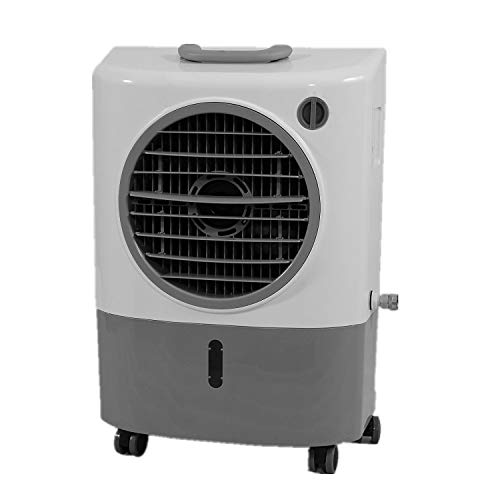
Weight and handling vary substantially. The Hessaire MC18M lists a 16-pound weight, while the Perfect Aire spot cooler lists the current price. Camping users may favor a carry handle, compact dimensions, or a dedicated bag, as found with the FO-KOKO unit. Patio and workshop users may prefer caster wheels, which appear on the Uthfy, Air Choice, FLOWBREEZE, YougetTech, and Perfect Aire models.
Also measure storage space, doorways, vehicle cargo areas, and the intended position of the exhaust duct or airflow outlet. A product can be portable in the sense that it has wheels or a handle without being convenient to carry long distances.
Check power before buying
Power compatibility is especially important outdoors. The Countrymod unit specifies standard 110V AC. The FO-KOKO IOG-3 lists compatibility with 110V AC, power stations rated above 1500W, and EV V2L, although some adapters are separate. BougeRV warns that compressor startup may reach 2kW and recommends a power station or inverter with at least 2kW continuous output. Those details should be checked against the intended generator, inverter, or campsite supply.
Evaporative coolers typically present a different power-planning question, but their listed electrical requirements should still be verified before connecting to a portable power source. Never assume that a low running-power claim automatically means a unit has low startup requirements.
Review drainage and upkeep
Compressor models can require condensate management. The Perfect Aire spot cooler lists continuous drainage and a washable filter. These features matter for overnight use, workshops, and locations where manually emptying a bucket is inconvenient.
Evaporative coolers require water filling, tank care, and pad maintenance. The Uthfy, Air Choice, FLOWBREEZE, YougetTech, and Hessaire listings all document tanks or cooling media. Consider how often the tank can be refilled and whether the cooler will be dried before storage.
Prioritize controls that fit your use
Remote controls and timers are useful for a tent, bedroom, or seated patio setup. The Air Choice, FLOWBREEZE, and BougeRV products list remote-related controls, while BougeRV adds app operation. Mechanical controls, as listed for YougetTech, may be preferable when simplicity matters more than remote access. Mode counts should be read carefully: a fan or sleep mode does not provide the same cooling method as compressor operation.
Final recommendation
FO-KOKO IOG-3 6800 BTU Dual Hose AC ranks first overall in this specification-based comparison under the published weighted criteria.
FO-KOKO IOG-3 is the first overall specification-based choice among these best outdoor portable air conditioners because it combines cooling, heating, five operating modes, dual-hose construction, portability, and flexible power compatibility. For enclosed camping spaces, Outohome IOG-1 and Countrymod offer simpler compressor-based alternatives, while BougeRV PC35 is the app-controlled option.
For patios, garages, and dry open areas, Uthfy 41-Inch 4800 CFM, Air Choice 3000 CFM, and YougetTech 3000 CFM are the top outdoor portable air conditioners to examine first. Perfect Aire is the better fit when spot cooling and continuous drainage matter more than carrying weight. Hessaire is the most manageable lightweight evaporative choice. The final selection should follow the space, humidity, water access, outlet or power-station capacity, and storage requirements rather than a single capacity number.
Frequently Asked Questions
Are the best outdoor portable air conditioners compressor ACs or evaporative coolers?
Both formats appear in this comparison. FO-KOKO IOG-3, Outohome IOG-1, Countrymod, BougeRV PC35, and Perfect Aire are compressor-based listings with BTU specifications. Uthfy, Air Choice, FLOWBREEZE, YougetTech, and Hessaire are evaporative coolers with airflow and water-tank specifications. Compressor units suit enclosed spaces more directly, while evaporative coolers are intended for dry conditions and open-area airflow.
Do outdoor portable air conditioners need an exhaust hose?
The supplied evidence shows that the BougeRV PC35 includes exhaust ducts, and the Perfect Aire spot cooler is described as requiring no installation. Compressor units should be evaluated for their specific exhaust and drainage arrangements. Evaporative coolers in this selection are described as water-based units and do not present the same compressor exhaust-duct setup in their supplied feature summaries.
Which selected model is easiest to move?
The Hessaire MC18M lists a 16-pound weight and a lightweight body. For rolling movement, the Uthfy, Air Choice, FLOWBREEZE, YougetTech, and Perfect Aire listings mention wheels or casters. The FO-KOKO IOG-3 lists a 34-pound compact design and a carry bag, making it more suitable for transport than the heavier spot cooler.
Can a power station run a camping air conditioner?
It depends on the power station’s output and the AC’s startup demand. FO-KOKO lists power-station compatibility above 1500W, while BougeRV warns of compressor startup that may reach 2kW and recommends at least 2kW continuous output. Verify the specific power requirements, adapters, and runtime before relying on a battery system.
Are evaporative coolers suitable for humid weather?
The supplied listings emphasize dry or low-humidity conditions for evaporative cooling. Air Choice describes use in hot, low-humidity environments, and the Outohome compressor listing provides a 70% humidity threshold for its drainage claim. Because evaporative coolers add moisture, buyers in humid locations should compare the intended climate with the product’s documented cooling format before purchase.