Buying Guide
The best bone conduction over-ear headphones are not necessarily the models with the longest feature lists. The right choice depends on how much you need open-ear awareness, how often the headset will encounter sweat or rain, and whether you prefer a wraparound frame or a true wireless earhook design. This comparison uses public listing descriptions and specifications only. It does not include hands-on testing, independent measurements, or customer-opinion analysis.
Start with the listening design
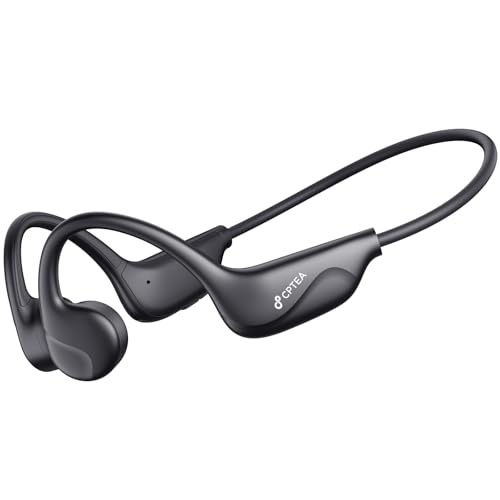
Most selected products use an open-ear format that leaves the ear canal unobstructed. The SHOKZ OpenRun Pro 2, SHOKZ OpenRun Pro, SHOKZ OpenRun, CPTEA X3, TECKNET X27, PSIER X23, CXK X17, and Gavhaio HS2 describe wraparound or open-ear structures. These designs are intended to let users remain aware of nearby sounds while listening. That can be useful for outdoor exercise, commuting, and office use, but an open-ear specification should not be treated as a guarantee of safety in every environment.
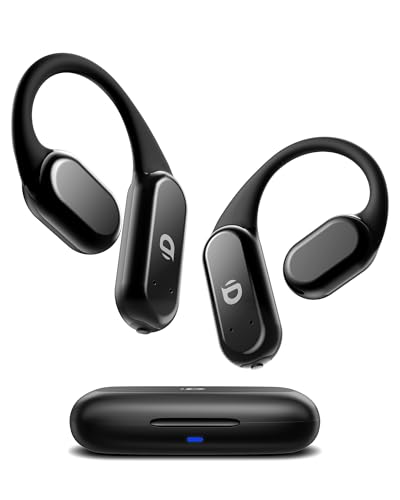
The DEMICEA B8 uses a true wireless earbud and earhook approach, while the Raycon model describes adjustable earbud positioning. These options may suit listeners who prefer separate left and right units or want more control over placement. Paired earhooks can also feel different from a neckband, so fit preference matters even when both products are marketed for sports.
Match moisture protection to your routine
Water-resistance language varies considerably. The CXK X17 lists IPX8 and is specifically presented for swimming, with an MP3 mode and a stated immersion capability in its description. The DEMICEA B8 lists IP68, making it another strong candidate for wet workouts based on the published rating. The SHOKZ OpenRun lists IP67 and explicitly says it is not suitable for swimming, an important limitation to note.
The CPTEA X3, TECKNET X27, and PSIER X23 list IPX5 protection. That is relevant to sweat and some moisture exposure, but it should not be interpreted as swimming protection. The Gavhaio HS2 and SHOKZ OpenRun Pro listings use sweat-resistant wording without providing a formal IP rating. For any product, follow the maker’s charging and water-use instructions rather than relying on a general waterproof description.
Compare battery claims carefully
Battery figures are not directly interchangeable because listings may use different volume levels, modes, or test conditions. The Raycon model lists 13 hours, while the CXK X17 and Gavhaio HS2 list up to 12 hours. The SHOKZ OpenRun Pro 2 lists 12 hours, and the SHOKZ OpenRun Pro lists 10 hours. The CPTEA X3, TECKNET X27, and PSIER X23 also list roughly 10 hours, with the CPTEA description specifying playback at 60% volume and the PSIER description specifying 50% volume.
The DEMICEA B8 and CXK X17 add different forms of extended use. DEMICEA lists up to 60 hours with its charging case, while CXK provides an MP3 mode intended for onboard playback. A case-total figure should not be compared with a single-charge figure as though they measured the same thing. Check whether you prefer fewer charging stops, a case, or built-in storage-style playback.
Consider calls and connectivity
Bluetooth version numbers can help describe a product, but they do not alone establish real-world range or call quality. Bluetooth 6.0 appears on the CPTEA X3, TECKNET X27, PSIER X23, and CXK X17 listings. The Raycon model does not state a Bluetooth version in the supplied specifications, but its description includes a microphone and open-ear use. SHOKZ OpenRun Pro 2 lists dual wind-resistant microphones and an AI noise-reduction algorithm, while TECKNET and PSIER also identify microphone support.
If calls are central to your purchase, prioritize a product whose listing explicitly includes microphones and call support. The SHOKZ OpenRun Pro, SHOKZ OpenRun, and Gavhaio HS2 all describe music-and-call or clear-call functionality. Still, these are listing claims, not independent voice tests. For laptop use, also confirm that the headset supports the device and operating system you plan to use.
Evaluate fit, weight, and controls
Weight and frame construction may be useful comparison points. PSIER lists 23 grams, while the CPTEA and TECKNET descriptions each mention 27 grams. Raycon describes a featherlight ergonomic build, and the SHOKZ models specify lightweight or featherweight wraparound designs. The CXK listing gives a soft silicone pad construction, and the Gavhaio HS2 describes a flexible silicone frame.
Controls and sound customization vary. SHOKZ OpenRun Pro 2 lists dedicated EQ modes through an app. PSIER lists app-based EQ options, and the CXK listing includes customizable EQ modes. The CXK and DEMICEA products also identify alternate playback or codec features. These extras can be useful if you want to adjust listening behavior, but they add complexity compared with a straightforward headset.
Final recommendation
DEMICEA B8 Bone Conduction Earphones ranks first overall in this specification-based comparison under the published weighted criteria.
SHOKZ OpenRun Pro 2 is the first overall specification-based choice among these best bone conduction over-ear headphones because its listing combines 12-hour playback, a dual-driver design, open-ear awareness, app EQ modes, a secure frame, and detailed microphone features. It is the most complete option on paper, not a claim of independently verified performance.
For water-focused use, CXK X17 and DEMICEA B8 stand out because their listings provide IPX8 and IP68 claims, respectively. For a formal IP rating in a familiar wraparound sports design, SHOKZ OpenRun is a strong alternative. Runners seeking a quick-charge headset can consider SHOKZ OpenRun Pro, while users prioritizing a lighter stated frame may prefer PSIER X23 or CPTEA X3.
The top bone conduction over-ear headphones for a particular buyer will depend on whether battery runtime, moisture protection, calls, or fit carries the most weight. Treat all playback, durability, and audio statements as supplied listing specifications, and confirm current product details before ordering.
Frequently Asked Questions
What are the best bone conduction over-ear headphones for swimming?
The CXK X17 is the clearest swimming-oriented selection because its listing specifies IPX8 water resistance, an open-ear design, Bluetooth 6.0, MP3 mode, and up to 12 hours of playback. The SHOKZ OpenRun lists IP67 but explicitly says it is not suitable for swimming, so it should not be treated as a swimming headset. Always check the manufacturer’s water-use guidance before entering a pool or open water.
Do these headphones completely block outside sound?
The selected products are described as open-ear or open-ear bone conduction designs, which leave the ear canal open rather than sealing it with conventional earbuds. That design is intended to support awareness of surrounding sounds. It does not guarantee that every environmental sound will be heard clearly, and listening volume and local conditions can affect awareness.
Which selected model has the longest stated battery life?
The Raycon model lists up to 13 hours of playtime on the headset. The SHOKZ OpenRun Pro 2, CXK X17, and Gavhaio HS2 each list up to 12 hours, while several other models list about 10 hours. DEMICEA lists up to 60 hours with its charging case, which is a case-total claim rather than a single-charge headset figure.
Are the top bone conduction over-ear headphones suitable for calls?
Several selected models list microphones and call support, including SHOKZ OpenRun Pro 2, SHOKZ OpenRun Pro, SHOKZ OpenRun, CPTEA X3, TECKNET X27, PSIER X23, and Gavhaio HS2. The OpenRun Pro 2 specifically lists dual wind-resistant microphones and AI noise reduction. These details come from public listings and do not replace an independent call-quality test.
Should I choose a wraparound frame or earhooks?
A wraparound frame, used by products such as SHOKZ OpenRun Pro 2 and PSIER X23, keeps the transducers connected behind the head and is commonly presented for running and workouts. DEMICEA B8 uses separate earhooks and true wireless earbuds, while Raycon describes adjustable positioning. The better format depends on how you prefer to put on, store, and stabilize the headset.