Buying Guide
Choosing the best braided usb cables starts with the ports on both ends, not with the braid alone. A cable can be well protected yet unsuitable if it connects to the wrong charger, supports less power than the device requires, or is too short for the intended setup. The products above cover three practical groups: USB-C to USB-C cables for newer chargers and laptops, USB-A to USB-C cables for older power adapters, and compact woven cables for travel or vehicle consoles.
Match the connector on both ends
USB-C to USB-C is the most capable format in this selection when paired with a compatible USB-C power adapter. The INIU cable documents up to 100W, while Basesailor lists up to 60W. These designs can suit USB-C phones, tablets, and laptops, but the charger and device must also support the advertised power level. A high-rated cable does not upgrade a lower-rated charger or a device with a lower charging limit.
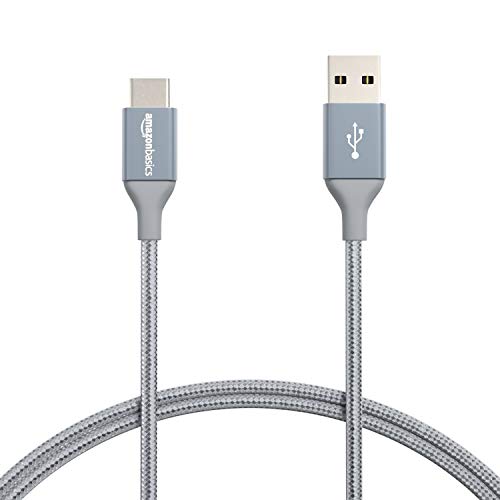
USB-A to USB-C remains useful for older wall chargers, car ports, power banks, and computers. Belkin, Beats, JSAUX, TAKAGI, QQLIKE, Teeind, and Amazon Basics use this arrangement. It is a sensible choice when the existing power source has a rectangular USB-A port. The trade-off is that these cables generally do not provide the same laptop-oriented power range as the USB-C to USB-C options in this guide.
The connector also affects vehicle use. CONMDEX lists Android Auto and Apple CarPlay compatibility and uses a 3-foot length intended for car consoles. Belkin also lists both vehicle platforms. Short cables can reduce excess slack around a dashboard, while a 6-foot cable is more useful beside a bed or across a desk.
Check charging requirements
Charging claims should be read alongside the source and device specifications. INIU lists 100W output and includes an e-marker chip, making it the clearest laptop-focused option here. Basesailor lists 60W PD at 20V/3A. Those figures are documented cable capabilities, not a promise that every connected device will charge at that rate.
The USB-A to USB-C models list lower or more general charging figures. TAKAGI, QQLIKE, and Teeind each state 3A charging, while JSAUX states 3.1A and Amazon Basics lists up to 5V/3A. Belkin and Beats list up to 15W in supported use cases. CONMDEX specifies 3A/18W and explicitly says it is not intended for high-wattage laptops. These distinctions make the cable type and power source important before purchase.
Several listings also state that fast charging depends on a suitable power block and a compatible device or protocol. That warning is especially relevant for USB-A cables. A cable may support a stated current while the charger, phone, or charging standard limits the actual result.
Compare data-transfer specifications
For ordinary phone syncing, 480Mbps is the most common documented figure in this group. Amazon Basics, JSAUX, TAKAGI, QQLIKE, and Teeind list that speed, and Basesailor also lists 480Mbps. This is appropriate for routine synchronization and file movement, but it is not the same as a high-speed USB 3.x cable.
CONMDEX is the outlier, with a stated 10Gbps USB 3.1 Gen 2 rate. That makes it the most specification-focused choice for compatible car, phone, or storage workflows where data movement matters. Its 3-foot length is intentional, but it may be limiting when the connection point is far away. The Beats listing does not provide a data rate, so it is better considered a charging-oriented woven cable rather than a high-speed transfer choice.
Do not infer a data speed from the word braided. The exterior material describes physical construction; it does not identify the USB generation. Look for an explicit transfer specification when syncing cameras, drives, or large media libraries.
Consider braid, joints, and bend claims
Braided nylon can add an outer layer of protection and flexibility, but the listings differ in how much construction detail they provide. INIU describes FLYWEAVE braiding, flexible anti-rupture joints, and a 45,000-plus bending test. JSAUX lists a 40,000-plus test and aluminum connector housing. Belkin lists 25,000-plus bends and 10,000-plus plug-ins. These documented figures provide more purchasing context than a generic braided label.
Other products describe additional reinforcement. TAKAGI and QQLIKE mention aluminum or alloy connector housings, while Amazon Basics describes a double-braided nylon exterior and a 5,000-bend test. Beats specifies reinforcement intended to help prevent fraying. A bend figure is not a guarantee of service life in every setup; it is a construction detail reported by the listing. Avoid sharply folding any cable at the plug, even when the product emphasizes durability.
Choose the right length and pack size
Length should match the power source and the way the cable will be routed. The 3-foot Amazon Basics and CONMDEX cables suit compact spaces. Belkin’s one-meter length and Beats’ 5-foot design sit between short vehicle cords and long room-side cables. JSAUX, TAKAGI, QQLIKE, and Teeind offer 6-foot options, while Basesailor reaches 10 feet.
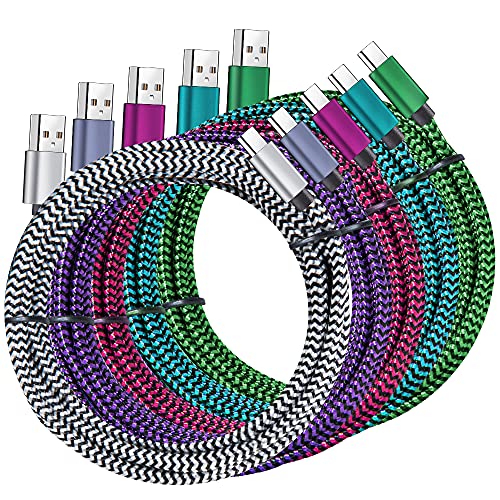
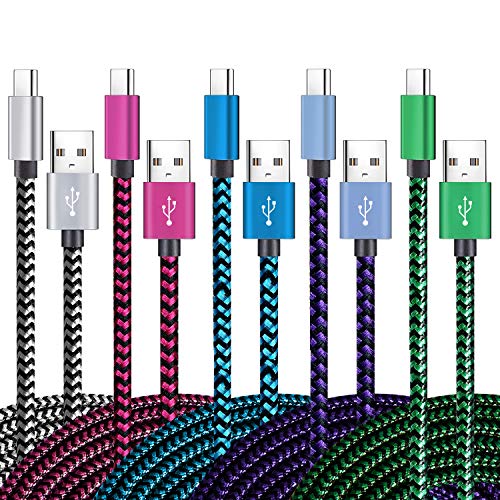
Pack size changes the use case. INIU and JSAUX provide two cables; TAKAGI provides three; QQLIKE and Teeind provide five. A multi-pack can place one cable at a desk, bedside table, or travel bag, but it also means every cable shares the same connector arrangement. Confirm that the pack is not merely a color or length variant of a different connector type.
Final Recommendation
INIU USB-C to USB-C 100W Cable, 6.6ft 2-Pack ranks first overall in this specification-based comparison under the published weighted criteria.
INIU USB-C to USB-C 100W Cable, 6.6ft 2-Pack is the highest-scoring product and the first overall specification-based choice among the best braided usb cables in this comparison. Its documented 100W capability, two long cables, e-marker chip, broad USB-C compatibility, and stated 45,000-plus bending test give it the most specification-aligned all-around specification profile, provided your charger and devices use USB-C.
Choose Basesailor if a 10-foot cable and adapter flexibility matter more than a two-pack. Choose CONMDEX for the clearest high-speed data specification and a tidy vehicle connection. For USB-A chargers, JSAUX offers long two-cable reach, Belkin provides a compact branded woven option, and Amazon Basics keeps the specifications straightforward. TAKAGI, QQLIKE, and Teeind are better suited to households that need several long charging cables rather than one high-power laptop cable. These are the top braided usb cables here by documented connector fit, charging, data, construction, and length characteristics—not by hands-on testing or customer sentiment.
Frequently Asked Questions
What should I check before buying the best braided usb cables?
Check the connector at the charger and the device, then compare the cable’s stated charging and data specifications with both devices. Also confirm the length and whether one cable or a multi-pack fits your setup. A USB-C to USB-C cable is not interchangeable with a USB-A to USB-C cable when the power source has only one port type.
Are braided USB cables automatically faster?
No. Braiding describes the outer construction and may add protection or flexibility, but it does not establish charging wattage or data speed. For example, CONMDEX lists 10Gbps data, while several other selected cables list 480Mbps. Check the explicit technical specification rather than relying on the exterior material.
Is a USB-C to USB-C cable better for laptops?
It can be a better fit when the laptop, charger, and cable all support USB-C Power Delivery. INIU lists 100W and Basesailor lists 60W, but the connected equipment still controls the usable charging level. CONMDEX specifically says it is not intended for high-wattage laptops, so connector shape alone is not enough.
It depends on the setup. A 3-foot cable can reduce clutter in a car or on a compact desk, while a 6-foot cable offers more reach beside a bed or across a workspace. Longer cables can be less convenient to carry, so choose the shortest length that reaches comfortably without tension.
Do multi-packs make sense for everyday charging?
They can when several locations need the same connector arrangement. TAKAGI supplies three cables, while QQLIKE and Teeind supply five, making them useful for distributing spares around a home or office. Confirm the charging source and device compatibility first, because a larger pack does not change the capability of each individual cable.