Buying Guide
The best candle led bulbs are decorative E12 light sources designed for fixtures such as chandeliers, sconces, pendants, and some ceiling fans. The products here are compared from supplied listing specifications, not from hands-on testing. Before choosing, confirm the socket, available space, desired light color, and whether the fixture uses a compatible dimmer.
Confirm the base and physical fit
Most products in this comparison use an E12 candelabra base, also called a small Edison screw base. That designation is more important than the candle-style name: an E12 bulb is not interchangeable with E11, E17, or E26 models. Check the fixture label or measure the existing base before selecting a bulb.
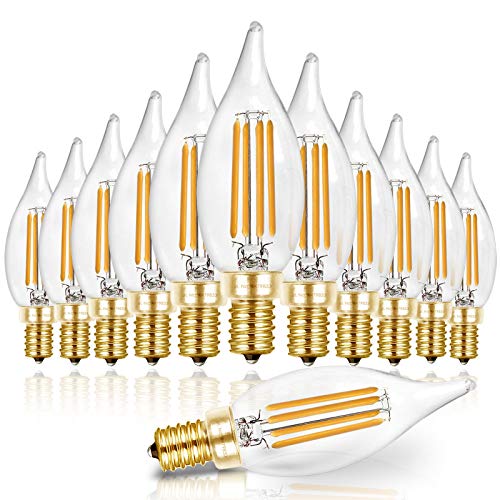
Shape and dimensions also matter. Flame-tip, torpedo, B10, B11, CA10, and CA12 descriptions indicate different profiles. A bulb may fit the socket but still be too tall or wide for a shade, chandelier arm, ceiling-fan enclosure, or pendant housing. The supplied listings show heights around 3.8 to 4.5 inches for many standard decorative models, while GE’s ultra-bright CA12 listing presents a different stated dimensional set. Compare the bulb outline with the fixture opening.
Match brightness to the fixture
Lumens are the most useful supplied measure for comparing light output. The selected products range from 400 lumens on the GvvooHome model to 1,080 lumens on the GE Ultra Bright model. A 400- to 470-lumen bulb can work well where several bulbs share a chandelier or where the fixture is primarily decorative. The 550- to 650-lumen options provide more illumination per bulb, while the 1,080-lumen GE model is intended for spaces that call for substantially more light.
Do not treat incandescent-equivalent wording as a precise room-lighting guarantee. It is a useful shorthand in the listings, but the fixture’s shade, number of sockets, beam direction, and room size still affect the result. A wide beam specification can be helpful in open fixtures: CYLYT lists 360 degrees, GvvooHome lists 360 degrees, and GoBright lists 320 degrees.
Select the right color temperature
Most of the warm decorative options use 2700K, which the listings describe as soft warm white. This is generally the traditional candle-like direction for dining rooms, living rooms, bedrooms, chandeliers, and sconces. The Hizashi 3000K model provides a slightly less amber alternative while retaining a warm appearance.
For a crisp, more neutral-looking space, consider a documented 5000K daylight model such as the dimmable MAXvolador bulb. Its daylight color can suit areas where brighter visual contrast is preferred, but it may not blend with a traditional warm decorative scheme.
Look at color rendering
Color-rendering information is useful when bulbs illuminate furniture, artwork, food, or other objects. Several selected products document CRI values: Hizashi and GvvooHome list 90+ CRI, while MAXvolador lists CRI 85+. These figures are specifications supplied by the listings rather than independent measurements in this guide.
If accurate-looking colors are a priority, the 90+ CRI models have the clearest documentation. If the primary goal is decorative ambience, color temperature and bulb appearance may matter more than a small difference in stated CRI.
Check dimmer compatibility carefully
Dimming is not automatic simply because a bulb is LED. The selected listings describe different ranges, including 10%-100% for Hizashi and GvvooHome and 100%-10% for MAXvolador’s dimmable daylight model. GoBright states compatibility with most modern LED dimmers, while GE says its bulbs work with most dimmer switches.
Compatibility depends on the installed dimmer and the fixture. Check the dimmer manufacturer’s LED guidance, and do not assume that a non-dimmable bulb can be used on a dimming circuit. Brightever deserves extra caution because its supplied description mentions both broad dimming compatibility and non-dimmable operation. Treat that listing as requiring confirmation before installation.
Compare the visual design
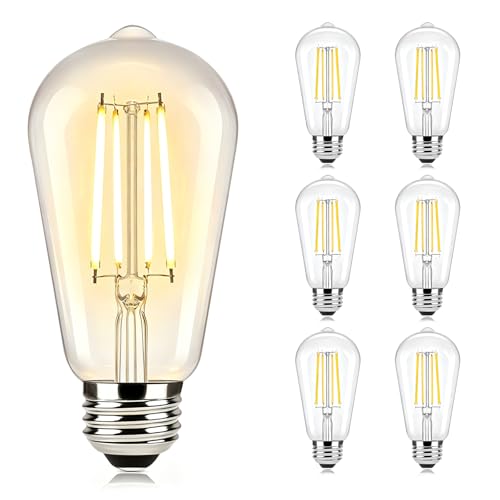
Clear glass and exposed filaments emphasize the decorative hardware of a chandelier or open sconce. Flame-tip and torpedo profiles create a traditional candle appearance, while the GE bulb uses a blunt-tip BC shape. Frosted glass is another documented design type: it conceals the internal elements when unlit and gives a softer retro appearance.
A clear bulb can show more filament detail, whereas a frosted finish can reduce the visibility of internal components. Choose based on whether the bulb is meant to be a visible design element or simply a light source behind a shade.
Warranties also vary in the supplied evidence, from one year on some products to five years on the GE models. These are manufacturer or seller listing statements, not independently verified durability results. Use them as documentation points rather than guarantees.
Final Recommendation
Hizashi 60W-Equivalent E12 LED Bulbs ranks first overall in this specification-based comparison under the published weighted criteria.
Hizashi 60W-Equivalent E12 LED Bulbs is the first overall specification-based choice in this comparison.
Hizashi 60W-Equivalent E12 LED Bulbs combines 550 lumens, 2700K warm light, 90+ CRI, broad dimming, an E12 base, and stated UL testing. For a softer 40W-equivalent option, Hizashi 40W-Equivalent E12 LED Bulbs add the same 90+ CRI emphasis with a flame-tip profile. Choose GE Ultra Bright 100W-Equivalent Candelabra Bulbs when the fixture requires the greatest listed illumination.
Among the top candle led bulbs, CYLYT is notable for its 650-lumen warm output and 360-degree beam. GoBright and GvvooHome are balanced decorative choices, while GE Soft White Decorative LED Candle Bulbs provide a blunt-tip alternative. For daylight, MAXvolador Dimmable 5000K E12 LED Bulbs offer 600 lumens and dimming. The best candle led bulbs for your fixture ultimately depend on E12 fit, available clearance, color temperature, and verified dimmer compatibility.
Frequently Asked Questions
What base do these candle LED bulbs use?
The selected products are E12 candelabra bulbs. E12 refers to the small screw-base diameter used by many chandeliers, sconces, pendants, and decorative ceiling-fan fixtures. Confirm the fixture’s socket before selecting a bulb.
Are the best candle led bulbs dimmable?
Many selected models are listed as dimmable, including the Hizashi, CYLYT, GoBright, GvvooHome, GE, and MAXvolador dimmable models. Dimming performance depends on the installed LED-compatible dimmer. Brightever’s supplied listing contains conflicting dimming information, so verify that specification before use.
Is 2700K or 5000K better for a chandelier?
The answer depends on the intended appearance. The selected 2700K bulbs produce the warm color commonly associated with decorative candle lighting. The selected 5000K MAXvolador model produces daylight white light for a crisper, cooler appearance. Match the bulb to the room and nearby lighting.
How bright is a 600-lumen candle bulb?
A 600-lumen bulb is among the brighter options in this comparison. The selected MAXvolador daylight models list 600 lumens. Actual room illumination also depends on the number of bulbs, fixture openness, shades, and beam distribution.
What does CRI mean on an LED candle bulb?
CRI, or color rendering index, describes how a light source represents colors relative to a reference. The selected Hizashi and GvvooHome listings specify 90+ CRI, while MAXvolador specifies CRI 85+. These are supplied listing claims rather than independent test results.