Buying Guide
Picking the best cardioid instrument condenser microphones starts with the instrument you want to capture and the environment you record in. The selections here include side-address studio designs, gooseneck wind-instrument mics, clip-on condensers, and overhead pencil-style options, so the choice depends on which form factor and mounting system fits your setup.
Polar Pattern and Off-Axis Rejection
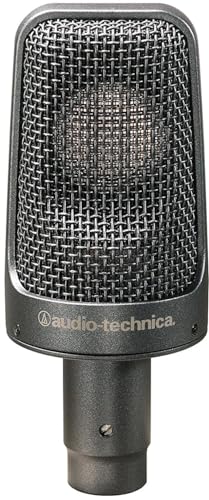
A consistent cardioid polar pattern is the defining feature of every entry in this list. The Shure SM81-LC, Audio-Technica AE5100, and Shure WB98H/C all describe their cardioid patterns as uniform with frequency or tuned for high gain-before-feedback, which helps reduce stage bleed. When comparing microphones, look for descriptions that mention symmetry about the axis or uniform response at different angles, since these signals indicate consistent rejection in real-world placement.
Frequency Response and Capsule Design
Frequency response varies significantly across the list. The Shure SM81-LC documents a flat 20 Hz to 20 kHz range, while large-diaphragm models like the Audio-Technica AE3000 and AE5100 use open head-case architecture for an accurate, natural response. For acoustic instruments that benefit from a ruler-flat capture, side-address designs with documented wide response are the most specification-aligned matches.
SPL Handling and Dynamic Range
High-SPL instruments like drums, brass, and amplified sources need mics that can handle loud transients without distortion. The Audio-Technica AE3000 is explicitly designed for high-SPL applications, and the Shure WB98H/C documents wide dynamic range and high maximum SPL for brass, woodwind, and percussion. Pick a model whose SPL headroom matches the loudest source in your signal chain.
Mounting Systems and Instrument Fit
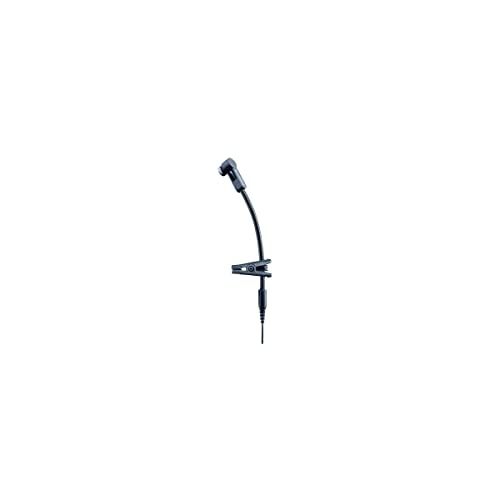
Mounting hardware is where the category really differentiates itself. The Audio-Technica ATM350PL pairs a low-profile capsule with a magnetic piano mount for shock resistance, and the ATM350GL uses a guitar mounting system with a 9-inch gooseneck for stable placement. The Shure PGA98H integrates a horn clamp for saxophones, while the Sennheiser e 908 B ew uses a long flexible boom with an integrated shock absorber for saxophone tone.
Build Quality and Operating Conditions
Touring and live setups put microphones through temperature, humidity, and mechanical stress. The Shure SM81-LC is ruggedly constructed and operates over a wide range of temperatures and humidity levels, while the Audio-Technica AE3000 and AE5100 carry a 5-year warranty and a robust road-ready design. The Shure WB98H/C uses transformerless preamp circuitry that improves linearity across the frequency range and is built for compact stage placement. The Sennheiser e 908 B ew backs its build with a 10-year warranty, which is one of the longest in the category.
Onboard Controls and Filtering
Models with switchable low-frequency rolloff and attenuation give you more flexibility at the source. The Shure SM81-LC documents selectable low-frequency response (flat, 6, or 18 dB/octave) and a lockable 0/10 dB attenuator switch.
Final Recommendation
Shure SM81-LC Cardioid Condenser Instrument Microphone ranks first overall in this specification-based comparison under the published weighted criteria.
The final choice among the best cardioid instrument condenser microphones depends on the documented features that match your intended use.
The Shure SM81-LC stands as the first overall specification-based choice in this guide because it pairs a flat 20 Hz to 20 kHz response with switchable low-frequency rolloff and a lockable pad, all in a rugged housing built for varied temperature and humidity. For high-SPL setups, the Audio-Technica AE3000 and AE5100 bring large-diaphragm open architecture and included isolation clamps, while the Shure WB98H/C adds wireless TA4F flexibility for brass and percussion. The Audio-Technica ATM350PL is a strong tailored choice for piano, and the ATM350GL is the dedicated pick for guitar. Together these represent the top cardioid instrument condenser microphones for studio and stage use in 2026.
Frequently Asked Questions
Among the best cardioid instrument condenser microphones, what makes a cardioid instrument condenser microphone different from a dynamic microphone?
A cardioid instrument condenser microphone uses a condenser capsule that requires phantom power and typically delivers higher sensitivity and wider frequency response than a dynamic transducer. The cardioid pattern focuses on the instrument in front of the mic while reducing off-axis pickup, which is why most of the entries in this list, such as the Shure SM81-LC and Audio-Technica AE5100, pair a cardioid pattern with detailed response descriptions.
Which microphone in this list is best for piano?
The Audio-Technica ATM350PL is purpose-built for piano, with a magnetic Unimount piano mount, a 9-inch rigid gooseneck, and shock resistance for the microphone. Its low-profile capsule keeps visual presence minimal, which is useful for video recording sessions.
Are these microphones suitable for live stage use?
Several entries are documented for live performance. The Shure WB98H/C is built for brass, woodwind, and percussion in high-SPL environments, the Shure PGA98H uses an integrated horn clamp for saxophones, and the Sennheiser e 908 B ew has a flexible boom with an integrated shock absorber for live saxophone use. The Audio-Technica AE3000 and AE5100 also carry robust road-ready designs.
Do I need phantom power for these microphones?
All condenser microphones in this guide require phantom power to operate, and the Shure SM81-LC specifically documents its best performance at 48 Vdc.
Which model is the most flexible for different instruments?
The Shure WB98H/C supports both wired and wireless use through its TA4F connector, and the Audio-Technica PRO 35 ships with a UniMount clip that fits a wide range of instruments.