Buying Guide
Selecting among the best pin microphone cables comes down to matching the cable’s documented build to the way you actually record and perform. The list above and the sections below focus on specification-based evidence such as conductor material, shielding layers, connector build, and jacket design, so you can decide which 3-pin XLR cable fits your rig without relying on guesswork.
Conductor Material and Gauge
Every microphone cable in this guide uses copper or oxygen-free copper signal conductors, which is the standard for balanced XLR audio. A heavier gauge is generally better for longer runs, while shorter patch cables can use lighter gauges without meaningful signal loss.
Shielding Layers and Noise Rejection
How a cable rejects hum, buzz, and RF interference is determined by its shielding stack. The most specification-aligned documentation in this list comes from cables that combine foil and copper braided shielding, such as the VANDESAIL 3ft 2 Pack Nylon Braided and the VANDESAIL PVC 3ft 2 Pack, which both list foil plus copper braid. The Yumiwoow 10FT 2 Pack documents oxygen-free copper shielding plus an extra foil shield, while Amazon Basics uses inner copper spiral shielding inside a 6mm PVC jacket. Cables with a single spiral shield may be more flexible but may not reject interference as strongly as dual-layer designs in environments with heavy RF.
Connector Construction and Strain Relief
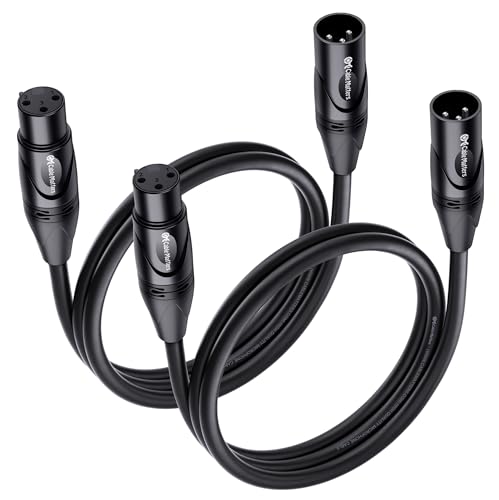
The 3-pin XLR connector is the mechanical weak point of any microphone cable, so its build matters as much as the conductor. Look for metal connector housings, chuck-type strain relief, and locking latches. The Cable Matters 2-Pack documents heavy-duty metal connectors with molded strain relief, and the VANDESAIL cables document metal connectors with chuck-type strain relief and tin-plated pins.
Jacket Material and Flexibility
Jacket choice affects how the cable feels on stage, how it coils, and how well it resists scuffs. Nylon braided jackets, as found on the VANDESAIL 3ft 2 Pack Nylon Braided, the SONICAKE 10 Feet, and the Shaevle 10 Feet, are documented for high bend-cycle counts and tangling resistance. Soft PVC jackets, used on the Amazon Basics 25 Foot, the EBXYA 6ft 2 Packs, and the VANDESAIL PVC 3ft 2 Pack, are documented as flexible and easy to clean. Thicker jackets, such as the 6mm PVC on Amazon Basics, can add durability for fixed runs but reduce packability.
Length and Pack Options
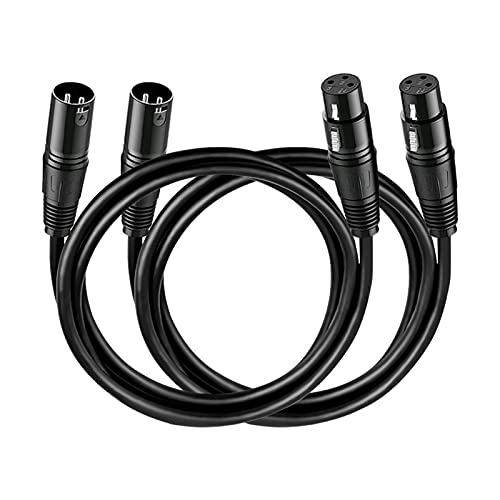
Match length to your physical setup rather than reaching for the longest option. Short 3-foot cables target patch bays and desktop rigs, documented on the VANDESAIL packs, the Cable Matters pair, and the EBXYA bundle. Many of the listed cables ship in 2-packs, which is useful if you run matched channels or want a documented spare.
Use-Case Fit: Studio, Stage, Podcast
The best pin microphone cables are the ones whose documented length and build match your specific room and equipment.
Final Recommendation
VANDESAIL XLR Cables 3ft 2 Pack, Nylon Braided ranks first overall in this specification-based comparison under the published weighted criteria.
The final choice among the best pin microphone cables depends on the documented features that match your intended use.
Across the documented specifications, the Amazon Basics XLR Male to Female 25 Foot cable stands out as the first overall specification-based choice because it pairs all-copper conductors with inner copper spiral shielding, zinc-alloy 3-pin connectors with nickel plating, and a 6mm PVC jacket in a versatile 25-foot length. For shorter patch work, the VANDESAIL XLR Cables 3ft 2 Pack Nylon Braided earns a strong top pin microphone cables recommendation because of its 24AWG oxygen-free copper conductors, dual-layer shielding, and bend-tested nylon braid. For compact desktop podcast rigs, the SONICAKE XLR Microphone Cable 10 Feet and the Shaevle XLR Microphone Cable 10 Feet both fit the role of top pin microphone cables with all-copper conductors and nylon jackets, while the Cable Matters 2-Pack is a strong choice for studios that want a heavier 21 AWG build. Choose the length and pack size that matches your room, and prioritize cables that document both a copper conductor and a multi-layer shield for the most consistent signal behavior.
Frequently Asked Questions
Among the best pin microphone cables, what length of 3-pin XLR cable should I buy for a home studio?
For most home studios, a 10-foot cable such as the SONICAKE or Shaevle 10 Feet option is a flexible starting point. If your interface is on the desk and your microphone is on a stand, 10 feet gives you slack without leaving a long coiled run that can act as an antenna. For larger rooms or wall-to-wall routing, the 25-foot Amazon Basics cable documents enough reach for typical fixed setups.
Are nylon braided XLR cables better than PVC jackets?
Nylon braided jackets, as documented on the VANDESAIL 3ft 2 Pack Nylon Braided and the SONICAKE 10 Feet, are generally more abrasion-resistant and document higher bend-cycle counts. PVC jackets, as documented on the EBXYA 6ft 2 Packs and the Amazon Basics 25 Foot, are typically softer and easier to clean. Both materials can work well; the choice depends on whether you value abrasion resistance or packability more.
Do I need oxygen-free copper conductors in a microphone cable?
OFC can marginally reduce oxidation over very long service life, which is more relevant for permanent installations than short patch cables. For a podcast or streaming rig, either copper or OFC conductors will generally perform the same in a short run.
Is a 2-pack of XLR cables worth it?
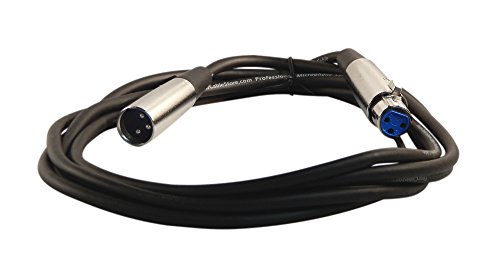
A 2-pack is useful if you run matched stereo channels, want a documented spare, or are building a stage box. Many of the cables in this list, including the VANDESAIL 3ft 2 Pack, Cable Matters 2-Pack, EBXYA 6ft 2 Packs, and Yumiwoow 10FT 2 Pack, are sold as 2-packs. If you need only one cable, a single-pack option such as the Amazon Basics 25 Foot or Your Cable Store 10 Foot may be a cleaner fit.
How important is the locking latch on an XLR connector?
The locking latch is one of the most important mechanical features on a 3-pin XLR cable, because it prevents the cable from being pulled out mid-session. For stage or live environments where cables may be stepped on or tugged, a positive locking latch is worth prioritizing over jacket color alone.