Buying Guide
Picking the best championship tennis balls is less about brand loyalty and more about aligning the ball’s construction with your court, frequency of play, and league requirements. The short guide below walks through the most important specifications to compare before you commit to a case.
Match Felt Duty to Your Court Surface
Felt duty is the single biggest specification difference among championship tennis balls. Extra Duty felt is woven to resist abrasion on hard courts, which is why it appears across most Penn Championship and Wilson Championship hard-court SKUs. Regular Duty felt is gentler, designed for softer clay and indoor courts where a tighter nap would simply wear out faster. If you play on both surfaces, the safer choice is the extra duty format, but players who train primarily on clay should reach for a Regular Duty option to protect the court and extend ball life.
Pressurized Cores and Bounce Consistency
All of the balls in this comparison use pressurized cores, which is what produces the lively, predictable bounce that championship-style play depends on. The tradeoff is that pressurization slowly leaks once a can is opened, so sealed-can storage matters. Brands such as Penn and Wilson describe interlocked wool fiber and natural rubber cores for consistent feel and reduced shock. Keep unopened cans stored at moderate temperatures and use Extra Duty cans promptly after opening to maintain consistent response.
Tournament Approval and League Suitability
If you play USTA League matches, school tennis, or sanctioned tournaments, approval status matters. The Penn Championship line is documented as the Official Ball of USTA Leagues and is USTA and ITF approved across extra duty, regular duty, and high altitude variants. Wilson Championship balls are USTA and ITF approved and carry the additional pedigree of being the official ball of the US Open, Australian Open, and NCAA Tennis. Players who only play recreational sets and drills may not need explicit approval, but most buyers still prefer the same spec used in league play for predictable performance.
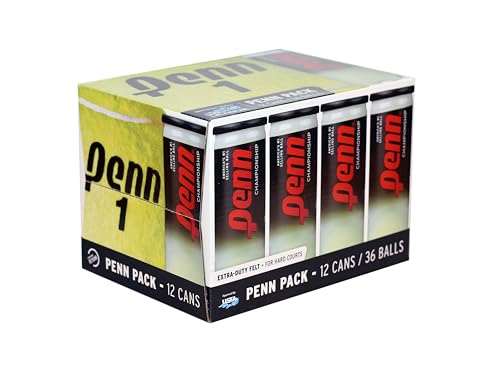
Championship tennis balls come in a wide range of formats. Single cans of 3 balls suit casual players and trial purchases, two-can and four-can packs work for doubles and small-group practice, and nine-can to 24-can cases fill club, team, and tournament needs. If you run a ball machine or coach frequently, bulk cases such as the Penn Championship Extra Duty 12-can pack or the Wilson Championship Regular Duty 24-can case reduce the chance of running out mid-session. Choose the smallest pack size that realistically covers a week of play to keep unopened cans sealed.
Construction Details Worth Noting
Championship-grade balls document a few shared construction cues: natural rubber cores for consistent feel, interlocked wool fiber for even nap, and pressurized packaging to retain liveliness. Dura-Weave felt on Wilson’s Extra Duty option is specifically highlighted for durability. The Penn lineup emphasizes controlled fiber release to keep nap uniform across the ball, which supports predictable flight and bounce. These details matter more than cosmetic differences such as can color, and they correlate with how long a ball maintains acceptable playability.
Choosing Between Penn and Wilson Championship Lines
Both Penn Championship and Wilson Championship lines are credible, spec-rich options. Penn’s line emphasizes the role of the Official Ball of USTA Leagues and centers on Extra Duty and Regular Duty variants. Wilson’s line leans on its Grand Slam association, with Extra Duty Dura-Weave balls for hard courts and Regular Duty balls explicitly aimed at clay and indoor surfaces. For hard-court league play, the Penn Championship Extra Duty 12-can pack and the Wilson Championship Extra Duty single can are the closest specification-based matches. For clay and indoor-focused clubs, the Penn Championship Regular Duty 12 cans and the Wilson Championship Regular Duty 24-can case are the most specification-aligned fits.
Storing and Rotating Your Stock
Pressurized championship tennis balls gradually lose pressure once exposed, so storage discipline is part of the product. Keep cans sealed until needed, store them away from extreme heat or cold, and rotate opened cans first. Heavy-use environments such as clubs and academies may want to standardize on a single SKU so balls rotate evenly, while home players may prefer a smaller pack to minimize the time any single can sits open.
Final Recommendation
Penn Championship Extra Duty 12 Cans (36 Balls) ranks first overall in this specification-based comparison under the published weighted criteria.
The final choice among the best championship tennis balls depends on the documented features that match your intended use.
For a specification-based overall pick, the Penn Championship Extra Duty 12 Cans (36 Balls) tops the list thanks to its USTA- and ITF-approved Extra Duty felt engineered for hard-court durability, interlocked wool fiber construction, and bulk 36-ball format that supports practice, lessons, and league sessions alike. It also doubles as a strong baseline if you want to standardise on a single SKU across your team. If you primarily play on clay or indoor courts, the Penn Championship Regular Duty 12 Cans (36 Balls) is the closest specification-based alternative, while the Wilson Championship lines, including the Extra Duty single can and the Regular Duty 24-can case, are the most specification-aligned choices for players who want a Grand Slam lineage. Among the top championship tennis balls, the Penn Extra Duty 12-can pack is the most complete hard-court option, and the Penn Regular Duty 12-can pack is its soft-court counterpart.
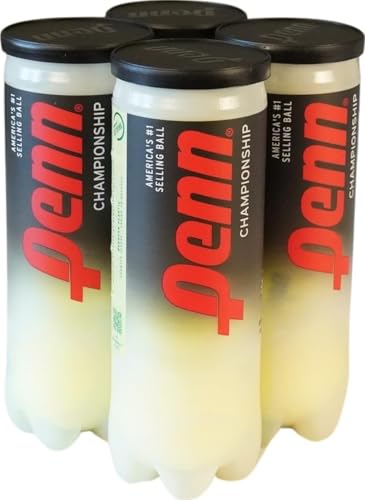
If you want a compact hard-court pack rooted in the same Penn Championship spec, the Wilson Championship Extra Duty Single Can is a credible compact pick. For dedicated soft-court players, the Wilson Championship Regular Duty 24-Can Case brings Grand Slam credentials to facility-scale supply. Coaches and small clubs who want a Regular Duty field pack can look at the Penn Championship Regular Duty 4-Can Bundle (12 Balls), while entry-level and trial choices, including the Penn Championship Extra Duty Single Can, the two-can pack, the nine-can pack, and the facility-grade Extra Duty case, all sit inside the broader category of championship tennis balls and serve specific budgets, surface mixes, and training volumes.
Frequently Asked Questions
What are the best championship tennis balls for hard courts?
For hard-court play, Extra Duty felt balls lead the spec sheets. The Penn Championship Extra Duty 12 Cans (36 Balls) and the Wilson Championship Extra Duty Single Can both document Extra Duty felt designed for abrasive hard-court surfaces, USTA and ITF approval, and pressurized natural rubber cores for consistent bounce.
Which championship tennis balls should I use on clay or indoor courts?
Regular Duty felt is the appropriate specification for clay and indoor play. The Penn Championship Regular Duty 12 Cans (36 Balls) and the Wilson Championship Regular Duty 24-Can Case explicitly target soft, clay, and indoor surfaces, while still carrying USTA League or Grand Slam approval.
How long do pressurized championship tennis balls stay lively?
Pressurized balls hold their bounce best while the can stays sealed. Once opened, pressure gradually drops and felt nap wears down with court abrasion. Storing cans in moderate temperatures, opening them close to play, and rotating stock so older cans are used first will help keep the best championship tennis balls playing consistently.
Are Penn Championship and Wilson Championship balls approved for league play?
Yes, where documented. Penn Championship balls are listed as USTA and ITF approved across extra duty, regular duty, and high altitude variants, and serve as the Official Ball of USTA Leagues. Wilson Championship balls are USTA and ITF approved and are the official ball of the US Open, Australian Open, and NCAA Tennis, which is why they are common at league and tournament events.
What pack size should I buy for regular practice?
The right pack size depends on your usage. A single can suits occasional recreational play, two- and four-can packs work for doubles or small-group practice, and nine-can to 24-can cases fit clubs, teams, and ball-machine use. Choosing the smallest pack that supports a typical week of play helps keep unopened cans sealed and preserves the pressurized feel of the best championship tennis balls.