Buying Guide
The best us open tennis balls are not all designed for the same court, pace, or player. The pool includes standard-duty balls for regular play, extra-duty balls for abrasive hard courts, and lower-compression green, orange, and red designs for modified-court development. This guide separates those uses so the pack size and construction match the session rather than relying on the US Open name alone.
Match the duty type to the court
Extra-duty felt is the clearest choice when hard-court wear is the main concern. The Wilson US Open Extra Duty Single Can states that it is intended for hard, abrasive courts and uses premium woven felt. The 24-can extra-duty listing likewise positions the ball for hard courts and specifies premium Tex/Tech felt. These details make the extra-duty products the most directly supported options for frequent hard-court use.
Regular-duty balls are better represented by the Wilson US Open Regular Duty 72-Ball Case, the WRT1073CS case, and the four-ball can. The 72-ball case identifies premium woven felt and approval for competitive play, while the four-ball can specifically lists clay and indoor-court durability. If you play mostly on clay or indoors, regular-duty construction may be a more relevant starting point than automatically selecting an extra-duty ball.
Choose a standard or modified ball
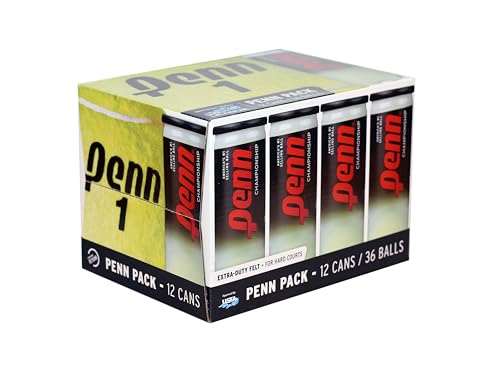
Standard adult practice and match sessions generally call for a regular-duty or extra-duty ball. The single-can extra-duty model is the most compact choice with complete competitive credentials, while the 72-ball regular-duty case is better for clubs, coaches, or players who use balls regularly. A 12-can extra-duty pack sits between those extremes, supplying 36 balls without the larger commitment of a full case.
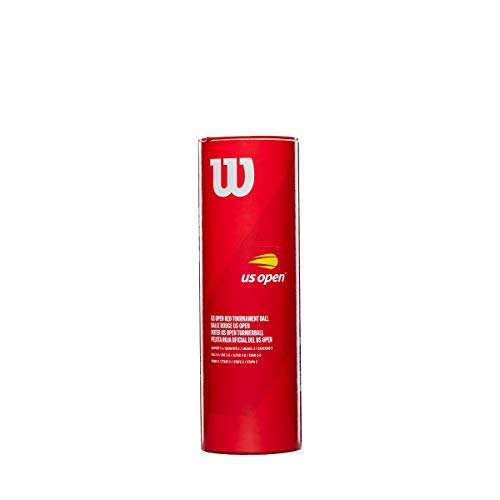
Modified balls serve a different purpose. The green tournament ball is pressurized, slightly slower, and listed with a bounce 25% lower than a standard tennis ball, but it is intended for full-size courts. The orange tournament ball is low compression, has a listed bounce 50% lower than standard, and is designed for 60-foot courts. The red tournament ball is larger and easier to hit, with a listed bounce 75% lower than standard for 36-foot courts. These are not interchangeable with standard adult balls; their usefulness comes from the court and player context documented in the listings.
Consider age and court length
For junior instruction, use the stated court length and age guidance. The Wilson US Open Orange Youth Tennis Balls listing specifically identifies 10-and-under tennis, ages 9 to 10, and stage-two orange play. The separate orange tournament listing also identifies 60-foot courts, while the red model is intended for 36-foot courts. Those distinctions are more useful than color alone because they connect the ball to a training format.
A junior player moving between lesson formats may need more than one design. An orange ball can support 60-foot-court work, while a red ball is aimed at the shorter 36-foot setup. The green model is different again: it is described for full-size courts but at a slightly slower pace. Select based on the actual court dimensions and program requirements rather than assuming every lower-compression ball is a general practice substitute.
Pick a pack size that fits the session
Pack size affects convenience, storage, and replacement planning. A single can is easy to carry and makes sense when only a few fresh balls are needed. The four-ball regular-duty can provides one additional ball without moving to a larger supply. The 12-can pack supplies 36 balls for repeated practice, while the 24-can cases contain 72 balls and are suited to frequent use, team settings, or organized instruction.
The listing data is not fully consistent across every case format, so verify the can and ball count before ordering. For example, some entries state the total directly, while others emphasize the case size. The most suitable comparison is to use the explicitly documented quantity: three balls for the single can, four for the regular-duty can, 36 for the 12-can pack, and 72 for the listed case formats.
Check the evidence you actually need
USTA and ITF approval is useful when competitive eligibility matters. The single-can extra-duty model, the regular-duty 72-ball case, and the green, orange, and red tournament balls explicitly include approval statements. Other listings still identify a recognizable US Open ball format but provide less information about credentials or materials. That does not prove they are unsuitable; it simply means the public listing supports fewer conclusions.
Construction terminology also matters. Premium woven felt, premium Tex/Tech felt, low compression, and pressurized green felt are all useful descriptors supplied by the listings. Avoid treating an unspecified feature as present. This comparison therefore favors products with clear technical or use-case information, not products based on marketplace signals or customer sentiment.
Final recommendation
Wilson US Open Extra Duty Single Can ranks first overall in this specification-based comparison under the published weighted criteria.
The final choice among the best us open tennis balls depends on the documented features that match your intended use.
The Wilson US Open Extra Duty Single Can is the first overall specification-based choice among these selections. It combines USTA and ITF approval, premium woven felt, a clear hard-court purpose, and a manageable three-ball format. For regular-duty bulk use, the Wilson US Open Regular Duty 72-Ball Case is the stronger supply-oriented alternative because its 72-ball quantity, premium woven felt, approval, and warranty are all documented.
The top us open tennis balls for junior or modified-court play depend on the court size. Choose the Wilson US Open Green Tournament Ball for slightly slower full-size-court play, the Wilson US Open Orange Tournament Ball for 60-foot courts, or the Wilson US Open Red Tournament Ball for 36-foot courts. For ages 9 to 10 and stage-two orange instruction, the Wilson US Open Orange Youth Tennis Balls provide the clearest age-specific positioning.
For court-specific adult use, the Wilson US Open Extra Duty 24-Can Case is the logical bulk hard-court option, while the Wilson US Open Regular Duty 4-Ball Can is the more targeted clay or indoor choice. The WRT1073CS regular-duty case and the 12-can extra-duty pack fill practical quantity gaps when a single can is too little and a full 72-ball case is unnecessary.
Frequently Asked Questions
What are the best us open tennis balls for hard courts?
The Wilson US Open Extra Duty Single Can is the clearest compact choice because its listing explicitly identifies hard, abrasive courts, premium woven felt, and USTA and ITF approval. The Wilson US Open Extra Duty 24-Can Case is better when a larger supply is needed.
Choose extra-duty when hard-court abrasion is the primary concern and regular-duty when the listing’s intended use better matches clay, indoor courts, or general regular-duty play. The comparison includes both types, so court surface should guide the decision.
The Wilson US Open Orange Tournament Ball is explicitly designed for 60-foot courts and is described as a low-compression ball with a bounce 50% lower than standard. The Wilson US Open Orange Youth Tennis Balls are also positioned for stage-two orange play and ages 9 to 10.
What is the difference between the green, orange, and red balls?
The green ball is described as slightly slower with a bounce 25% lower than standard and is intended for full-size courts. The orange ball is for 60-foot courts with a 50% lower listed bounce. The red ball is larger, easier to hit, and intended for 36-foot courts with a 75% lower listed bounce.
Is a case better than a single can?
A case provides more reserve for frequent practice, coaching, or organized play, while a single can is easier to carry and suits occasional use. The listed formats range from three or four balls to 36- and 72-ball supplies, so the appropriate choice depends on session frequency and storage needs.