Buying Guide
Choosing the best dirt bike fuel lines starts with the existing hose rather than the motorcycle’s general class. Dirt bikes can use different hose diameters, valves, routing paths, and fuel-delivery arrangements. A line that fits a 50cc pit bike may not fit another motorcycle simply because both are described as dirt bikes. Compare the original hose’s inner diameter, outer diameter, connection points, and operating layout with the listing evidence before selecting a replacement.
Match the inner diameter first
Inner diameter controls how the hose meets the tank outlet, petcock, filter, and carburetor fittings. The selected products document several common sizes. The uxcell and XIKOBY options list a 5mm inner diameter. The wyevee, YAMAKATO, YGQ, and KIKITE products use approximately 3/16-inch sizing, although YGQ and KIKITE specify 4.8mm while YAMAKATO uses 3/16 inch. AloneGoer and Sunxeke list 5.5mm inner diameters, while Max-Motorsports lists 1/4 inch.
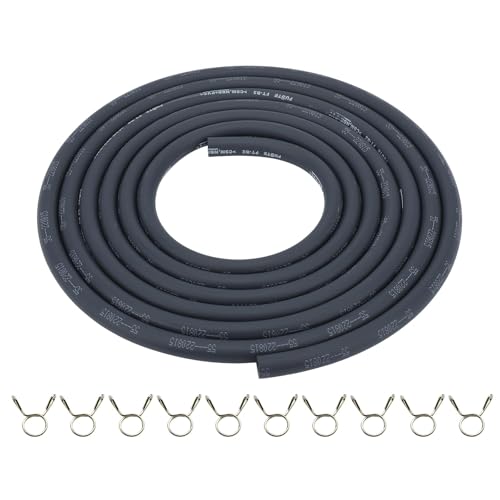
Do not treat those measurements as interchangeable without checking the mating fittings. A small difference can affect how the hose seats and which clamp or connector is appropriate. The outer diameter also matters when a fitting, clamp, or routing guide must accommodate the hose wall. For example, uxcell lists 5mm ID and 8mm OD, while Sunxeke lists 5.5mm ID and 10.3mm OD.
Confirm the fuel-system type
Several selected lines are explicitly for gravity-fed or non-pressure systems. YAMAKATO states that its two-layer line is for gravity-fed systems and not pressurized fuel delivery. Max-Motorsports is documented for gravity-fed and low-pressure applications and excludes fuel injection. Sunxeke, YGQ, and KIKITE also identify their tubing as non-pressure hose or exclude engines with fuel pumps.
This distinction is essential. A specification for gasoline compatibility does not by itself establish suitability for a pressurized fuel system. If the motorcycle uses a fuel pump or fuel injection, the supplied evidence here does not support assuming that any selected line is appropriate. Use the bike manufacturer’s service information and the hose manufacturer’s application requirements to verify the system type.
Compare hose materials and resistance notes
Material descriptions help explain how a line is intended to be used, but they do not replace dimensional matching. Max-Motorsports identifies 85A polyurethane. uxcell uses silicone, while AloneGoer documents an NBR+PVC/CSM double-layer structure. YAMAKATO and YGQ describe two-layer construction, and KIKITE identifies rubber tubing.
The listings also provide different resistance details. AloneGoer states a -40°F to 212°F range and compatibility with gasoline containing 10% or more ethanol. Sunxeke lists oil, ethanol, and high- and low-temperature resistance, with a -22°F to 338°F range. YGQ states resistance to oil and temperatures from -22°F to 338°F and lists gasoline, E-85, diesel, and biodiesel applications. KIKITE states resistance to oil, ethanol, high temperature, and low temperature. Max-Motorsports specifically documents gasoline containing up to 10% ethanol.
These claims are listing specifications, not independent test results. Treat the stated fuel and temperature limits as screening information, then confirm the intended fuel and operating conditions for the motorcycle.
Decide between tubing and a complete kit
Tubing-only products are useful when the existing filter, petcock, and clamps are serviceable. Max-Motorsports supplies hose and zip ties but says clamps are not included. Sunxeke, uxcell, YGQ, and KIKITE include clamps, which can simplify a hose-only replacement when the sizes match.
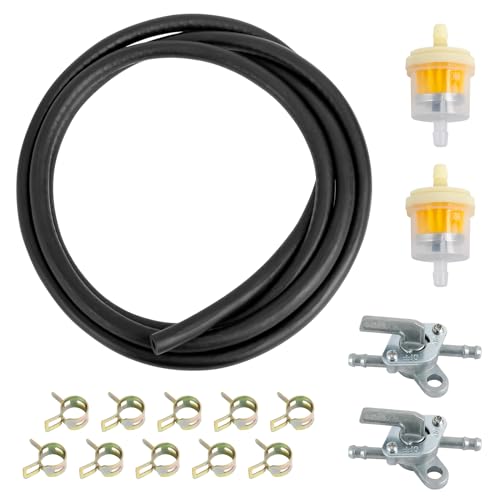
Complete kits may be more practical when a filter or valve is also being replaced. wyevee includes two filters, two shut-off valves, and 10 clamps. YAMAKATO includes three filters, an inline petcock, 10 clips, and a protective hose supporter. XIKOBY includes a filter, 1/4-inch petcock, and spring clips. HIAORS includes a filter, shut-off valve, and six clips.
Check each component separately. A hose can have the right inner diameter while a supplied valve uses a different inlet size. HIAORS lists a 5mm hose and a 6mm valve inlet; XIKOBY gives the same 5mm hose and 6mm petcock inlet relationship. That information is helpful, but the motorcycle’s actual tank and carburetor connections remain the final fit check.
Use length to plan the route
A near-four-foot line can suit a straightforward replacement. XIKOBY, HIAORS, and uxcell list approximately 39.3 to 39.37 inches. Max-Motorsports provides four feet, while AloneGoer provides five feet. These lengths may be enough for a single run, but the correct amount depends on routing, bends, and where the hose is secured.
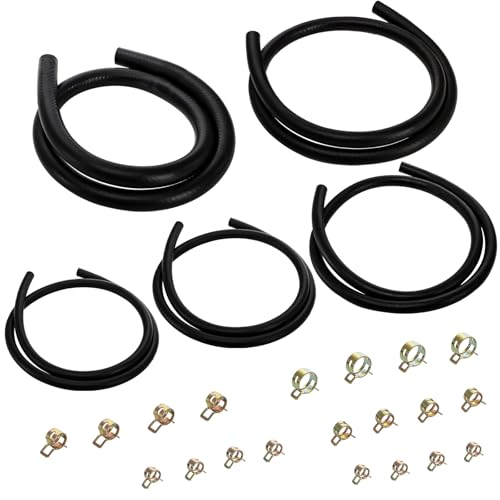
Longer options offer more flexibility for unusual layouts or repeated cuts. wyevee provides six feet, YGQ eight feet, and KIKITE 10 feet. Sunxeke supplies six feet and specifically says the hose can be cut to requirements. Long tubing can reduce the need to join sections, but excess hose should not be routed loosely near heat, moving parts, or sharp edges. Follow the motorcycle’s original routing and use suitable retention hardware.
Inspect the route before installation
Measure the old line and note the direction of flow through any filter. Compare the replacement’s inner and outer diameters before cutting. The supplied evidence supports cutting several products to length, including wyevee, Sunxeke, uxcell, YGQ, and KIKITE. Make a clean cut and confirm that the hose reaches each connection without stretching, folding, or forcing a tight bend.
The listings describe flexible or bendable construction for wyevee, uxcell, AloneGoer, and other options. That does not establish a specific minimum bend radius, so avoid assuming that a flexible hose can safely make every turn. Keep the line away from abrasion and heat, and use clamps or clips where the kit supplies them. After installation, inspect every connection according to the motorcycle’s service procedure.
Final recommendation
YGQ 8-Foot 3/16-Inch Fuel Hose ranks first overall in this specification-based comparison under the published weighted criteria.
The final choice among the best dirt bike fuel lines depends on the documented features that match your intended use.
wyevee 3/16-Inch 6-Foot Fuel Line Kit is the highest-scoring returned product and the first overall specification-based choice. It combines a documented six-foot cut-to-fit hose with two filters, two shut-off valves, and 10 clamps, while listing broad dirt-bike and small-engine applications. YAMAKATO is a close alternative when the system is gravity-fed and a protective supporter is useful. Max-Motorsports suits a 1/4-inch low-pressure setup, while Sunxeke, YGQ, and KIKITE provide longer tubing for custom cuts.
Among the top dirt bike fuel lines, the correct inner diameter and system type should decide the final selection. Choose a complete kit when the filter, petcock, or clamps also need replacement; choose tubing-only when the existing hardware is compatible and serviceable. The product evidence supports comparison, but it does not replace a model-specific fit check.
Frequently Asked Questions
Among the best dirt bike fuel lines, what inner diameter should I choose for a dirt bike fuel line?
Match the original hose and the fittings, not merely the motorcycle category. The selected products document 5mm, 5.5mm, approximately 3/16-inch, and 1/4-inch options. Measure the existing line and compare both inner and outer diameters with the replacement listing.
Are these fuel lines suitable for fuel-injected dirt bikes?
The supplied evidence does not support that assumption. YAMAKATO, Max-Motorsports, Sunxeke, YGQ, and KIKITE identify gravity-fed, low-pressure, or non-pressure limitations. A fuel-injected or pump-fed system requires a hose specifically documented for that application.
Is a longer fuel line better for a dirt bike?
Longer tubing provides more material for routing and cutting, but it is not automatically the right choice. YGQ offers eight feet and KIKITE offers 10 feet, while several selected products are approximately four feet. Choose enough length to follow the original route without leaving loose hose or creating unnecessary bends.
Do dirt bike fuel line kits include filters and clamps?
Some do and some do not. wyevee, YAMAKATO, XIKOBY, and HIAORS include combinations of filters, valves, and clips. Max-Motorsports does not include clamps, while uxcell, Sunxeke, YGQ, and KIKITE include clamps. Check the package contents before assuming the existing hardware can be reused.
Can I cut a fuel line to fit?
Several selected listings describe cut-to-fit use, including wyevee, Sunxeke, uxcell, YGQ, and KIKITE. Cut only after confirming the route and connection points. Keep the finished hose free of kinks and secure the ends with appropriate clamps or other specified hardware.