Buying Guide
Choosing among the best in-line fuel filters starts with the fuel line, not the brand name. An in-line filter sits between the tank and engine, so the connection must match the hose’s inside diameter and the filter’s inlet and outlet. A filter that appears universal may still require a specific hose size, clamp, adapter, or mounting arrangement. Confirm the line measurement before ordering, and compare the listed fuel type with the engine’s requirements.
Match the fuel-line size
The selected products document 1/4-inch, 5/16-inch, and 3/8-inch applications. WIX 33001 is the clearest 1/4-inch gasoline choice, while WIX 33002 and WIX 33012 target 5/16-inch lines. The attwood 12562-6 and several universal designs are listed for 3/8-inch hose. Taiss covers both 3/8-inch and 5/16-inch applications, but its listing notes that the connection may need to be secured carefully.
Do not treat a nominal size as proof of universal fit. Hose inside diameter, barb shape, clamp position, available clearance, and flow direction all matter. Medoon and EVIL ENERGY use adapter-based layouts rather than a single fixed hose-barb format. That can help with custom systems, but it also adds installation decisions. Check the arrows or installation instructions where provided.
Compare filtration ratings carefully
A lower micron number generally describes a finer filtration specification, but the correct choice depends on the equipment and fuel-system design. The selected products range from Medoon’s stated 10 microns to EVIL ENERGY’s 100 microns. WIX 33001 is listed at 12 microns, WIX 33012 and Quicksilver 879885Q at 20 microns, attwood at 40 microns, and WIX 33972 at 50 microns.
These numbers are specifications, not independent performance test results. They should not be used to promise a particular engine outcome. Use the equipment maker’s recommendation when one is available, especially for marine, diesel, or modified fuel systems. APE RACING uses sintered bronze, and several compact universal models use pleated media, but the supplied listings do not provide directly comparable efficiency testing for those designs.
Consider housing and element materials
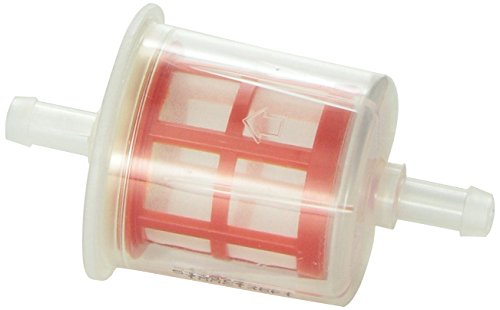
Plastic bodies are common in compact replacement filters because they keep the format light and simple. WIX 33001 and WIX 33002 use plastic housings, while WIX 33012 uses metal. The attwood filter adds a clear body with impact- and shatter-resistant construction. For a small gasoline engine, a compact plastic filter can be appropriate when its size and fuel compatibility match the application.
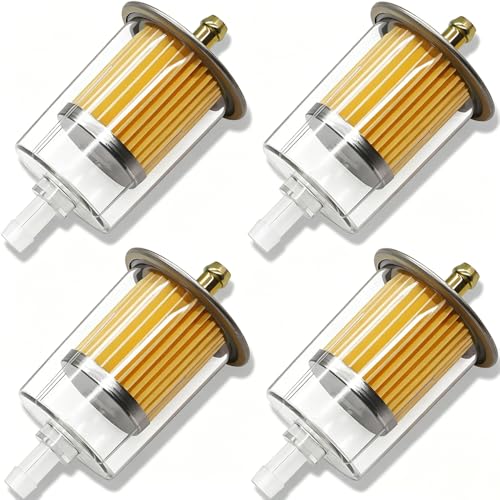
Metal designs may appeal to users building or maintaining a more specialized setup. EVIL ENERGY and Medoon specify aluminum housings with stainless steel elements, while APE RACING specifies billet aluminum and sintered bronze. These products may occupy more space or require different fittings than a simple replacement filter. Review dimensions, adapter sizes, bracket requirements, and clearance around hot or moving components before installation.
Decide whether visibility or serviceability matters
A clear or translucent body lets you inspect the filter area without removing it. Visual access can help identify visible debris or fuel condition, but it does not replace the engine maker’s replacement schedule.
Most compact replacement filters are disposable. The reusable alternatives are Medoon and EVIL ENERGY, both of which document removable elements. Medoon also lists a washable element, replacement element, O-rings, and a mounting bracket. Serviceable construction may reduce waste and support recurring maintenance, but it requires correct reassembly, sealing, and flow-direction checks.
Account for the application
A gasoline lawn mower, an outboard motor, a motorcycle, and a custom fuel system do not necessarily need the same filter. Quicksilver 879885Q is specifically positioned for Mercury and Mariner outboards, and attwood identifies most outboard motors. APE RACING and Taiss focus on small engines and powersports equipment. WIX products provide conventional replacement choices when their listed sizes and fuel restrictions match.
Fuel type is equally important. WIX 33001, WIX 33002, WIX 33012, and Taiss are presented for gasoline applications. WIX 33972 lists gasoline or diesel. EVIL ENERGY lists gasoline and diesel but specifically excludes E85, while Medoon lists gasoline, diesel, E85, and more. Treat these statements as product-listing evidence and verify the intended fuel system before use.
Installation and replacement checks
Install the filter in the documented flow direction, use suitable clamps or adapters, and inspect for leaks after the system is reassembled. Replace a disposable filter according to the engine or equipment guidance. For reusable units, follow the supplied element and O-ring instructions rather than assuming every insert is interchangeable.
The best in-line fuel filters are not necessarily the most elaborate. A clearly sized replacement can be preferable to a multi-adapter kit when the application is standard. Conversely, the extra fittings and serviceable element in Medoon or EVIL ENERGY may be useful for a custom layout. Compare the evidence that matters to your setup: size, fuel type, filtration rating, materials, visibility, and maintenance method.
Final Recommendation
Medoon 10 Micron Inline Fuel Filter Set ranks first overall in this specification-based comparison under the published weighted criteria.
The final choice among the best in-line fuel filters depends on the documented features that match your intended use.
Medoon 10 Micron Inline Fuel Filter Set is the first overall specification-based choice for buyers who need adapter coverage and a reusable element. Its documented 10-micron stainless steel filter, aluminum housing, replacement element, and stated gasoline, diesel, and E85 compatibility give it a particularly detailed specification profile in this comparison.
The top in-line fuel filters still depend on fitment. Choose WIX 33001 for a clearly specified 1/4-inch gasoline line, WIX 33002 or WIX 33012 for 5/16-inch systems, and Quicksilver 879885Q or attwood 12562-6 for the documented outboard applications. EVIL ENERGY is better suited to a custom AN installation, while APE RACING and Taiss address different small-engine needs. Check the hose, fuel, flow direction, and available space before purchase.
Frequently Asked Questions
What should I check before buying the best in-line fuel filters?
Measure the fuel hose’s inside diameter, confirm whether the engine uses gasoline, diesel, or another fuel, and compare the required filtration rating with the listing. Also check whether the filter is disposable or reusable, whether clamps or adapters are needed, and whether it will fit in the available space.
Are a 10-micron and a 100-micron filter interchangeable?
They should not be treated as interchangeable based on the numbers alone. The listings specify different filtration ratings and different connection systems. Follow the fuel-system or equipment guidance, then confirm that the chosen filter’s flow arrangement, fuel compatibility, and fittings suit the application.
Which selected filter is intended for outboard motors?
Quicksilver 879885Q is listed for Mercury and Mariner outboards, while attwood 12562-6 is listed for most outboard motors and 3/8-inch fuel lines. Confirm the specific engine fitment before installation because universal appearance does not establish marine compatibility.
Are reusable in-line filters easier to maintain?
They can permit cleaning or element replacement without replacing the entire housing, but they require correct disassembly, sealing, and reassembly. Medoon documents a washable element, replacement element, and O-rings. EVIL ENERGY documents a removable element for cleaning or replacement. Follow the supplied instructions and inspect for leaks afterward.
Can a filter listed for gasoline also be used with diesel or E85?
Not automatically. WIX gasoline-only models should not be assumed suitable for other fuels. WIX 33972 lists gasoline or diesel, EVIL ENERGY lists gasoline and diesel but excludes E85, and Medoon lists gasoline, diesel, and E85. Use the fuel compatibility stated for the exact product and verify the equipment requirements.