Buying Guide
Choosing the best snowmobile fuel lines starts with the existing hose rather than the vehicle name alone. A listing can mention snowmobiles while still offering several diameters, materials, and system limitations. Measure the original line’s inside diameter and, when possible, its outside diameter. Then confirm whether the system is non-pressure or uses a fuel pump before comparing construction details.
Match the inside diameter first
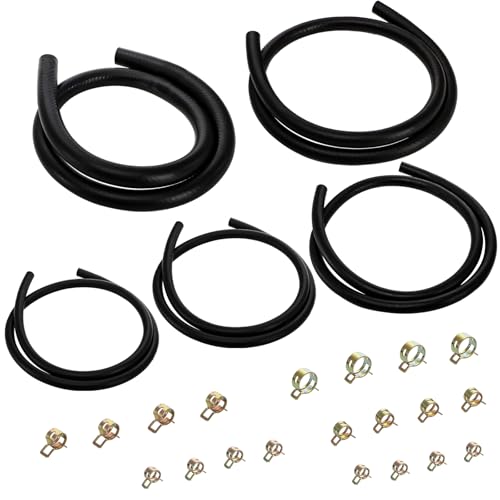
Inside diameter is the most important starting point because it determines whether the replacement can connect correctly and provide the intended passage size. Yesland, Shineyoo, Meonum, and Tanbupu offer several sizes in one kit. That approach can be useful when the required diameter is uncertain, when a snowmobile has more than one hose size, or when the tubing is being used for several small-engine projects.
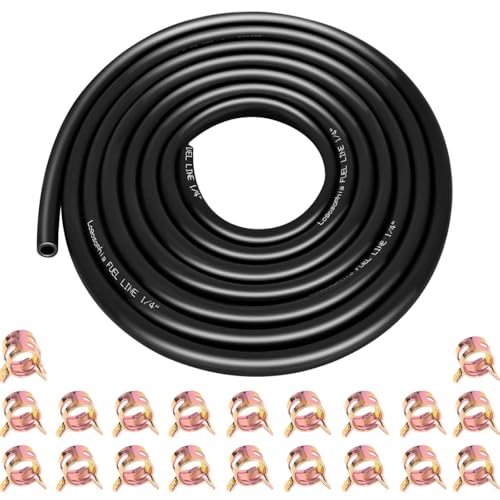
For a known size, a single-diameter roll may be simpler. ALLWIN, YAMAKATO, and Logosophia each document a 1/4-inch ID, while Wetenex documents a 1/8-inch ID. KAVREXO and Strongthium cover two sizes: 3/16 and 1/4 inch. Do not select by outside diameter alone. Compare the inner diameter, outer diameter, connector size, and routing space with the original installation.
Compare hose materials
The selected products document several material types. NBR, or nitrile rubber, appears in Yesland, Shineyoo, Meonum, and Tanbupu. These listings describe resistance to oil, heat, or wear, with some also specifying temperature ranges or reinforcement. NBR is therefore a useful documented design type for fuel-line replacement, but the exact listing limitations still matter.
YAMAKATO and the Logosophia option use rubber-based hose listings, while Wetenex specifies rubber and gives a cold-weather range. KAVREXO uses TPU and describes flexibility and resistance to cracking, hardening, and wear. These descriptions are specification claims, not independent test results, so they should be treated as comparison information rather than a guarantee of service life.
Check temperature and pressure limits
Snowmobile use can expose tubing to cold conditions, but a cold-weather claim should be matched to the product’s stated range. Wetenex lists -40°F to 212°F. Yesland lists -40°F to 250°F. Shineyoo lists -40°F to 257°F, while ALLWIN, YAMAKATO, and Logosophia list -22°F to 338°F. These figures are not interchangeable because the products may use different constructions and application restrictions.
Pressure is equally important. Yesland lists 300 PSI working pressure and a 1,160 PSI burst pressure. Shineyoo lists 300 PSI working pressure and 1,200 PSI burst pressure. Those figures should not be used to assume suitability for every fuel system. Several 1/4-inch options, including ALLWIN, YAMAKATO, and Logosophia, explicitly state that they are non-pressure lines and are not suitable for engines with fuel pumps. Follow the snowmobile manufacturer’s requirements and the hose listing’s stated limitations.
Decide between a roll and a multi-size kit
A 10-foot roll from ALLWIN, YAMAKATO, Logosophia, or Wetenex gives plenty of tubing to cut to the required route when the diameter is already known. Meonum provides 10 feet in each of five sizes, making it the broadest long-length option among the selected products. That format is useful for repeated maintenance but may leave unused sizes after one repair.
Shorter kits can reduce excess material. Tanbupu provides 3.3 feet in each of five sizes, while Strongthium supplies 3.3 feet each of two sizes. KAVREXO documents two sizes but does not state the hose lengths in the supplied listing. Shineyoo provides five feet of each listed size. Choose the length based on the replacement route, bends, and any section that must be trimmed away, not simply the largest number in the title.
Consider clamps and connection hardware
Included clamps can simplify a replacement, but they do not establish compatibility by themselves. Yesland includes 20 clamps, Shineyoo 25, Meonum 50 plus hose-clamp pliers, Tanbupu 50, and ALLWIN and YAMAKATO 20 each. Wetenex includes 10, KAVREXO eight spring clamps, and Strongthium 12. Check that the clamp style and diameter suit the hose and fitting. A clamp that is too large may not secure the connection correctly, while one that is too small may damage the tubing during installation.
Verify application limits before installation
The selected listings generally position these products for small engines, powersports equipment, or fuel systems. That establishes category relevance but does not confirm a particular snowmobile model. Compare the replacement’s diameter, fuel type, routing, pressure requirement, and connection style with the original part. Pay special attention to explicit exclusions: non-pressure hose should not be treated as a fuel-pump line, and the Yesland listing warns against fuel-injection systems. When the listing does not provide a pressure or temperature figure, avoid assuming one.
Final Recommendation
Yesland 5-Size NBR Fuel Line Kit ranks first overall in this specification-based comparison under the published weighted criteria.
The final choice among the best snowmobile fuel lines depends on the documented features that match your intended use.
Yesland 5-Size NBR Fuel Line Kit is the highest-scoring returned product and the first overall specification-based choice. It combines five documented diameters, NBR construction, a braided design, a broad stated temperature range, snowmobile application evidence, and included clamps. Shineyoo is a close alternative when reinforced construction and pressure specifications are especially important, while Meonum is the better fit for long, multi-size maintenance work.
For a known 1/4-inch non-pressure line, ALLWIN, YAMAKATO, and Logosophia offer more focused formats with 10-foot lengths. Wetenex is the specialized 1/8-inch option with a -40°F lower temperature claim. KAVREXO and Strongthium are compact dual-size choices, and Tanbupu offers a clearly marked five-size kit in shorter lengths. These are the top snowmobile fuel lines in this comparison based on documented dimensions, materials, applications, lengths, and hardware rather than hands-on testing.
Frequently Asked Questions
How do I choose the best snowmobile fuel lines for my machine?
Measure the original hose’s inside diameter and compare its outside diameter and connection points with the listing. Then check the fuel system type, required temperature range, fuel compatibility, and routing length. A snowmobile mention in a product listing supports application relevance, but it does not replace model-specific verification.
Is a multi-size fuel-line kit better than a single-size hose?
It depends on the repair. A multi-size kit such as Yesland, Shineyoo, Tanbupu, or Meonum can help when several diameters are needed or the correct size is uncertain. A single-size option such as Wetenex or ALLWIN can be more direct when the original diameter is already confirmed.
Can non-pressure hose be used with a snowmobile fuel pump?
Do not assume that it can. ALLWIN, YAMAKATO, and Logosophia state that their listed 1/4-inch hoses are non-pressure and not suitable for engines with fuel pumps. Check the snowmobile’s system requirements and select a line whose documented pressure application matches the installation.
What hose length should I buy?
Use enough length to follow the original route without stretching or forcing sharp bends, with extra material for a clean cut. The selected products range from 3.3-foot sections to 10-foot lengths, while some multi-size kits provide five feet per diameter. Measure the route before choosing a short kit or long roll.
Do included clamps establish a correct fit?
No. Included clamps are useful only when their size and style match the hose and fittings. Check the clamp dimensions, hose outside diameter, and connection design. A properly sized clamp should secure the connection without cutting into or distorting the tubing.