Buying Guide
The best easy-clean flatware organizers are not all designed for the same drawer. Some prioritize width adjustment, some provide a compact fixed footprint, and others use bamboo, metal mesh, or covered plastic construction. Start by measuring the usable drawer interior, then compare the organizer’s folded and expanded dimensions.
Measure the drawer first
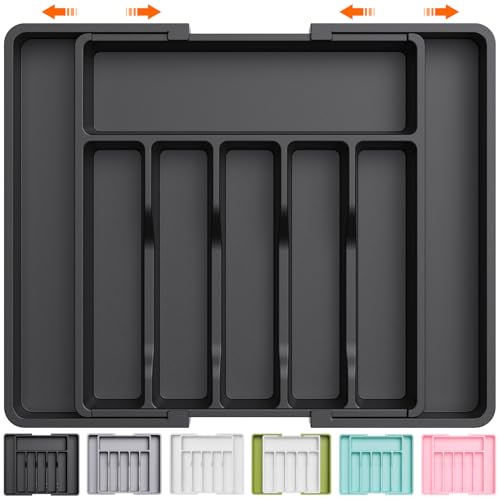
Measure inside width, front-to-back depth, and available height. Leave clearance so the drawer can close without rubbing against the organizer or flatware. Caperci expands to 20.5 inches wide, Homecor reaches 22 inches, and the extra-large Lifewit reaches 22.4 inches. Those dimensions suit unusually wide drawers but may be excessive for standard ones.
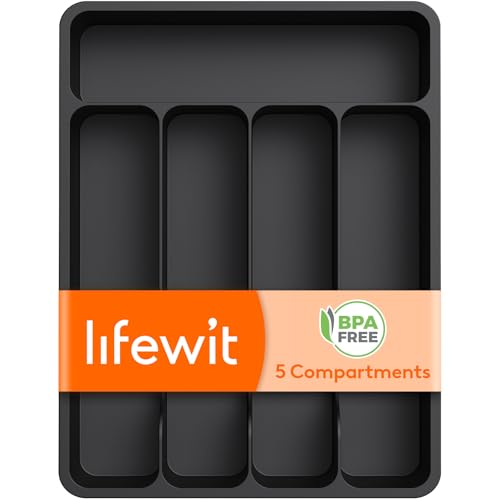
For smaller spaces, the compact Lifewit measures 9.1 by 12.6 by 1.6 inches. Aujen expands from 8.7 to 14.8 inches, while the medium Lifewit adjusts from 8.5 to 14.1 inches. Compare the folded and expanded measurements with the drawer before choosing.
Match the compartment layout to your utensils
Compartment count is useful, but layout matters too. A five-compartment tray can separate forks, spoons, knives, serving pieces, and miscellaneous tools. Homecor provides nine compartments and two removable knife-block inserts, making it the most specialized selection for knife separation.
Caperci has six compartments when closed and eight when expanded. Its listing describes wider central compartments and two expanding sections for serving utensils and cooking tools. The extra-large Lifewit provides eight compartments and three size options for larger collections.
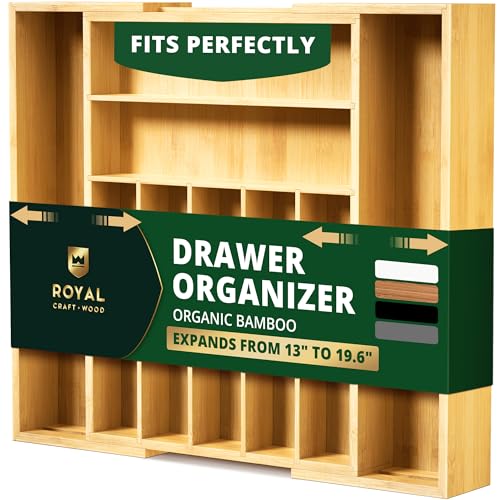
Pipishell changes from six to eight compartments, while oridom is described as a five-to-seven-compartment tray. These bamboo designs can suit shoppers who want adjustable storage with a natural appearance. AIYoo is narrower and includes a lid, so it works more like an enclosed visible-storage container than a high-capacity drawer divider.
Compare cleaning instructions
Cleaning claims differ by product. Caperci is explicitly listed as top-shelf dishwasher safe. Homecor, Aujen, and several Lifewit plastic trays use rinse-with-water guidance, while the medium Lifewit specifically says not to wash it in a dishwasher.
Bamboo requires more careful handling in the supplied evidence. Pipishell calls for warm water or a damp cloth and recommends airing before use. Oridom specifies warm water, damp-cloth wiping, and air drying. These instructions make bamboo a wipe-care option rather than a dishwasher-oriented one.
Sedegn uses coated carbon steel and describes a high-temperature coating, four rubber pads, and a non-slip, easy-clean design. Its mesh may encourage airflow around utensils, while plastic trays offer more enclosed surfaces. Choose according to your maintenance routine.
Prioritize stability when the drawer moves often
An organizer that shifts can mix categories. Caperci documents eight non-skid silicone feet. Homecor and Aujen list four anti-slip or anti-sliding features, and Sedegn includes four non-slip rubber pads. These details provide more specific evidence of intended placement stability than a general statement that a tray is sturdy.
The other selected products may still work in a drawer, but their listings do not provide the same level of anti-slip detail. If the drawer opens forcefully or has a smooth base, prioritize a model with documented feet or pads.
Select the material for your routine
Plastic is a practical choice when rinsing matters. Homecor, Caperci, Aujen, AIYoo, and the Lifewit organizers use PP or similar plastic descriptions, with BPA-free language documented for several models. Caperci has the clearest dishwasher claim, while other plastic products require attention to their individual instructions.
Bamboo, represented by Pipishell and oridom, adds a natural appearance and expandable storage but requires wiping and drying. Sedegn’s coated carbon steel offers a metal alternative with deeper side walls. No material fits every kitchen; drawer dimensions and care preferences should guide the choice.
How this comparison was assembled
This is a specification-based comparison using public listing data, not a hands-on test and not a summary of customer opinions. Products were selected after checking that each independently functions as a flatware or cutlery organizer. The criteria are cleaning convenience, drawer fit flexibility, compartment organization, stability, and material and construction. Scores use only the supplied product evidence and do not use customer sentiment or volatile marketplace information.
Final recommendation
Caperci Large Expandable Silverware Organizer ranks first overall in this specification-based comparison under the published weighted criteria.
Caperci Large Expandable Silverware Organizer is the first overall specification-based choice.
Among the best easy-clean flatware organizers, Caperci has the most balanced documented feature set: broad width adjustment, eight compartments when expanded, thick BPA-free plastic, top-shelf dishwasher-safe parts, and eight non-skid feet. It is a strong match for a large drawer containing flatware and cooking tools.
Homecor is the alternative when removable knife blocks and nine compartments matter most. Choose Sedegn for long-handled utensils and coated metal mesh, or Pipishell and oridom when bamboo appearance and adjustable storage are priorities. For smaller drawers, compare Aujen, the medium Lifewit, and the compact Lifewit using their folded dimensions. These are the top easy-clean flatware organizers for different documented drawer and maintenance needs.
Frequently Asked Questions
What should I measure before buying one of the best easy-clean flatware organizers?
Measure the drawer’s inside width, depth, and height, then compare those figures with the organizer’s folded and expanded dimensions. Check that the drawer can close without contacting the tray or flatware.
Are bamboo flatware organizers easy to clean?
The selected bamboo listings describe warm-water washing or damp-cloth wiping followed by air drying. Pipishell also recommends airing the organizer before first use. This differs from dishwasher-oriented plastic care.
Which organizer is most suitable for knives?
Homecor is the clearest choice because its listing specifies two removable knife-block inserts and nine compartments. The other selected organizers may hold knives, but their supplied evidence does not document the same dedicated knife-block design.
Is a dishwasher-safe organizer always the easiest option?
Not necessarily. Caperci is explicitly listed as top-shelf dishwasher safe, while several others are rinseable or wipeable and some exclude dishwasher washing. Drawer fit, compartment shape, and stability also affect convenience.
Should I choose an expandable or fixed-width organizer?
Expandable designs help when drawer dimensions are unusual or storage needs may change. Compact fixed-width trays can be simpler for a known narrow drawer. Compare both the minimum and maximum width before buying.