Buying Guide
The best electric sewing machines differ mainly in their controls, automation, workspace, and specialty functions. First decide whether you need a conventional sewing machine, a quilting-oriented model, a heavy-duty mechanical machine, or a sewing-and-embroidery combination. The selected products document all four approaches, so the appropriate choice depends on the projects you expect to make.
Choose the machine type first
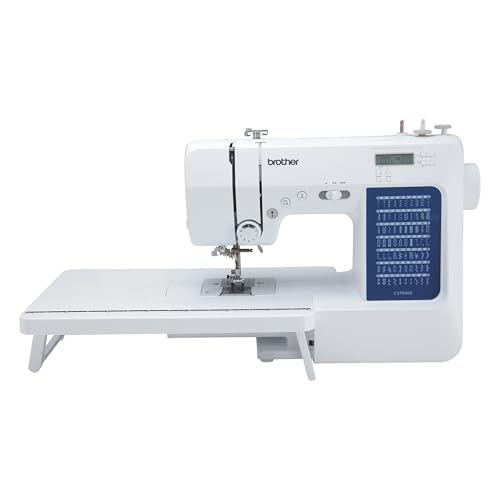
A computerized model such as the Brother CS5055 or CS7000X can suit garments, repairs, decorative work, and some quilting. These machines document automatic needle threading, drop-in bobbins, built-in stitch libraries, and one-step buttonholes. Mechanical models such as the SINGER 4423, SINGER 4452, and Brother FB1757X use simpler controls and may suit users who prefer direct physical settings.
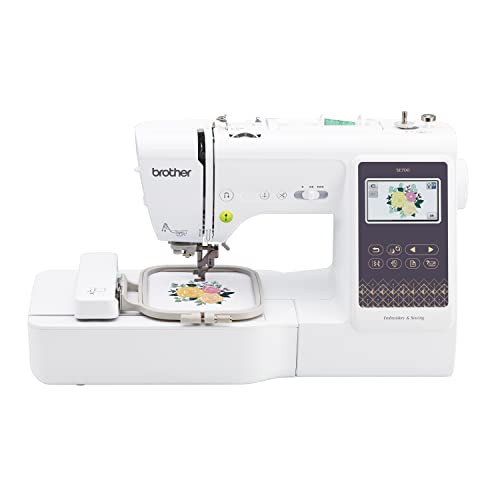
A combination model adds embroidery hardware and software. The Brother SE700 documents a 4-by-4-inch embroidery field, while the Brother SE2000 documents a 5-by-7-inch field. Both also include sewing functions, but they are more specialized than machines intended only for hems and repairs. If embroidery is not part of your plan, the added functions may not be necessary.
Match stitch variety to your projects
Stitch counts help show documented range, but they do not indicate which stitches you will use most. The Brother XR9550 lists 165 built-in stitches, including alphanumeric stitches, while the SE2000 lists 241 sewing stitches. The CS7000X lists 70 and the CS5055 lists 60. These larger libraries can support decorative, heirloom, utility, or quilting work.
Mechanical machines can still cover common tasks. The SINGER 4423 lists 23 built-in stitches with 97 applications, and the 4452 lists 32 stitches with 110 applications. The Brother XR3774 lists 37 stitches, including blind-hem, decorative, and quilting options. For basic mending, hems, seams, and simple garments, a smaller documented library may be enough.
Consider threading and bobbin features
Automatic needle threaders are documented on the CS5055, CS7000X, XR9550, XR3774, XM2701, 4423, and 4452, as well as both selected embroidery machines. These features can reduce a common setup task. Drop-in top bobbins appear on several Brother and SINGER models and can simplify loading or thread-supply monitoring.
The FB1757X takes a more basic approach. Its evidence lists reverse sewing, a four-step buttonhole, and LED lighting but does not document an automatic needle threader or drop-in bobbin. That does not make it unsuitable; it indicates a less automated design.
Check workspace and quilting support
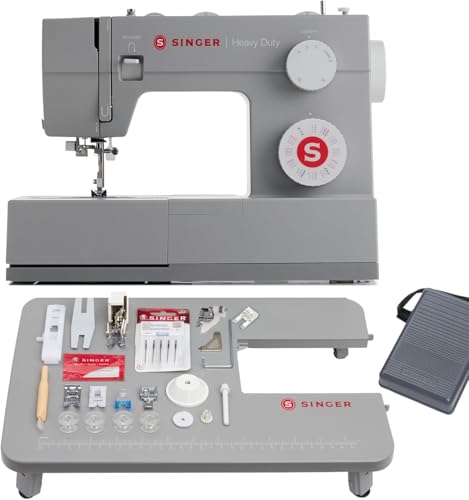
Quilts and larger fabric pieces benefit from a wide or extension table. The XR9550 includes a wide table, the CS7000X includes a wide table and quilt guide, and the XR3774 includes a wide table. The SINGER 4452 includes a removable extension table described for quilts, home décor, and costumes. These features provide a broader supported surface around the needle area.
For sleeves, cuffs, and other narrow sections, a free arm is more relevant. The XR3774, XM2701, and FB1757X document free-arm capability. Consider both features if your projects include garments and larger fabric assemblies.
Think about heavy fabrics separately
The SINGER 4423 and 4452 are the clearest heavy-duty choices in this comparison. Their listings document heavy-duty or full metal frame construction, stronger motors, stainless steel bedframes, and speeds up to 1,100 stitches per minute. The 4452 additionally documents adjustable stitch length and width. These specifications support considering them for thicker seams or multiple layers, but they do not replace checking the instructions for your fabric and needle setup.
Other selected machines document metal frames or structural features, including the CS5055 and CS7000X. However, the supplied evidence does not describe those models with the same heavy-duty motor and speed combination as the SINGER options.
Review accessories and storage needs
Included accessories can affect how ready a machine is for a particular project. The XR9550 includes a protective hard cover, wide table, and quilting feet. The CS7000X includes 10 sewing feet, a quilt guide, a wide table, and a hard case. The XR3774 includes eight feet, a wide table, and a machine cover. The XM2701 includes six feet, a twin needle, bobbins, and a needle set.
Combination machines include specialty equipment such as an embroidery arm and hoop. The SE700 includes an embroidery hoop, arm, and eight sewing feet; the SE2000 also includes an embroidery hoop and eight sewing feet. Check available storage before selecting a feature-rich model.
How this comparison was scored
The editorial criteria reflect the supplied product evidence: stitching versatility, ease of operation, project capacity, specialty capabilities, and included accessories or support. Scores describe documented specifications, not hands-on performance. No product score uses customer opinions, marketplace activity, or volatile listing labels. The ranking is therefore a practical specification comparison rather than a test result.
Final Recommendation
Brother SE2000 Sewing and Embroidery Machine ranks first overall in this specification-based comparison under the published weighted criteria.
The final choice among the best electric sewing machines depends on the features that match your intended use.
The Brother SE2000 Sewing and Embroidery Machine is the first specification-based choice because it documents an extensive combination of sewing and embroidery features, including 241 sewing stitches, a 5-by-7-inch embroidery field, wireless transfer, touchscreen editing, color sorting, and jump-stitch trimming. It is suited to shoppers who will use those advanced capabilities.
Among the top electric sewing machines for conventional sewing, the Brother XR9550 is a strong quilting and stitch-variety choice, while the CS7000X offers a useful quilting accessory package. Choose the SINGER 4423 or 4452 when heavy-duty construction and a documented 1,100-stitches-per-minute maximum speed matter more than computerized controls. For basic mending and learning, the XM2701, XR3774, or FB1757X provides a more focused feature set.
Frequently Asked Questions
What are the best electric sewing machines for beginners?
The Brother XM2701, Brother XR3774, and Brother FB1757X are reasonable specification-based starting points. The XM2701 documents automatic needle threading, a drop-in bobbin, a free arm, and 27 stitches. The XR3774 adds a wide table and quilting stitches. The FB1757X has a focused mechanical feature set with 17 stitches, reverse sewing, a free arm, and LED lighting.
Are computerized machines better than mechanical machines?
Neither design is automatically better for every project. Computerized models such as the CS5055, CS7000X, and XR9550 document LCD-based selection, broader stitch libraries, and automated buttonholes or threading features. Mechanical models such as the 4423, 4452, and FB1757X use simpler documented controls and may appeal to users who want direct setup. Select based on the functions you will use.
Which selected machine is suitable for quilting?
The Brother XR9550, CS7000X, XR3774, and SINGER 4452 all document features relevant to quilting. The XR9550 includes a wide table and quilting feet, the CS7000X includes a wide table and quilt guide, and the XR3774 includes a wide table and quilting stitches. The 4452 includes a removable extension table for larger projects.
Do any of these machines support embroidery?
Yes. The Brother SE700 and SE2000 are sewing-and-embroidery combination machines. The SE700 documents a 4-by-4-inch embroidery field, 135 built-in embroidery designs, and 10 embroidery fonts. The SE2000 documents a 5-by-7-inch field, more than 190 built-in embroidery designs, 13 embroidery fonts, wireless transfer, and touchscreen editing.
What should I look for when sewing thicker fabrics?
Look for documented heavy-duty construction, motor information, and features related to fabric handling. The SINGER 4423 and 4452 list heavy-duty or full metal frames, stronger motors, stainless steel bedframes, and maximum speeds of 1,100 stitches per minute. Always pair the machine with suitable needles, thread, and settings for the material specified in its instructions.