Buying Guide
Picking the best ergonomic gardening shovels starts with understanding how a shovel meets your hand, your soil, and your planting style. The best ergonomic gardening shovels share a few traits: a grip shaped to match the natural curve of the hand, a blade matched to the type of digging you do most, and a weight you can swing or push comfortably. This guide breaks those traits into practical sections so you can narrow the field of top ergonomic gardening shovels to the model that fits your beds, borders, and containers.
Handle Geometry and Grip Materials
Handle shape is the single biggest ergonomic factor on a garden shovel. Look for grips that describe thumb rests, finger grooves, or contoured shapes rather than smooth cylinders. Rubber, TPR, or gel-style overlays help cushion the palm during repeated scooping and reduce pressure points during long sessions. Long-handle shovels should pair the grip with a foot platform so you can drive the blade into the ground using your leg instead of your wrist.
Blade Material and Strength
The blade material dictates how a shovel feels in hard ground. Carbon steel and forged manganese steel are common in heavy-duty trowels because they resist bending in clay and rocky soil. Stainless steel resists rust easily and tends to be lighter, but it can flex more in compacted ground. Aluminum alloy blades are the lightest option and are well matched to planting and weeding in softer soil, though they are less suited to pry work. Match the blade material to the toughest soil you realistically expect to dig.
Control Features and Leverage
Ergonomic shovels should give you multiple ways to apply force. A thumb rest and finger grooves on a hand trowel support precise control when transplanting seedlings. On long-handle models, an enlarged foot platform and a T-handle or D-handle let you push the blade into the ground while keeping your wrist neutral. Serrated edges and V-cut tips add control in root-filled soil, where a smooth blade would skid.
Size, Weight, and Intended Use
Short hand trowels are best for containers, raised beds, and close-up transplanting because they offer fine control. Long-handle digging shovels are designed for breaking new ground, trenching, and root cutting because they let you stand upright and use your body weight. Check the listed dimensions and weight of each tool before choosing, especially if you garden for long sessions or have limited grip strength.
Measurement Marks and Other Practical Details
Etched or printed depth scales on the blade help you plant seedlings and bulbs at consistent depths, which supports uniform growth. Hanging holes, smooth finishes, and rust-resistant coatings all add to everyday convenience. If you frequently switch between tasks, look for multi-function blades with serrated edges that can cut small roots without a second tool.
Final recommendation
Edward Tools Garden Trowel ranks first overall in this specification-based comparison under the published weighted criteria.
The final choice among the best ergonomic gardening shovels depends on the documented features that match your intended use.
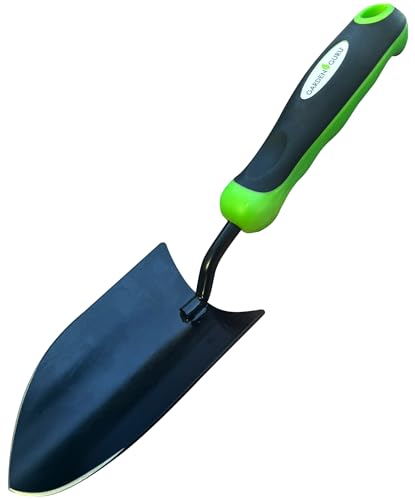
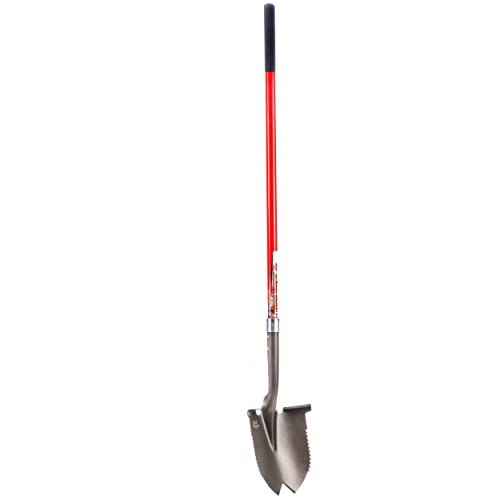
For an all-purpose specification-based choice, the Edward Tools Garden Trowel leads with a heavy-duty carbon steel blade, an ErgoGrip rubber handle, and printed depth markers that make it a strong fit across planting, transplanting, and tough soil work. If you prefer a stainless steel option for rust resistance, the Garden Guru Heavy Duty Garden Trowel offers a wide concave scoop and a clearly documented ergonomic handle with thumb rest and finger grooves. Among top ergonomic gardening shovels for standing work, the Jardineer Updated Root Shovel pairs an ergonomic T-handle with a heat-treated carbon steel head and serrated edge for trenching and root cutting.
Frequently Asked Questions
What makes a gardening shovel ergonomic?
An ergonomic gardening shovel typically combines a contoured or rubberized grip, a handle shape that keeps the wrist in a neutral position, and a blade matched to the task so the gardener does not need to apply excess force. Features such as thumb rests, finger grooves, and foot platforms are common markers of an ergonomic design.
Are carbon steel blades better than stainless steel for ergonomic gardening shovels?
Carbon steel is generally stiffer and resists bending in compacted or rocky soil, which means less effort is required per dig. Stainless steel resists rust more easily and is often lighter, but it can flex more under heavy load. The best ergonomic gardening shovels pair either steel with a grip designed to reduce hand strain.
Do long-handle shovels count as ergonomic gardening shovels?
These features reduce back and wrist strain during bigger digging tasks.
Are depth markings important when comparing the best ergonomic gardening shovels?
Depth markings printed or etched on the blade, like those on the Owlett Measuring Garden Trowel and the Garden Guru Transplanter Trowel, help you plant at consistent depths. Consistency supports uniform germination and growth, which is useful for vegetables, bulbs, and bedding plants.
How do I choose between a hand trowel and a long-handle shovel?
Pick a hand trowel for containers, raised beds, and transplanting work where close control matters. Choose a long-handle shovel for breaking new ground, edging beds, trenching, and root cutting where you need leverage and upright posture. Many gardeners keep both formats available for different parts of the season.