Buying Guide
Choosing the best heavy duty gardening shovels starts with matching tool geometry to the work in front of you. A round-point digging shovel covers most garden tasks, while a flat spade, drain spade, or root-cutting model can specialize the same tool kit for tougher jobs.
Match the Head Shape to the Task
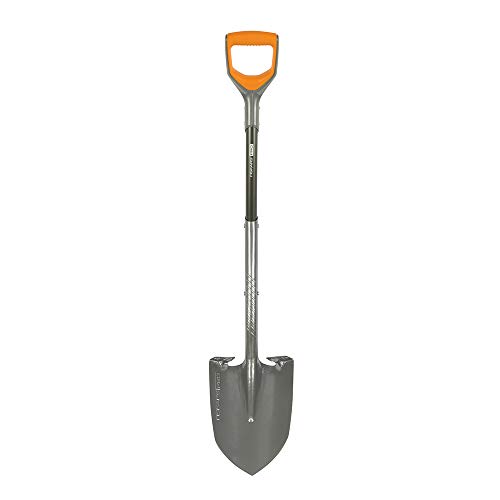
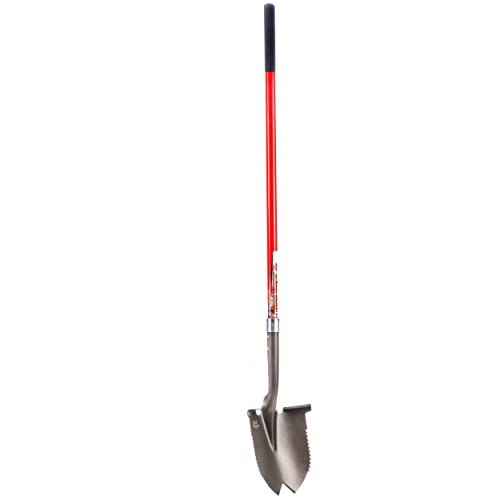
Round-point heads, like those on the Fiskars 57-Inch Steel Digging Shovel and Ashman 41-Inch Round Digging Shovel, concentrate pressure into a focused tip for breaking new ground and scooping soil. Flat spade heads such as the HANTOP Sawtooth Flat Spade Shovel are better for edging beds and cutting clean trench lines. Narrow drain spades such as the WIKER 45-Inch Sharp Shooter Drain Spade and KOLEIYA Drain Spade handle transplant holes and drainage work where a wider blade would disturb too much surrounding ground. Serrated, root-focused heads, exemplified by the Root Slayer RS220, target established roots and compacted ground.
Evaluate Blade Steel and Thickness
Blade material sets the baseline for how a shovel resists bending and wear. Spec sheets call out hardened steels such as the welded 14-gauge blade on the Fiskars 57-Inch model, high-carbon steel on the AgroPro 58-Inch Fiberglass Digging Shovel, manganese steel on the WIKER sharp shooter, and 1050MN steel on the HANTOP spade. A powder-coated or multi-layer anti-corrosion finish, like the coating on the WIKER or Root Slayer heads, can extend outdoor life. Sharpened edges, including the Fiskars Pro’s sharpened heavy-gauge spade and the HANTOP sawtooth blade, help the tool penetrate ground with less effort.
Consider Handle Material, Length, and Grip
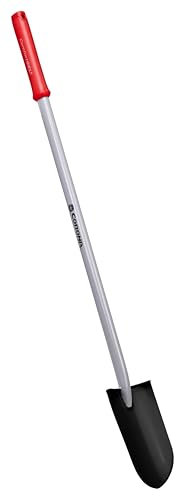
Handle choice influences comfort, weight, and durability. Traditional wooden handles, such as the solid wood build on the KOLEIYA 41-Inch Round Point Shovel, deliver a familiar feel but may need more care in damp storage. D-handles and oversized flanges, like the Corona DigMASTER ComfortGEL grip or the Fiskars 44-Inch Pro D-handle, give two-handed control and added leverage.
Wide treads on the Fiskars Pro, VNIMTI, and AgroPro heads let you drive foot pressure into the blade without slipping. V-shaped or inverted V tips, paired with serrations on the Root Slayer RS220, focus the cut directly into stubborn roots.
Balance Weight, Length, and User Fit
Longer shafts such as the 57-inch Fiskars, the 56-inch VNIMTI, and the 58-inch AgroPro favor taller gardeners and reduce waist bending. Shorter shafts such as the 41-inch Ashman or 43-inch HANTOP stay easier to maneuver around raised beds and tight landscapes. Mid-length models like the 45-inch WIKER sharp shooter, 45-inch KOLEIYA drain spade, and 47-inch Corona DigMASTER split the difference for general gardening and detailed work.
Confirm Warranty and Build Quality Signals
Many of the top heavy duty gardening shovels pair heavy steel heads with multi-year or lifetime coverage. Fiskars builds in a full lifetime warranty on both the 57-inch and 44-inch Pro models. The Corona DigMASTER adds a ComfortGEL ergonomic grip alongside a manufacturer warranty. A reinforced connection between head and shaft, such as the rivet bonding on the AgroPro fiberglass shovel or the double-riveted wood handle on the KOLEIYA round point, helps the tool hold up to repeated levering.
Final Recommendation
Root Slayer RS220 Heavy Duty Garden Shovel ranks first overall in this specification-based comparison under the published weighted criteria.
The final choice among the best heavy duty gardening shovels depends on the documented features that match your intended use.
For gardeners who want one tool that can handle most digging while still cutting through roots, the Root Slayer RS220 stands as the first overall specification-based choice among the top heavy duty gardening shovels in this round-up. Its serrated blade and V-shaped tip lead the group on digging design, and the reinforced steel shaft supports heavy use in tough ground. Gardeners who prefer classic round-point digging should look at the Fiskars 57-Inch Steel Digging Shovel and the Fiskars 44-Inch Pro Digging Shovel, which together cover long-reach power and ergonomic D-handle control. Pairing a general-purpose digging shovel with a specialized tool, such as the Root Slayer RS220 for roots and the HANTOP Sawtooth Flat Spade for edging, gives a complete heavy duty gardening shovels lineup that covers everything from bed prep to drainage work.
Frequently Asked Questions
Among the best heavy duty gardening shovels, what makes a gardening shovel truly heavy duty?
Heavy duty construction usually means a thick-gauge steel head, a reinforced shaft connection, and a handle designed to resist bending or breaking under repeated levering. Specs like the welded 14-gauge blade and full-length steel shaft on the Fiskars 57-Inch model, the high-carbon steel head on the AgroPro 58-Inch, and the manganese steel head on the WIKER sharp shooter all signal heavy duty design among the best heavy duty gardening shovels.
Are fiberglass handles better than wood for heavy duty gardening shovels?
Fiberglass handles resist rot, weather, and breakage better than untreated wood, which is why brands such as VNIMTI, AgroPro, KOLEIYA, and WIKER use them. Wooden handles, like the solid wood build on the KOLEIYA 41-Inch Round Point Shovel, offer a familiar feel and natural flex but may need more care in damp storage. For most gardeners shopping heavy duty gardening shovels, fiberglass handles offer a longer service life outdoors.
Should I choose a round point, flat spade, or drain spade?
A round point suits general digging and scooping, which is why the Fiskars 57-Inch, Ashman 41-Inch, and VNIMTI 56-Inch all use this shape. A flat spade like the HANTOP Sawtooth Flat Spade Shovel excels at edging and trenching. A narrow drain spade such as the WIKER Sharp Shooter or the KOLEIYA Drain Spade targets transplant holes and drainage lines. Many gardeners build their heavy duty gardening shovels kit by combining one of each.
How long should a heavy duty shovel shaft be?
Shaft length should match your height and typical digging depth. Tall gardeners often prefer 56 to 58-inch shafts like those on the AgroPro, Fiskars 57-Inch, or VNIMTI models, while shorter users find 41 to 45-inch shafts such as the Ashman, KOLEIYA, WIKER, and HANTOP easier to control. A mid-length 47-inch model like the Corona DigMASTER is a strong compromise when more than one person uses the same tool.
Do serrated and root-cutting blades really help in clay or rocky soil?
They may show extra wear on sandy or loamy ground, but in dense or root-filled beds they reduce the effort needed to drive the blade into the soil.