Buying Guide
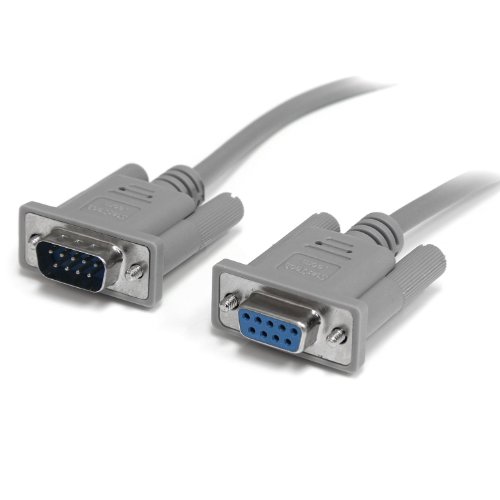
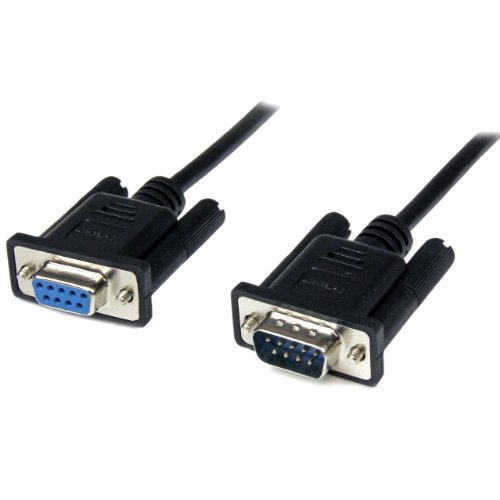
Choosing the best female modem cables starts with the ports and wiring pattern on the equipment, not simply the cable length. In this category, “modem cable” generally refers to an RS232 serial cable using DB9 or DB25 connectors. A female connector has recessed contacts, while a male connector has protruding pins. The gender on each end must match the physical ports or the adapter arrangement in your setup.
The products in this comparison are specification-based selections from the supplied listings. They are not hands-on test results, and the scores reflect documented design information only. Before selecting one, identify the connector size, whether the link is straight-through or null-modem, whether hardware handshaking is needed, and how much cable is required.
Match DB9 and DB25 connector types
DB9 is the nine-pin serial format commonly identified as DE9 in technical documentation. DB25 is the larger 25-pin format. The cable’s connector gender determines whether it can physically plug into the device.
For mixed ports, choose a cable that documents both ends precisely. The StarTech 10ft DB9 Female-to-DB25 Male Null Modem Cable and C2G 6ft DB25 Male-to-DB9 Female Null Modem Cable are examples of DB9-to-DB25 designs. Their end-to-end gender is different, so compare each side with the equipment before ordering. The KENTEK 6ft DB9 Female-to-DB25 Male Straight-Through Cable is another mixed-format option, but its straight-through layout makes it different from the null-modem products.
Check null-modem versus straight-through wiring
This is the most important technical distinction. A null-modem cable crosses selected transmit and receive lines so that two similarly configured serial devices can communicate. A straight-through cable keeps the corresponding pins connected directly. The two designs are not interchangeable in every installation.
Your Cable Store goes further by supplying a pinout, including the crossed signal lines. By contrast, the KENTEK 6ft DB9 Female-to-DB25 Male Straight-Through Cable explicitly identifies a direct wiring arrangement. Use the equipment documentation to determine which signal path is required.
Decide whether three-wire or full handshaking is needed
Some serial devices communicate with only transmit, receive, and signal ground. DTECH’s 6 ft female-to-female simple cable documents this three-wire approach and says it has no hardware handshaking. The 6 ft DTECH design is therefore a focused choice for basic serial data communication, but its listing does not support assuming compatibility with every legacy device.
The DTECH 1.5ft DB9 Female-to-Female Full-Handshaking Cable documents a seven-wire layout. It identifies crossings for TX, RX, RTS, CTS, DTR, and DSR. That detail makes it the more appropriate specification match when the connected equipment requires flow-control or modem-control lines. Its short 1.5 ft length is also intentional: it keeps nearby devices connected without a long loose loop.
Do not infer full handshaking from the words “RS232” or “null modem” alone. Look for a stated wire count or pinout. If the listing does not provide that information, treat the wiring as less certain and verify the device requirements separately.
Shielding can be relevant when serial cables pass near other electrical equipment. Several selected products document aluminum-foil shielding, including the DTECH simple and full-handshaking cables. The C2G cable identifies foil shielding for EMI/RFI protection, while the StarTech DB9-to-DB25 cable lists shielding and a PVC jacket. These details provide useful evidence about the cable’s construction without claiming a measured performance result.
Conductor details can also help distinguish designs. The DTECH listings specify 30 AWG internal wires, and the KENTEK straight-through cable specifies 28 AWG by nine conductors plus a drain wire. These specifications describe the build; they do not guarantee a particular result in every installation. Keep the cable separated from avoidable sources of interference and use the shortest suitable route.
Select an appropriate cable length
Short cables are useful when devices sit beside one another. The DTECH full-handshaking model is 1.5 ft, while StarTech offers a 1 m or 2 m female-to-female format in the supplied candidates. Medium lengths around 6 ft cover many computer, printer, router, and test-equipment layouts. Several selected cables use that length, including the C2G, KENTEK, and DTECH models.
Longer options are available when the equipment is separated. The StarTech male-to-female cable measures 10 ft, and Your Cable Store’s female-to-female model measures 25 ft. Longer cable can simplify routing but may create extra slack, so measure the path rather than choosing the longest specification automatically.
Review the connector hardware
Screw-secured DB9 connectors can help keep a serial connection attached during handling. The DTECH listings specifically mention screws on each end. Molded construction is another documented feature: StarTech identifies molded connectors on its DB9-to-DB25 cable, and C2G describes rugged overmolded construction with strain relief. These features are useful when the cable will be connected and disconnected repeatedly, though the supplied evidence does not establish a durability test result.
Final recommendation
C2G 6ft DB25 Male-to-DB9 Female Null Modem Cable ranks first overall in this specification-based comparison under the published weighted criteria.
The final choice among the best female modem cables depends on the documented features that match your intended use.
It combines the requested female-to-female connector layout, a practical 2 m length, and clearly stated RS232 null-modem use. For a DB25 connection, the C2G 6ft DB25 Male-to-DB9 Female Null Modem Cable offers the most specification-aligned documented construction detail, while the KENTEK 6ft DB9 Female-to-DB25 Male Straight-Through Cable is the better match when direct pin-to-pin wiring is required.
Among the top female modem cables, the DTECH 1.5ft DB9 Female-to-Female Full-Handshaking Cable stands out for its explicit seven-wire layout. Choose it only when the connected equipment needs those additional control lines. For a basic three-wire link, the DTECH 6ft DB9 Female-to-Female Simple Null Modem Cable documents the simpler alternative. If distance is the main concern, Your Cable Store’s 25 ft female-to-female model provides the longest documented reach in this selection.
Frequently Asked Questions
What should I verify before choosing the best female modem cables?
Verify the connector format on both devices, the gender of each end, and the required wiring pattern. Then check whether the equipment needs a null-modem crossover, straight-through wiring, or full handshaking. A cable that fits physically can still have the wrong pin configuration for the serial devices.
Are DB9 female-to-female cables always null-modem cables?
No. Connector gender and wiring type are separate specifications. The selected DB9 female-to-female examples in this guide document null-modem wiring, but a DB9 female-to-female cable could use another pin arrangement. Look for a stated null-modem description, wire count, or pinout rather than relying on connector gender alone.
When is a DB9-to-DB25 female modem cable useful?
It is useful when one serial device uses a nine-pin port and the other uses a 25-pin port. Check the gender on both ends and confirm the wiring pattern. The C2G DB25 male-to-DB9 female model and the KENTEK DB9 female-to-DB25 male models document different arrangements, including null-modem and straight-through designs.
Is a three-wire cable different from a full-handshaking cable?
Yes. The DTECH simple cable documents transmit, receive, and signal ground without hardware handshaking. The DTECH full-handshaking model documents seven connected wires and additional control-line crossings. Use the wiring information supplied by the equipment manufacturer to determine which design is appropriate.
Does a longer cable change the selection?
Length affects routing and slack. A 1.5 ft cable suits closely positioned devices, 6 ft is a common middle length in this comparison, and 10 ft or 25 ft can reach farther equipment. Choose the shortest documented length that covers the measured route while preserving the required connector and wiring configuration.