Buying Guide
The best flame-resistant safety jackets should be selected by hazard, not by appearance alone. A welding jacket intended to block brief sparks and spatter is not automatically suitable for arc-flash exposure, flash-fire work, rain, or firefighting. Start with the hazard assessment for your job, then compare the garment’s documented rating, construction, coverage, and care requirements.
Match the jacket to the hazard
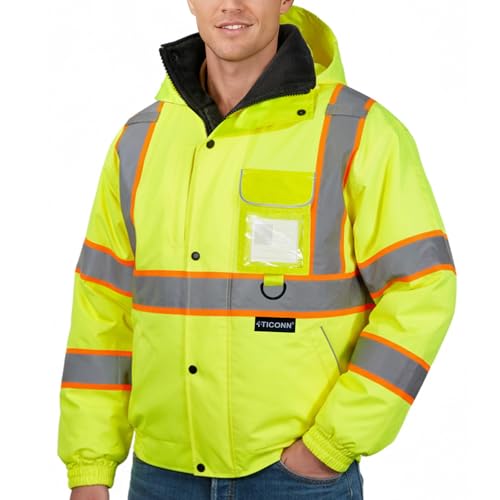
For outdoor utility or industrial work, the Oberon jacket is the clearest rain-and-visibility design in this comparison. Its listing identifies waterproof and windproof construction, ANSI Class 3 Type R visibility, NFPA 70E and CSA Z462 references, and a 10 cal/cm² ATPV rating. Those specifications address several conditions at once, but they do not eliminate the need to follow the employer’s PPE program or select protection appropriate to the specific arc-flash boundary.
For cold industrial work, the VATRENUS jacket documents CAT3 and HRC3 protection, a 38 cal/cm² ATPV rating, and an 11-ounce fleece lining. Insulation can be useful outdoors or in cool facilities, while potentially being uncomfortable in warm welding bays. Choose based on the surrounding temperature and the other layers required under the garment.
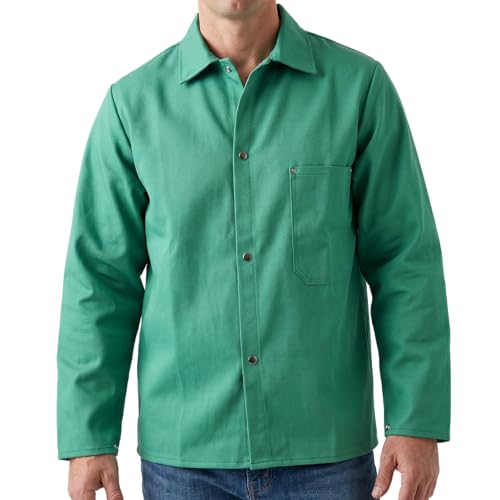
Routine welding options have more focused evidence. The YESWELDER 11-Ounce jacket, ARCCAPTAIN jacket, and VEVOR 7-Ounce jacket each identify FR cotton and an NFPA 2112 reference. The VEVOR listing also states a 9.2 cal/cm² ATPV rating, while ARCCAPTAIN emphasizes pockets, reflective strips, and cuff adjustment. Read the actual standard and rating information against your workplace requirements rather than assuming that every FR cotton jacket provides the same protection.
Compare cotton, canvas, leather, and hybrids
FR cotton is often the simplest choice for lightness and breathability. The MAGID SparkGuard uses 9-ounce cotton sateen and lists ASTM D6413-99, while the VEVOR 7-Ounce jacket uses lighter FR cotton and provides machine-wash information. Cotton layers may be more comfortable during active work, but the evidence here does not establish that one fabric is universally safer or more durable than another.
Leather designs emphasize coverage and resistance to sparks. The VEVOR Heavy-Duty Cowhide jacket is described as full cowhide leather and lists a 9.2 cal/cm² ATPV rating. Leather may be appropriate for heavier welding tasks, although it can add weight and require dry cleaning. The YESWELDER and VEVOR leather listings also identify collars, closures, and pockets that help cover or organize the wearer’s work area.
Hybrid jackets place leather in selected areas while using FR cotton elsewhere. The Black Stallion JH1012-OR uses split cowhide sleeves with a 9-ounce FR cotton body, and the QeeLink hybrid uses leather on the arms, shoulders, and chest with a 10-ounce FR cotton body. This design can target high-impact areas without making the entire jacket leather. Neither supplied listing should be treated as having an arc-flash rating unless one is explicitly documented.
Check coverage and fit details
A stand-up collar can add neck coverage in welding designs. The Black Stallion hybrid, QeeLink hybrid, and YESWELDER cotton jacket all document collar features, while the VEVOR leather jacket adds adjustable cuffs and closure systems. Cuffs, collars, and front fasteners should close without interfering with movement or other PPE. The ARCCAPTAIN listing identifies two-position cuff adjustment and warns that borderline sizes may restrict muscular builds, so consult the supplied size chart and leave room for required layers.
Visibility is another separate consideration. The Oberon jacket documents ANSI Class 3 Type R visibility, and several welding jackets identify reflective tape or strips. Reflective details can help in low-light or traffic-adjacent work, but a reflective strip alone does not make a jacket an ANSI Class 3 garment. Look for the stated visibility classification when that requirement applies.
Evaluate pockets, access, and maintenance
Pockets should keep essentials away from sparks and remain usable with gloves. The Oberon jacket has lower front pockets and an inside cellphone pocket; ARCCAPTAIN lists four pockets and a chest pen holder; and the VEVOR leather jacket lists four pockets including arm pockets. A back harness-access slot, documented on the Oberon and Black Stallion hybrid jackets, may be useful for elevated work when compatible with the rest of the fall-protection setup.
Care instructions affect whether the garment remains practical. MAGID states that its FR treatment continues through 50-plus industrial washes. BOCOMAL states up to 100 washes and identifies machine washing, while the VEVOR 7-Ounce jacket gives a 50–100 wash range. In contrast, the YESWELDER 11-Ounce jacket lists dry cleaning and a 165°F wash limit, and the leather VEVOR jacket advises against water washing. Follow the manufacturer’s instructions and inspect garments for damage or contamination before use.
Final recommendation
Oberon Hi Vis FR/Arc-Rated Rain Jacket ranks first overall in this specification-based comparison under the published weighted criteria.
The final choice among the best flame-resistant safety jackets depends on the documented features that match your intended use.
The Oberon Hi Vis FR/Arc-Rated Rain Jacket is the highest-scoring returned product and the first overall specification-based choice. It is the most versatile documented option because it combines waterproofing, high visibility, arc-flash references, chemical resistance, hood coverage, storage, and ventilation. For cold conditions, VATRENUS is the stronger lined alternative. For welding-specific leather coverage, the VEVOR Heavy-Duty Cowhide jacket and Black Stallion hybrid are distinct choices. The top flame-resistant safety jackets still require hazard-specific selection: verify the required standard, arc rating, size, layering compatibility, and care process before purchase.
Frequently Asked Questions
What should I look for in the best flame-resistant safety jackets?
Look for documentation that matches the hazard: an ATPV or arc rating for arc-flash work, a relevant flash-fire or welding standard, and material details such as FR cotton, treated sateen, leather, or a hybrid build. Then check coverage, closures, cuffs, visibility classification, and care instructions. A jacket described as flame resistant is not necessarily suitable for every flame, arc, or welding situation.
Are FR cotton welding jackets the same as arc-flash jackets?
Not necessarily. Several selected cotton welding jackets describe protection from sparks, spatter, or flash fire, and some list NFPA 2112 or an ATPV value. Arc-flash suitability depends on the garment’s documented rating and the requirements of the job. Do not infer an arc-flash rating from the words cotton, welding, or flame resistant alone.
When is a leather or hybrid jacket useful?
Leather can provide a more coverage-oriented surface for spark and spatter exposure, while a hybrid jacket concentrates leather on areas such as sleeves, shoulders, or chest. The VEVOR full-leather design and the Black Stallion and QeeLink hybrids document these approaches. They may trade some lightness or flexibility for reinforced coverage, so compare the task, movement demands, and required rating.
How important are washing instructions for FR workwear?
They are important because the supplied listings describe different maintenance limits. Some garments identify machine washing and a stated wash-life range, while others recommend dry cleaning or prohibit water washing. Use only the manufacturer’s care directions, and replace a garment if its protective material, closures, seams, or reflective elements are damaged.
Does reflective tape make a jacket high visibility?
No. Reflective tape or strips can improve visibility in low-light settings, but a formal high-visibility classification should be explicitly stated. The Oberon listing identifies ANSI Class 3 Type R, while other selected jackets mention reflective details without that same classification. Match the garment to the site’s visibility requirement.