Buying Guide
The best functional martial arts swords should be chosen by intended use first, then by construction and handling details. Public listings use “functional” broadly: some products are steel swords described for martial arts practice, while others are blunt polypropylene trainers designed for forms. Those are not interchangeable. A steel blade may require oiling and controlled storage, while a polymer trainer may be more appropriate for repeated drills where a sharp edge is not wanted.
Start with the training purpose
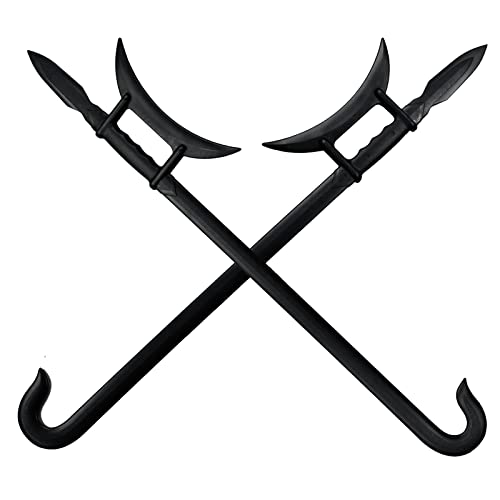
For Wushu forms, the Munetoshi Polypropylene Hook Swords are the clearest purpose-built choice in this selection. The listing identifies them as a two-sword set for Wushu forms and gives the 40.5-inch overall length, 27-inch blade length, 4.5-inch hilt length, and weight. The interlocking hooks are also documented. This makes the set useful for buyers who want the distinctive Chinese hook-sword format without selecting steel equipment.
The Munetoshi 33.5-Inch Stainless Steel Hook Swords and the 1sword Stainless Steel Hook Sword Set offer the same broad design family in steel. The former specifies black unsharpened 440 stainless steel and cord-wrapped handles. The latter also uses 440 stainless steel and describes two distinctive hooked ends. These listings support form-oriented comparison, but neither supplies as much care information as the katana listings.
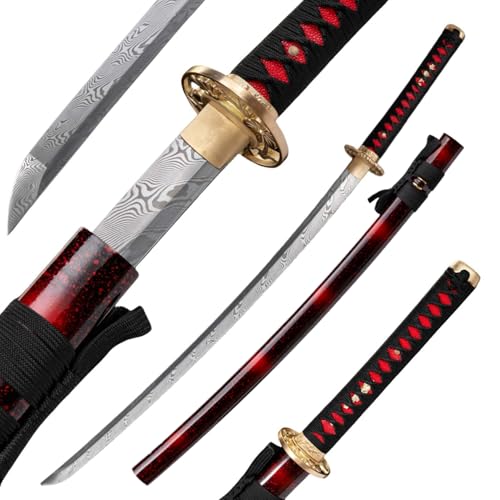
For a Japanese sword format, the Zhangswords katana has the most specification-aligned direct practice positioning because its listing names Iaido practice and katana training. It also documents a full tang, two bamboo mekugi pegs, a wrapped hardwood handle, a saya, and periodic oiling. The KAWANO Yukimura offers another traditional format with a full tang, Damascus steel, genuine rayskin, and a hardwood saya.
Compare construction, not just appearance
Full-tang construction is one of the most useful details supplied in this category. Zhangswords, KAWANO, Wuaiyebet, and the anatak 1060 katana explicitly describe full-tang designs. A full tang means the listing says the blade metal extends through the handle, but it does not by itself prove quality, balance, or safe use. Look for supporting details such as the attachment method, handle materials, and stated dimensions.
Zhangswords provides the most complete attachment description, naming two bamboo mekugi pegs and a disassemblable construction. KAWANO states full tang and gives traditional grip details. Wuaiyebet clearly states full tang but supplies fewer technical specifications. The anatak model combines a stated hand-forging and heat-treatment process with a particularly detailed dimensional profile.
The Sauvagine sword is also notable for its hand-forged and hand-ground 1095 steel description, stated heat treatment, and complete size information. However, the supplied listing does not identify the tang attachment. That does not disqualify it, but it is an important comparison gap.
Select the steel type carefully
Steel descriptions help establish what a listing is offering, but they do not replace a hands-on inspection or independent verification. The selected products mention 1095, 1060, 1045, Damascus, folded steel, EN45, or 440 stainless steel. High-carbon steel models such as Zhangswords, Sauvagine, Kamaiwo, and anatak are paired with forging or heat-treatment claims in their listings. KAWANO identifies Damascus steel, while MN Sword describes a folded-steel blade.
Its Greek hoplite design is different from a katana or Chinese hook sword, but it independently fits a functional martial-arts-sword comparison because the listing describes a sharpened steel blade, leather-wrapped handle, and practical use.
Stainless steel hook swords may be simpler to maintain than high-carbon steel, but the supplied listings do not make a general maintenance comparison. Treat material as one factor rather than assuming a particular steel is automatically better for every practitioner.
Length and weight affect whether a sword matches the practice style and the user’s available space. Zhangswords lists a 40.9-inch overall length, 28-inch blade, and approximate 2.86-pound weight. KAWANO lists a 41-inch overall length and 28.35-inch blade. The anatak model gives overall length, blade length, width, thickness, handle length, and weight, making it easier to compare with a training space or existing equipment.
The polypropylene katana is listed at 39.8 inches with an 18.7-ounce weight. Its lighter, blunt construction separates it from the steel katanas and makes it a different type of practice tool. Do not interpret its lighter specification as evidence of superior performance; it simply serves a different training role.
Grip information is similarly important. Cord wrapping appears on both hook-sword sets. Zhangswords specifies a traditional Ito cord wrap over hardwood, KAWANO lists genuine rayskin, Kamaiwo describes a cotton-wire wrap, and MN Sword lists a wood core with synthetic rayskin and synthetic silk wrapping. These details describe materials and design; they do not establish comfort for every user.
Plan for storage and maintenance
Steel swords need a storage plan. Zhangswords explicitly recommends periodic light oiling and includes a saya and carrying bag. MN Sword advises keeping the blade away from water, damp conditions, and direct sunlight, and warns against contact with people or animals. KAWANO includes a saya, while the anatak model includes a black sword bag. The Sauvagine listing includes a scabbard.
A scabbard or bag helps with storage and transport, but it does not eliminate the need to follow the manufacturer’s instructions. For any sharp-blade listing, confirm applicable local rules, age requirements, safe storage needs, and training supervision before purchase. The 1sword listing states an 18-plus purchase requirement, and the MN Sword listing states that its product is not for children under 16.
Final recommendation
Zhangswords 1095 High-Carbon Steel Katana ranks first overall in this specification-based comparison under the published weighted criteria.
Zhangswords 1095 High-Carbon Steel Katana is the first overall specification-based choice among these best functional martial arts swords. Its combination of stated Iaido and katana-training use, full-tang construction, two bamboo pegs, traditional grip, clear dimensions, saya, bag, and maintenance guidance gives it the most complete evidence profile.
For a blunt Wushu trainer, choose the Munetoshi Polypropylene Hook Swords because the listing directly identifies Wushu forms and supplies useful dimensions. For traditional grip materials, KAWANO is a strong alternative. For detailed measurements, anatak and Sauvagine are practical comparison points. Buyers seeking the top functional martial arts swords should match the material and edge description to their training environment instead of treating every “functional” listing as the same kind of equipment.
Frequently Asked Questions
Are these best functional martial arts swords tested hands-on?
No. This is a specification-based comparison using public listing information. It does not report hands-on testing, cutting results, balance testing, durability testing, or customer sentiment. Product descriptions and technical specifications support the comparisons, but buyers should independently verify details that matter for supervised training.
The Munetoshi Polypropylene Hook Swords are the clearest match because the listing specifically describes the two-sword set as ideal for practicing Wushu forms. It also identifies solid polypropylene construction, dimensions, weight, and interlocking hook features. The stainless-steel hook sets are alternatives for the same broad design style, but their listings provide less direct training detail.
What is the difference between the steel katanas and the polypropylene katana?
The steel katanas use metal blades and are listed with features such as full tangs, high-carbon steel, Damascus steel, or folded steel. The polypropylene katana is blunt, has no sharp edges or points according to its listing, and is described for sparring, conditioning drills, and training. They serve different roles and should not be judged by the same expectations.
Does full tang mean a sword is safe for practice?
No. Full tang describes how the blade extends through the handle; it is not a guarantee of safety, balance, durability, or suitability for a particular drill. Zhangswords and KAWANO provide additional construction details, but all steel swords should be used only in an appropriate supervised setting and according to the manufacturer’s instructions.
How should a high-carbon steel sword be stored?
Follow the product-specific care instructions. Zhangswords calls for light periodic oiling to help prevent rust, while MN Sword advises avoiding water, damp conditions, and direct sunlight. Store any sharp sword securely, keep it away from unauthorized users, and check local requirements before purchase or transport.