Buying Guide
Choosing among the best hand-forged martial arts swords requires separating documented construction from decorative language. The supplied listings cover two main families: Japanese-style katana with curved, single-edged blades and Chinese Jian or saber designs intended for forms, display, or collection. Because this is a specification-based comparison rather than a hands-on test, the most useful signals are details that can be checked directly in a listing.
Start with the intended activity
First decide whether the sword is for forms practice, controlled training, display, collection, or a combination of those uses. The YAXAZA katana and LOONGSWORD unsharpened saber explicitly identify unsharpened blades, which is a significant distinction for buyers seeking a practice-oriented option. The 41-inch blue-etched Han Jian is described for forms practice and display only. Those statements make intended use easier to interpret than listings that merely mention martial arts without explaining blade condition.
The Armory Replicas katana is described for intense training and has a full tang, but its listing also calls the blade razor-sharp. The entez, HMDSWORDS, and several ATANAK listings do not provide an equally clear sharpness designation. A buyer should not infer that an unspecified blade is suitable for a particular class, dojo, cutting activity, or forms routine. Confirm the edge condition and training requirements before ordering.
Compare blade materials carefully
Steel names are useful specifications, but they do not replace information about heat treatment, geometry, edge condition, or quality control. The selected products identify 1060, 1095, T10, Damascus, high-carbon, or high-manganese steel. The Armory Replicas listing goes further by describing clay tempering and a hamon. HMDSWORDS also identifies clay tempering and several traditional processing steps. The ATANAK models list annealing, tempering, quenching, or related heat-treatment language.
The Damascus designation on the entez sword describes its patterned blade and material presentation in the supplied evidence. The LOONGSWORD Han Jian models emphasize Longquan hand-forging and high-carbon or high-manganese steel, with the octahedral model adding a distinct eight-sided blade structure. These differences help establish design and material categories, but they should not be treated as proof of superior real-world cutting performance.
Look for full-tang evidence
A full tang means the listing says the blade extends through the handle, but the amount of supporting detail varies. Armory Replicas states that the tang is secured to the handle with bamboo pegs. The entez, YAXAZA, HMDSWORDS, and LOONGSWORD Han Jian listings also identify full-tang construction. This is more informative than a general claim that a sword is functional or strong.
Handle materials and attachment details matter as well. The Armory model lists a wooden handle, while the entez model uses a cord-wrapped handle. HMDSWORDS describes a wrapped handle and two-nail support. The ATANAK models use classic imogata handle language. Chinese designs vary more widely, with alloy fittings, polyethylene terephthalate, or covered wooden components appearing in the supplied descriptions.
Match dimensions to your practice space
Most katana entries are approximately 40 to 41 inches overall, with blades around 28 inches and handles around 10 inches. The ATANAK 1095 and 1060 models provide especially useful measurements, including blade width and thickness. The Armory Replicas katana is listed near 40 inches, while the entez listing provides a 40.55-inch overall length and 2.75-pound weight.
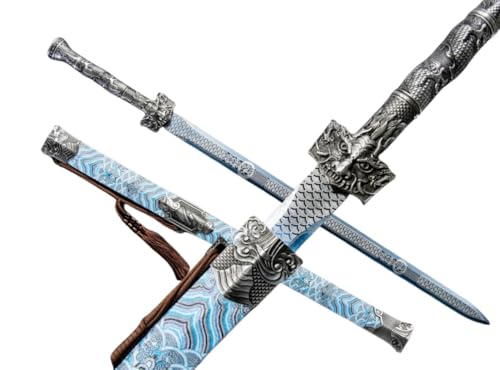
Chinese Jian models can be longer or heavier. The selected LOONGSWORD octahedral Han Jian is listed at 42.5 inches overall with a 29.5-inch blade and separate weights for the sword with and without its scabbard. The Longquan Han Jian and blue-etched Han Jian offer similarly extended formats. A longer sword may require more room for movement and storage, while a heavier scabbarded package may be less convenient to transport. Use the published dimensions as planning information rather than as a substitute for handling experience.
Evaluate the scabbard and included storage
A scabbard protects the blade and affects how the sword is stored and displayed. The Armory Replicas model includes a black hardwood scabbard, and the entez sword includes a black scabbard with a yellow-wrapped handle. The LOONGSWORD Jian models document hardwood or solid-wood scabbards, sometimes covered in PVC or faux leather. The ATANAK 1060 listing specifically mentions a sword and black sword bag, so buyers should confirm whether a rigid scabbard is included rather than assuming every carrier serves that purpose.
Several products include a cotton or sword bag, while stands are generally not included. Carbon-steel swords require attention to moisture and maintenance regardless of decorative finish.
Consider katana and Jian designs
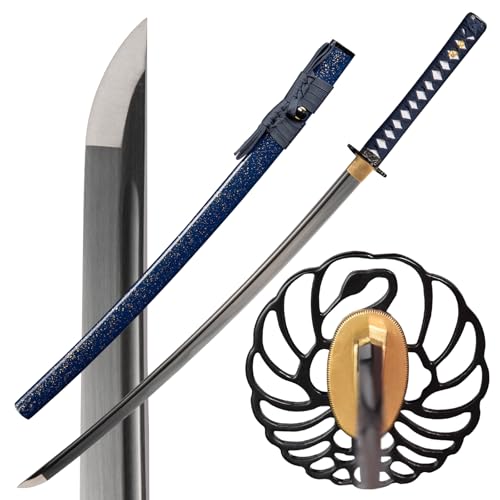
A katana is typically curved and single-edged, with a guard, long grip, and scabbard. The selected ATANAK, Armory Replicas, entez, HMDSWORDS, and YAXAZA products document this general Japanese-style format. A Jian is generally a straight, double-edged Chinese sword; the Longquan Han Jian listing explicitly describes that profile. The blue-etched and octahedral Han Jian models add their own blade treatments and geometry. The LOONGSWORD unsharpened saber provides a Chinese single-edged alternative.
Design preference should follow the movement system, instructor guidance, storage needs, and intended presentation. Product titles alone should not determine whether a sword is appropriate for a martial art. Verify dimensions, sharpness, and local rules before purchase, especially for sharp or functional blades.
Final recommendation
Armory Replicas T10 Clay-Tempered Katana ranks first overall in this specification-based comparison under the published weighted criteria.
Armory Replicas T10 Clay-Tempered Katana is the highest-scoring returned product and the first overall specification-based choice.
Armory Replicas T10 Clay-Tempered Katana leads these best hand-forged martial arts swords because it combines a named T10 blade, stated clay tempering, full-tang construction, bamboo-peg attachment, and a wooden scabbard. It is followed by the entez Damascus Steel Katana for its strong dimension disclosure and full-tang construction, then the ATANAK 1095 Blue Swan Katana for its named steel and traditional process details.
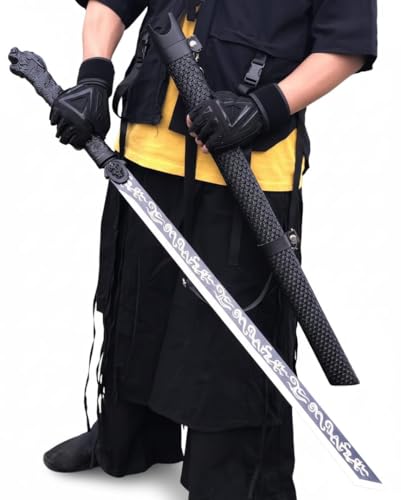
For an explicitly unsharpened option, choose the YAXAZA katana or LOONGSWORD Unsharpened Chinese Saber, depending on whether a Japanese-style katana or Chinese saber better fits the intended practice. The LOONGSWORD Longquan Han Jian and blue-etched Han Jian are better matches for buyers seeking Chinese straight-sword forms and cultural presentation. Across the top hand-forged martial arts swords, confirm edge condition, tang construction, scabbard contents, dimensions, maintenance requirements, and applicable US or local regulations before buying.
Frequently Asked Questions
What should I check first when comparing hand-forged martial arts swords?
Check the intended use and edge condition first. An unsharpened sword may be more appropriate for forms practice, while a sharp sword requires different handling, storage, and legal considerations. Then compare steel, heat-treatment information, tang construction, dimensions, and scabbard details. A listing that identifies all of these provides a more useful basis for comparison than one relying mainly on decorative claims.
Are the best hand-forged martial arts swords always made from the highest-numbered steel?
No. The supplied products use 1060, 1095, T10, Damascus, high-carbon, and high-manganese steel. A steel number alone does not establish overall suitability. Heat treatment, blade geometry, tang construction, edge condition, maintenance, and intended activity also matter. The Armory Replicas and HMDSWORDS listings receive particular consideration because they describe clay tempering, but that listing information is not a substitute for independent inspection or testing.
Is a full-tang sword automatically suitable for martial arts practice?
No. Full tang is a useful construction detail, but it does not establish that a sword is appropriate for every form, training method, or cutting activity. The blade may be sharp, unsharpened, too heavy, or otherwise unsuitable for a particular setting. Confirm the product’s stated use, edge condition, dimensions, and your instructor’s requirements before using it.
What is the difference between a katana and a Jian?
The selected katana listings describe curved Japanese-style swords with long handles and scabbards. The Longquan Han Jian listing describes a straight, double-edged Chinese sword, while the other Jian models add etched or octahedral blade designs. The distinction affects appearance, handling expectations, and cultural design, but the right choice depends on the martial art, practice space, and intended display.
How should a carbon-steel sword be stored?
Keep it dry, avoid leaving moisture on the blade, and follow the supplied maintenance instructions. The selected listings recommend wiping the blade and, in one case, using protective oil. A sword bag or scabbard can help with storage, but it does not eliminate the need for inspection and care. Keep sharp blades secured and follow applicable laws and safe-handling practices.