Buying Guide
The best full-tang martial arts swords should be compared by documented construction rather than by appearance alone. A listing may show a traditional katana shape, but useful buying evidence comes from the tang description, blade material, intended use, dimensions, grip, scabbard, and care information. This guide uses those fields only. It does not treat marketplace activity, customer sentiment, or a product label as proof of quality.
Start with the tang description
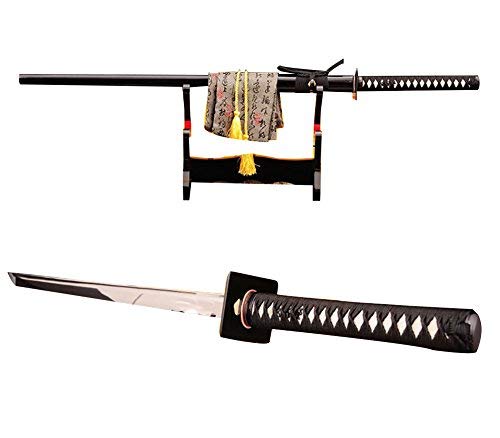
Full tang means the blade’s tang is described as extending through the handle. The most specification-aligned listings go further by explaining how the handle is secured. Zhangswords identifies a full nakago and two bamboo mekugi pegs. YONG XIN SWORD states full tang construction alongside other blade details, while the Lyuesword models describe a full-length tang and traditional peg or disassembly features. Those details are more useful than a generic “strong” claim because they tell you what the listing says about the blade-to-handle connection.
A buyer should still distinguish documented construction from verified performance. None of these listings was hands-on tested for flex, balance, edge retention, or structural durability in this comparison. If a sword is intended for formal instruction, ask the instructor what construction and edge type are permitted before ordering.
Match the blade condition to the activity
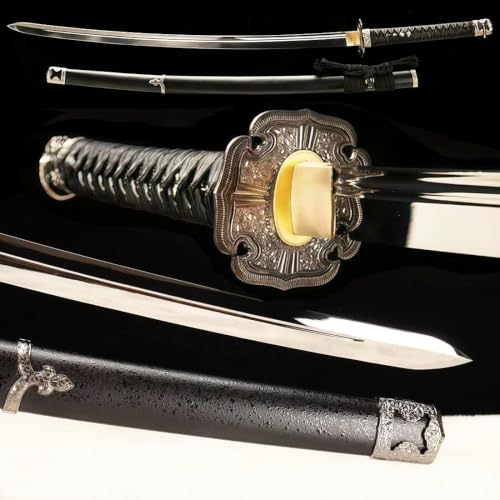
The selected products span unsharpened practice designs and sharp models. Sharp products in this list include the YONG XIN SWORD katana, the HAJUNGU tachi, the MAKOTO katana, and both Lyuesword designs. A sharp blade is not automatically a better training choice. It changes the storage, transport, supervision, and practice requirements.
CANGDT is positioned for practice, training, and performance, while Zhangswords names Iaido practice and katana training. Kamaiwo is more collection- and display-focused. These distinctions matter: a sword described for display or cosplay should not be assumed to be suitable for contact practice, cutting, or formal instruction. Confirm the exact intended use and local rules before purchase.
Compare steel claims carefully
Steel designations help organize the options, but they do not independently establish quality. The list includes 1095 carbon steel on Zhangswords and the first Lyuesword model, 1060 on CANGDT, anatak, YONG XIN SWORD, and Wuaiyebet, 9260 spring steel on the Lyuesword ninjato, 5160 on HAJUNGU, and 1045 or 1045/1060 on MAKOTO and Kamaiwo.
Process detail adds context. CANGDT describes a traditional forging process and more than ten precision processes. anatak lists annealing, tempering, quenching, and other heat-treatment steps. The Lyuesword listings describe manual selection, forging, quenching, polishing, grinding, and assembly. These are still listing claims, not independent certification or test results. Use them to compare documentation, not to assume one blade will outperform another.
Use dimensions to narrow the fit
Length and weight affect how a sword will feel, but a specification sheet cannot predict an individual’s comfort or technique. CANGDT lists a 41-inch overall length, a 28.7-inch blade, and a 3.57-pound weight. anatak lists a 40.55-inch total length, a 28.3-inch blade, and about the current price with the saya. Zhangswords gives a 40.9-inch overall length and approximately the current price. YONG XIN SWORD lists approximately the current price.
Handle details are also relevant. CANGDT identifies a 10mm leather grip, Wuaiyebet identifies a 10mm cotton-wire grip, and Zhangswords describes a hardwood handle with traditional cord wrapping. Lyuesword adds ray skin and silk wrapping. These descriptions can help you compare materials and stated grip features, but they do not replace trying a properly supervised training sword when that is possible.
Consider the scabbard, bag, and care needs
A saya or scabbard is useful for storage and transport, but its presence does not make a sharp sword safe by itself. Zhangswords includes a hand-lacquered wood saya and sword bag. YONG XIN SWORD lists a black lacquered scabbard, while anatak includes a black sword bag. MAKOTO also lists a sword bag. The Lyuesword ninjato specifies a hardwood lacquered saya, and the Lyuesword ninja sword identifies a sword bag in its description.
Care evidence is particularly important for carbon steel. Zhangswords states that high-carbon steel requires light periodic oiling, using mineral or choji oil as examples. A purchaser should follow the maker’s instructions and use a secure location away from children, visitors, and unauthorized handling. Listings that do not explain care should not be treated as maintenance-free.
Decide between traditional katana and ninja-sword profiles
Most selected products use a katana format, with curved blades, wrapped handles, and saya-related details. The two Lyuesword entries provide a different ninja-sword or ninjato profile. The Lyuesword 1095 model emphasizes a hand-forged blade, ray-skin grip, silk wrap, and Iaido practice. The 9260 model adds hardwood and copper component details. Choose by the design documented in the listing, not by assumptions about historical authenticity or cutting performance.
Final recommendation
Zhangswords 1095 Full-Tang Katana ranks first overall in this specification-based comparison under the published weighted criteria.
The final choice among the best full-tang martial arts swords depends on the documented features that match your intended use.
Zhangswords 1095 Full-Tang Katana is the highest-scoring returned product and the first overall specification-based choice. Its listing is the most complete combination of full-tang construction, dual mekugi pegs, steel information, grip details, standard dimensions, saya, carrying bag, and maintenance guidance. CANGDT is the better fit when measured dimensions and a stated training orientation are priorities, while anatak is appealing for buyers who value a detailed hand-forging and heat-treatment description.
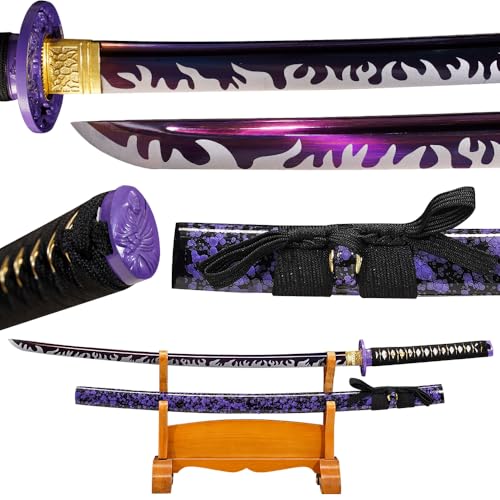
Among the top full-tang martial arts swords, the right choice still depends on whether the intended use is supervised practice, collection, cosplay, or display. YONG XIN SWORD and Zhangswords provide especially clear training-related wording, but both should be assessed against instructor requirements and local regulations. The Lyuesword models are more specialized choices because their listings describe sharp blades and distinct ninja-sword profiles. For a display-led purchase, MAKOTO or Kamaiwo supplies a simpler specification set, while HAJUNGU offers a 5160-steel alternative.
No ranking here confirms balance, edge retention, durability, or safe handling in practice. Before buying, verify blade condition, return terms, storage arrangements, and whether the seller’s stated specifications match the exact color or configuration shown on the order page. A responsible selection is one whose documented design matches the activity and whose handling requirements you can meet.
Frequently Asked Questions
What makes the best full-tang martial arts swords different from decorative replicas?
The most specification-aligned examples in this comparison explicitly identify full-tang construction and provide supporting details such as pegs, handle materials, blade steel, or dimensions. Decorative language alone is not enough. Kamaiwo, for example, is clearly positioned for collection, cosplay, and display, while Zhangswords and CANGDT provide more detailed training-related information. Even when a listing says “functional,” confirm the intended activity with a qualified instructor.
Is a sharp sword appropriate for martial-arts practice?
Not necessarily. A sharp sword requires more controlled handling, secure storage, and appropriate supervision. The YONG XIN SWORD, HAJUNGU, MAKOTO, and Lyuesword listings describe sharp blades, while CANGDT specifically mentions practice and training. The correct choice depends on the discipline, instructor, and exercise. Never infer that sharpness improves training suitability.
Which steel should I choose for a full-tang katana?
The answer depends on the documented design and your intended use. 1095, 1060, 1045, 5160, and 9260 appear across the selected products, but the steel number alone does not prove durability or cutting performance. Compare the seller’s process description, heat-treatment information, construction details, and care instructions. If you need a particular steel for instruction, verify that requirement before ordering.
What measurements should I compare first?
Start with overall length, blade length, handle length, and listed weight. CANGDT, anatak, Zhangswords, and YONG XIN SWORD provide especially useful dimensional information. Then review the grip description and scabbard. These figures help narrow the options, but they cannot predict personal comfort, balance, or technique. A supervised fitting or instructor recommendation is preferable for regular practice.
How should a carbon-steel sword be stored?
Use a secure, dry location and follow the manufacturer’s care directions. Zhangswords specifically states that high-carbon steel needs light periodic oiling to help prevent rust. Keep sharp swords inaccessible to children and unauthorized users, and transport them in an appropriate bag or scabbard where applicable. A saya or sword bag supports storage, but it does not replace safe handling procedures.