Buying Guide
Choosing the best gluten-free spaghetti pasta starts with identifying what the listing actually documents. Gluten-free status alone does not explain the flour base, production approach, cooking guidance, or dietary certifications. The products in this comparison range from familiar rice-and-corn blends to brown-rice, quinoa, lentil, and edamame formulas. That variety matters because ingredient selection can affect which dietary preferences a product fits, even when all of the options are presented as spaghetti.
Start with the flour or legume base
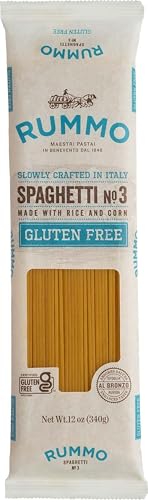
Rice-and-corn formulas are represented by Barilla, Rummo, and Sanniti. These products are positioned as conventional spaghetti alternatives, with ingredient information that is easy to understand. Barilla lists only rice and corn and documents production on a dedicated gluten-free line. Rummo also uses rice and corn, while Sanniti describes its blend as imported from Italy and suitable for several familiar preparations.
Brown-rice options provide a different route. Jovial lists brown rice as its only ingredient, and Tinkyada identifies its product as organic brown-rice spaghetti style. A single-grain formula can be appealing when a short ingredient list is the priority. Jovial supplies more production information, including bronze-die pressing and slow drying, while Tinkyada’s supplied evidence is more concise.
Legume-based choices include Bionaturae, Whole Foods Market, and The Only Bean. Bionaturae combines rice and lentils, Whole Foods Market uses 100% red lentil flour, and The Only Bean uses edamame as its sole ingredient. These are not interchangeable with grain-based pasta in ingredient terms, so shoppers should select them for the stated formula rather than assuming every gluten-free spaghetti has the same composition.
NOW Foods uses rice, quinoa, and amaranth and is specifically listed as corn-free. That makes it a relevant choice for shoppers who want to avoid corn while still selecting a grain-and-seed blend. Garofalo takes a broader approach with corn, rice, potato, and quinoa.
Check how gluten-free production is described
The most specification-aligned documentation in this group goes beyond a product title. Jovial and Bionaturae identify dedicated gluten-free facilities, while Barilla names a dedicated gluten-free line. NOW Foods describes a dedicated allergy-friendly facility and separately lists certified gluten-free status. These details are useful for shoppers who want production information rather than only a front-label claim.
Other products still clearly fit the requested category through their titles and feature statements. Rummo, Garofalo, Sanniti, Whole Foods Market, Tinkyada, and The Only Bean all provide gluten-free product descriptions. However, the amount and type of supporting detail varies. A product with a dedicated facility statement should not automatically be treated as identical to one with only a gluten-free designation; the evidence supports different levels of documentation.
Compare cooking and texture information
Cooking instructions are practical because spaghetti thickness and formula can affect preparation. Barilla lists 10 to 11 minutes, and Rummo lists 10 minutes. The Only Bean gives a much shorter three-to-five-minute window. Those stated times can help organize meal preparation, but they are listing claims rather than results from an independent test.
Several products describe texture or processing. Jovial says its pasta cooks firm and identifies bronze-die pressing and slow drying. Garofalo describes bronze drawing, slow drying, al dente texture, and sauce holding. Bionaturae lists slow drying, bronze-die pressing, and a coarse, firm texture. Tinkyada’s supplied evidence describes a consistent texture and says it is not mushy, but that information appears in a different package listing than the organic single-package selection, so this comparison keeps the claim tied to the brand’s supplied evidence without treating it as a hands-on finding.
NOW Foods, Whole Foods Market, and the selected Sanniti listing provide less technical cooking detail. Their scores reflect that narrower evidence rather than assuming a texture result. For the best gluten-free spaghetti pasta for your kitchen, prioritize a product whose listing gives the kind of preparation information you actually need.
Review certifications and dietary fit
Certifications and dietary statements can narrow the field. Jovial is described as free from the top eight allergens and made in a dedicated gluten-free facility. NOW Foods lists certified gluten-free, Halal, kosher, non-GMO, and USDA organic credentials. Whole Foods Market lists USDA organic, kosher, and non-GMO verification. The Only Bean lists organic, vegan, kosher, non-GMO, and low-carb positioning.
Tinkyada is listed as organic, non-GMO, gluten-free, wheat-free, and kosher. Sanniti is described as vegan, GMO-free, European-kosher, and gluten-free. These claims are useful for comparison, but shoppers with medically necessary restrictions should still check the current package and manufacturer information because public listings can change.
Package size affects planning even when it does not change the pasta formula. The selected products include single 8- and 12-ounce packages, two-package formats, and larger multipacks. A single package can make sense when trying a new ingredient base, while a multipack may fit households that already know they use that product regularly. The comparison does not treat a larger pack as inherently better; it simply records the format supplied in the listing.
Meal versatility is also documented unevenly. Barilla names sauces, vegetables, and fish. Sanniti mentions tomato sauce, olive oil and garlic, and pasta salads. Garofalo lists oil, meat, and tomato sauces, while Bionaturae says its spaghetti can be served with any sauce. Rummo describes classic preparations. These examples support practical pairing guidance without claiming that an independent cooking test was performed.
Final Recommendation
Jovial Organic Brown Rice Gluten-Free Spaghetti ranks first overall in this specification-based comparison under the published weighted criteria.
The final choice among the best gluten-free spaghetti pasta depends on the documented features that match your intended use.
Jovial Organic Brown Rice Gluten-Free Spaghetti is the highest-scoring returned product and the first overall specification-based choice. Its one-ingredient organic brown-rice formula, dedicated gluten-free facility, Italian production, bronze-die pressing, slow drying, and firm-cooking description give it the most complete evidence profile in this comparison.
Garofalo is the better documented choice for shoppers focused on bronze-drawn processing, slow drying, and sauce-oriented serving details. Rummo and Barilla are straightforward rice-and-corn alternatives with explicit cooking windows. Bionaturae adds a rice-and-lentil blend and detailed traditional processing, while NOW Foods is the clearest corn-free option among the selected products.
Tinkyada, Whole Foods Market, Sanniti, and The Only Bean fill distinct dietary or ingredient niches. Tinkyada keeps the formula centered on organic brown rice; Whole Foods Market uses red lentil flour; Sanniti emphasizes an Italian corn-and-rice blend; and The Only Bean offers one-ingredient edamame spaghetti with a short listed cooking time. Together, these form a useful range of the top gluten-free spaghetti pasta options documented in the supplied listings.
Frequently Asked Questions
What makes the best gluten-free spaghetti pasta different from another gluten-free option?
The main differences are the base ingredient, production documentation, cooking guidance, certifications, and package format. For example, Jovial uses brown rice only, Barilla uses rice and corn, Whole Foods Market uses red lentil flour, and The Only Bean uses edamame. Those formulas serve different dietary preferences even though each product is presented as gluten-free spaghetti.
Which selected pasta is made from one ingredient?
Jovial is listed as made with one ingredient: brown rice. Whole Foods Market is made from 100% red lentil flour, and The Only Bean identifies edamame as its one ingredient. A one-ingredient formula may simplify label checking, but it does not mean the products have identical cooking characteristics or flavor profiles.
Which best gluten-free spaghetti pasta has the clearest cooking time?
The supplied listings provide explicit times for Barilla, Rummo, and The Only Bean. Barilla lists 10 to 11 minutes, Rummo lists 10 minutes, and The Only Bean lists three to five minutes. These are published preparation directions, not independently verified cooking results, so follow the current package instructions.
Are any selected products specifically listed as corn-free?
NOW Foods is specifically described as corn-free and uses rice, quinoa, and amaranth. Several other selected products contain corn, including Barilla, Rummo, Garofalo, and Sanniti. Anyone avoiding corn should review the current package statement and ingredient panel before preparation.
Which products document dedicated gluten-free or allergy-friendly production?
Jovial and Bionaturae identify dedicated gluten-free facilities, Barilla identifies a dedicated gluten-free line, and NOW Foods describes a dedicated allergy-friendly facility. These statements provide useful production context, but they should be checked against current manufacturer and package information for personal dietary requirements.