Buying Guide
The best gmo-free spaghetti pasta is not one uniform product type. The candidates in this comparison range from conventional durum-wheat strands to rice blends and legume-based noodles. Start by deciding which base fits your dietary needs, then check how clearly the listing documents the non-GMO status, package format, and preparation information.
Choose the pasta base first
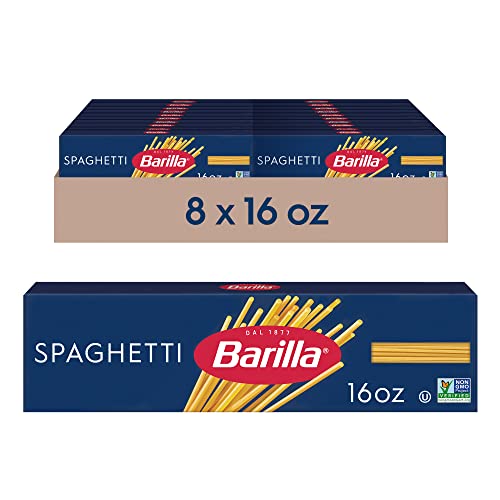
Traditional wheat spaghetti remains represented by Barilla and Pasta Zara. Barilla’s standard spaghetti uses durum wheat and gives a 10-to-11-minute cooking window, while Pasta Zara identifies 100% organic durum-wheat semolina and slow drying. These are the most familiar choices for shoppers who want a conventional wheat format. Barilla Whole Grain Thin Spaghetti keeps the durum-wheat base but changes the strand style and documents 3 grams of fiber per serving.
Gluten-free shoppers have several distinct options. NOW Foods uses rice, quinoa, and amaranth; DeLallo uses whole-grain brown rice flour; and Sogno Toscano uses a corn-and-rice flour blend. Schär documents gluten-free and wheat-free characteristics but does not provide the flour blend in the supplied evidence. Compare the actual ingredient base rather than treating all gluten-free spaghetti as interchangeable. In particular, a corn-and-rice blend may not suit someone avoiding corn, while rice-based products may be a better fit for that requirement.
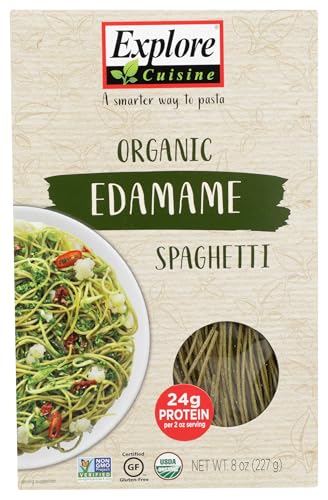
Legume pastas serve a different purpose. Explore Cuisine uses edamame, and Barilla’s specialty variety pack uses red lentil flour. Their listings provide substantially more protein and fiber information than most grain-based entries. The trade-off is that their flavor, texture, and cooking behavior may differ from conventional wheat spaghetti; the supplied listings establish the ingredients and nutrition claims but do not support independent texture conclusions.
Check certifications and dietary claims
Look for the exact claim that matters to your household. NOW Foods lists USDA Organic and Non-GMO Project Verified status along with gluten-free, Halal, and Kosher certifications. Explore Cuisine lists USDA Organic, non-GMO, gluten-free, vegan, and Kosher attributes. Schär identifies certified gluten-free and excludes several ingredients, including wheat, eggs, lactose, and preservatives.
Organic labeling appears on Pasta Zara, NOW Foods, Sogno Toscano’s organic chitarra product, and Explore Cuisine. Organic status can be useful when it aligns with your shopping requirements, but it does not tell you the pasta’s base or shape by itself. Read the ingredient and format details separately. For a corn-free choice, NOW Foods specifically lists corn-free quinoa spaghetti, while Sogno Toscano’s gluten-free option explicitly uses corn and rice.
Package quantities vary widely. Barilla’s standard listing is an eight-pack of 16-ounce boxes, Schär supplies ten 12-ounce packages, and DeLallo lists four 12-ounce bags. Smaller single-package options include NOW Foods at 8 ounces and Pasta Zara at 1 pound. The Barilla red-lentil listing is a mixed variety pack with three spaghetti boxes and three penne boxes, so it should not be treated as six spaghetti packages.
Sogno Toscano’s listings also require attention to the supplied size language. The artisan gluten-free product is described as a four-pack, while the organic spaghetti alla chitarra listing is a single 17.6-ounce bag. Checking both the unit count and the product shape helps prevent an unexpected mix of formats.
Use cooking details as a comparison point
Cooking information is helpful when it is supplied, but it should not be treated as a hands-on performance result. Barilla lists 10 to 11 minutes for standard spaghetti and 6 to 7 minutes for its thin whole-grain version. DeLallo lists 7 minutes, while The Barilla red-lentil listing gives 8 minutes with an additional one to two minutes for a more tender result. Explore Cuisine says its edamame spaghetti is ready in minutes, and the remaining listings provide less precise guidance.
Texture descriptions also vary. Pasta Zara describes a firm al dente result, and Sogno Toscano documents slow drying and bronze dye for its artisan products. These are listing-based production or positioning details, not independent test findings. Use them to identify meaningful specification differences, then follow the package directions for preparation.
For familiar tomato, meat, vegetable, or oil-based sauces, standard Barilla and Pasta Zara are the most direct format matches because both are traditional durum-wheat spaghetti. DeLallo, Sogno Toscano, and Schär provide gluten-free spaghetti formats for recipes where wheat is excluded. Explore Cuisine and Barilla Red Lentil offer a way to build meals around legume ingredients, while NOW Foods offers a quinoa-based alternative with several allergen-related claims.
Final Recommendation
NOW Foods Organic Quinoa Spaghetti ranks first overall in this specification-based comparison under the published weighted criteria.
The final choice among the best gmo-free spaghetti pasta depends on the documented features that match your intended use.
NOW Foods Organic Quinoa Spaghetti is the first overall specification-based choice for shoppers seeking well-documented GMO-free spaghetti with a gluten-free, corn-free, and organic profile. It combines a clearly stated ingredient blend with Non-GMO Project Verified and USDA Organic credentials. Among the top gmo-free spaghetti pasta options, Pasta Zara is the more traditional organic durum-wheat choice, while DeLallo is a strong documented brown-rice alternative.
Choose Barilla standard spaghetti when a clearly specified bulk format and familiar durum-wheat base matter most. Choose Schär when broad wheat-free and gluten-free exclusions are central. For legume-based nutrition documentation, Explore Cuisine and Barilla Red Lentil provide the most detailed supplied figures, though their bases differ substantially from conventional pasta. Sogno Toscano’s two entries are best suited to shoppers prioritizing artisan production details or a distinctive chitarra shape.
Frequently Asked Questions
What makes the best gmo-free spaghetti pasta different from ordinary spaghetti?
The defining comparison point here is a supplied non-GMO or GMO-free claim, but the products also differ by base, certifications, shape, and package format. Traditional choices use durum wheat, while other selected products use rice, quinoa, corn, edamame, or red lentil flour.
Which selected pasta is gluten-free?
NOW Foods, Sogno Toscano’s gluten-free spaghetti, Schär, DeLallo, Explore Cuisine, and Barilla Red Lentil are identified in the supplied evidence as gluten-free. Their ingredient bases are not the same, so shoppers should also check whether they need to avoid corn, wheat, soy, or other specific ingredients.
Which option uses whole-grain ingredients?
Barilla Whole Grain Thin Spaghetti is made with 100% whole-grain durum wheat and lists 3 grams of fiber per serving. DeLallo uses whole-grain brown rice flour. These products are different from one another: one is wheat-based and the other is presented as gluten-free rice pasta.
Does the Barilla red-lentil package contain only spaghetti?
No. The supplied listing describes a variety pack containing three boxes of red-lentil spaghetti and three boxes of red-lentil penne. It is therefore a mixed-shape option rather than a spaghetti-only package.
Which product has the clearest stated cooking time?
The selected listings provide specific times for Barilla standard spaghetti, Barilla Whole Grain Thin Spaghetti, DeLallo, and Barilla Red Lentil. Their stated times range from six to eleven minutes, depending on the product. These are listing details, so package directions remain the appropriate preparation reference.